

Полное меню
- Актуальное
законодательство - Интернет
и право- - Рассылка ''Закон есть закон''
- - Форум сайта (архив)
- - Законодательство
- - Судебная практика (необычная)
- - Судебная практика (авторская)
- - Процедура UDRP и и решения WIPO
- - Книги серии ''Интернет и Право''
- - Книги в открытом доступе
- - Учебный курс ''Интернет и Право''
- - Учебный курс ''Доменные споры''
- - Литература по ''Интернет и Право''
- - Литература по интел. собственности
- - Научный уголок (работы гостей)
- - Авторские публикации
- Информационные
материалы - ЮРИДИЧЕСКИЕ
УСЛУГИ- - Перечень юридических услуг
- - Карта юридических услуг
- - Юридическая консультация
- - Доменные споры (RU), авторское право
- - Международный суд по доменам (COM)
- - Защита прав на маркетплейсе (WB, Ozon)
- - Защита прав в соцсетях (Vk, Ok, FB)
- - Купля-продажа домена, сайта, ПО
- - Досудебное урегулирование конфликта
- - Защита чести и деловой репутации
- - Отмена блокировки сайта/домена РКН
- - ФАС: товарные знаки, авторское право
- - Регистрация ПО/сайта (Роспатент)
- - Юридическая проверка домена
- - Нотариальное заверение сайтов
- - Способы и формы оплаты услуг
- - Мы в СМИ
- - О компании, клиенты
- - Наши дела и победы
- - Контакты и реквизиты
- Информация
о сайте -


ОписаниеИсточник публикации Директива на русском языке подготовлена для публикации в системах ИС NORMPROD. Директива на английском языке опубликована не была. Примечание к документу Данная редакция документа вступила в силу 27 июня 2007 года (официальный сайт законодательства Европейского Союза /template/go.php?url=https://eur-lex.europa.eu по состоянию на 15.09.2017). Россия не участвует. Первоначальная редакция данного документа вступила в силу 22 июля 1992 года (официальный сайт законодательства Европейского Союза /template/go.php?url=https://eur-lex.europa.eu по состоянию на 15.09.2017). Россия не участвует. Название документа Директива N 92/58/ЕЭС Совета Европейских сообществ "О минимальных требованиях к знакам безопасности и/или охраны здоровья на рабочих местах (Девятая отдельная директива в значении статьи 16 (1) Директивы 89/391/ЕЭС)" [рус., англ.] (Вместе с <Требованиями к указателям, знакам с подсветкой на контейнерах и трубах, препятствий и опасных мест, а также для обозначения путей передвижения, идентификации и размещению противопожарного оборудования, звуковым сигналам, устным сообщениям, сигналам жестом рук>) (Принята в г. Люксембурге 24.06.1992) (с изм. и доп. от 20.06.2007) Договаривающиеся стороны Директива N 92/58/ЕЭС Совета Европейских сообществ
|

Назначение или цель | Инструкции и информация | |
Красный | Запрещающий знак | Опасное поведение |
Сигнал об опасности | Устройства остановки, отключения, аварийного выключения Эвакуация | |
Противопожарное оборудование | Обозначение и расположение | |
Желтый или янтарный | Предупреждающий знак | Будь осторожен, прими меры предосторожности Проверь |
Синий | Знак обязательного поведения | Особое поведение или действия Надеть средство индивидуальной защиты |
Зеленый | Знак аварийного выхода, первой помощи | Двери, выходы, пути, оборудование, средства |
Отсутствие опасности | Возвращение к нормальному режиму |
5. На эффективность использования знака не должно оказывать вредного влияния:
5.1. наличие иных источников передачи информации аналогичного типа, которые нарушают видимость или слышимость; поэтому, в частности,
5.1.1. следует избегать размещения слишком большого количества знаков слишком близко друг к другу;
5.1.2. не должны использоваться одновременно два знака с подсветкой, действие которых может привести к путанице;
5.1.3. знак с подсветкой не должен использоваться поблизости от другого аналогичного источника света;
5.1.4. два звуковых сигнала не должны использоваться одновременно;
5.1.5. звуковой сигнал не должен использоваться, если присутствует слишком большой фоновый шум;
5.2. некачественная конструкция, недостаточное количество, неправильное расположение, плохая исправность или неправильное функционирование знаков или сигнальных устройств.
6. В зависимости от требований знаки и сигнальные устройства должны чиститься, обслуживаться, проверяться, ремонтироваться и, при необходимости, заменяться на регулярной основе, чтобы обеспечить поддержание их внутренних и/или функциональных качеств.
7. Количество и расположение знаков или сигнальных устройств, которые должны быть установлены, должно зависеть от масштаба рисков и опасностей или зоны действия.
8. Для знаков, работа которых требует какого-либо энергоснабжения, должно быть обеспечено аварийное снабжение в случае отключения подачи энергии, пока опасность не будет устранена.
9. Включение знака с подсветкой и/или звукового сигнала указывает, когда требуемое действие должно начаться. Знак или сигнал должны быть включенными, пока их действие необходимо.
Работа знаков с подсветкой и звуковых сигналов должна быть немедленно восстановлена после использования.
10. Знаки с подсветкой и звуковые сигналы должны быть проверены на правильность работы и эффективность прежде, чем они поступят в эксплуатацию, и далее должны проверяться с необходимой частотой.
11. Если слух или зрение работников нарушены, включая нарушения, вызванные ношением средств индивидуальной защиты, то должны быть приняты меры по дополнению или замене соответствующих знаков.
12. Территории, помещения или огороженные места, используемые для хранения большого количества опасных веществ или препаратов, должны быть обозначены соответствующими предупреждающими знаками, указанными в разделе 3.2 Приложения II, или отмечены в соответствии с разделом 1 Приложения III, кроме случаев, когда этикетки индивидуальных упаковок или контейнеров соответствуют этим целям.
К УКАЗАТЕЛЯМ
1.1. Форма и цвета указателей установлены в разделе 3 в соответствии с их специальной целью (указатели, указывающие запрещение, предупреждение, обязательное действие, путь эвакуации, предохранительное или противопожарное оборудование).
1.2. Пиктограммы должны быть как можно более простыми и должны содержать только необходимые элементы.
1.3. Используемые пиктограммы могут незначительно отличаться или быть более детализированными по сравнению с указанными в разделе 3 при условии, что они передают одинаковое значение и что никакие различия или адаптация не изменяют значения.
1.4. Указатели должны быть изготовлены из материалов, устойчивых к колебаниям и быть погодными для условий окружающей среды.
1.5. Размеры, колориметрические и фотометрические характеристики указателей должны обеспечивать легкую видимость и понимание.
2.1. Указатели в принципе должны устанавливаться на удобной высоте и в положении на линии взгляда, принимая во внимание какие-либо препятствия, как на входе на территорию в случае общей опасности, или непосредственно в зоне опасности или объекта, а также в хорошо освещенном, легко доступном и видимом месте.
Без ущерба действию положений Директивы 89/654/ЕЭС фосфоресцирующие цвета, отражающие материалы или искусственное освещение должны использоваться в условиях низкого естественного освещения.
2.2. Указатель должен быть удален, когда ситуация, к которой этот знак относится, прекращает существовать.
Характерные свойства:
- круглая форма;
- черная пиктограмма на белом фоне, красная окантовка и диагональная линия (красная часть знака должна занимать не менее 35% его площади).
Используемые знаки




Не курить Курение Нет прохода Не тушить
и открытый для пешеходов водой
огонь
запрещены




Не пригодно Нет доступа Нет доступа Не прикасаться
для питья для лиц без для промышленных
допуска транспортных
средств
Характерные свойства:
- треугольная форма;
- черная пиктограмма на желтом фоне с черной окантовкой (желтая часть знака должна занимать не менее 50% его площади).

Легковоспламеняющийся материал или высокая температура <*>
--------------------------------



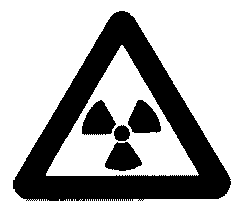
Взрывчатое Токсичное Коррозирующее Радиоактивное
вещество вещество вещество вещество
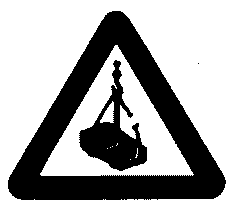
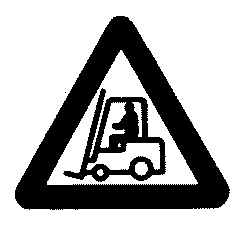
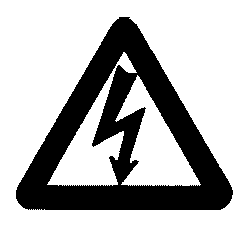

Погрузка Промышленные Опасно: Общая опасность
краном транспортные электричество
средства




Лазерный луч Окисляющее Неионизирующее Сильное
вещество излучение магнитное поле

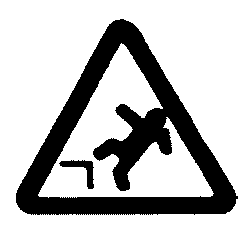


Препятствия Перепад высоты Биологическая Низкая
опасность <*> температура
--------------------------------
<*> Пиктограмма введена Директивой Совета ЕС 90/679/ЕЭС от 26 ноября 1990 г. о защите работников от рисков, связанных с воздействием биологических веществ (Седьмая отдельная директива в значении статьи 16 (1) Директивы 89/391/ЕЭС)/ОЖ N L 374, 31.12.1990, стр. 1.

Вредные или раздражающие вещества <*>
--------------------------------
<*> Фон данного знака может быть янтарного цвета исключительно если это необходимо, чтобы отличить его от аналогичного знака безопасности дорожного движения.
Характерные свойства:
- круглая форма;
- белая пиктограмма на синем фоне (синяя часть знака должна занимать не менее 50% площади знака).




Должна быть Должен быть Должна быть Должно быть
надета надет надета надето
защита защитный защита респираторное
для глаз шлем для ушей оборудование




Должны быть Должны быть Должен быть Должна быть
надеты надеты надет надета
защитные защитные защитный защита
сапоги перчатки комбинезон для лица
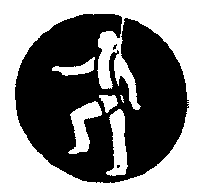


Должны быть Пешеходы Общий знак
надеты должны обязательного
привязные использовать поведения (при
ремни этот путь необходимости
должен
сопровождаться
другим знаком)
Характерные свойства:
- прямоугольная или квадратная форма;
- белая пиктограмма на зеленом фоне (зеленая часть знака должна занимать не менее 50% его площади).





Аварийный выход/путь эвакуации




Сюда (дополнительный информационный знак)





Медпункт Носилки Защитный Промывка Телефон экстренной
душ глаз связи для запроса
оказания первой
помощи или эвакуации
Характерные свойства:
- прямоугольная или квадратная форма;
- белая пиктограмма на красном фоне (красная часть знака должна занимать не менее 50% его площади).
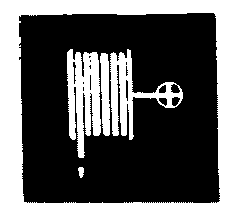



Пожарный шланг Лестница Огнетушитель Телефон
экстренной
связи на
случай пожара




Сюда (дополнительный информационный знак)
К ЗНАКАМ НА КОНТЕЙНЕРАХ И ТРУБАХ
1. Контейнеры, используемые для работы с опасными веществами или препаратами, определенными в Директивах 67/548/ЕЭС <*> и 88/379/ЕЭС <**>, а также контейнеры, используемые для хранения таких опасных веществ или препаратов, вместе с видимыми частями труб, содержащих или передающих опасные вещества и препараты, должны быть отмечены наклейкой (пиктограммой или символом на цветном фоне) в соответствии с этими Директивами.
--------------------------------
Параграф 1 не применяется к контейнерам, используемым в процессе труда на короткое время, а также к контейнерам, содержимое которых часто меняется, при условии, что приняты альтернативные должные меры, в частности, в отношении информирования и/или обучения, которые гарантируют аналогичный уровень защиты.
Наклейки, указанные в параграфе 1, могут быть:
- заменены предупреждающими знаками в соответствии с Приложением II, используя аналогичные пиктограммы или символы;
- снабжены дополнительной информацией, такой как название и/или формула опасного вещества или препарата и особенности вредного воздействия;
- при транспортировке контейнеров на месте проведения работ дополнены или заменены знаками, применяемыми во всем Сообществе при транспортировке опасных веществ или препаратов.
- на видимой стороне (-ах);
- должны быть негнущимися, самоклеющимися или в нарисованной форме.
3. При необходимости знаки, указанные в разделе 1 данного Приложения, должны обладать существенными признаками, определенными в разделе 1.4 Приложения II и должны соответствовать условиям использования указателей, содержащихся в разделе 2 Приложения II.
4. Без ущерба действию положений разделов 1, 2 и 3 наклейки, используемые на трубах, должны располагаться так, чтобы быть видимыми, в зоне наиболее опасных пунктов, таких как вентили и швы, а также через разумные интервалы.
5. Территории, помещения или огороженные площадки, используемые для хранения большого количества опасных веществ или препаратов, должны быть обозначены соответствующим предупреждающим знаком из раздела 3.2 Приложения II, или отмечены в соответствии с разделом 1 Приложения HI <*>, если этикетки индивидуальных упаковок или контейнеров не соответствуют этой цели, принимая во внимание Приложение II, пункт 1.5 в отношении размеров.
--------------------------------
<*> В оригинале, скорее всего, допущена ошибка. Следует переводить: разделом 1 Приложения III - прим. перев.
Хранилища опасных веществ или препаратов могут быть обозначены предупреждающим знаком общей опасности.
Знаки или наклейки, относящиеся к вышеуказанному, должны быть при необходимости размещены рядом с территорией хранилища или на двери, ведущей в помещение хранилища.
МИНИМАЛЬНЫЕ ТРЕБОВАНИЯ
К ИДЕНТИФИКАЦИИ И РАЗМЕЩЕНИЮ ПРОТИВОПОЖАРНОГО ОБОРУДОВАНИЯ
1. Вводные замечания
Данное Приложение применяется к оборудованию, используемому исключительно в противопожарных целях.
2. Противопожарное оборудование должно быть обозначено с использованием особого цвета для оборудования и путем размещения указателя, указывающего на наличие оборудования, и/или путем использования особого цвета для обозначения мест хранения такого оборудования или пунктов доступа к нему.
3. Идентификационным цветом для данного оборудования является красный цвет.
Зона покрытия красным цветом должна быть достаточно большой, чтобы оборудование было легко обнаружить.
4. Указатели, предусмотренные разделом 3.5 Приложения Ii <*>, должны быть использованы для обозначения мест размещения данного оборудования.
--------------------------------
<*> В оригинале, скорее всего, допущена ошибка. Следует переводить: раздел 3.5 Приложения II - прим. перев.
К ЗНАКАМ ПРЕПЯТСТВИЙ И ОПАСНЫХ МЕСТ, А ТАКЖЕ
ДЛЯ ОБОЗНАЧЕНИЯ ПУТЕЙ ПЕРЕДВИЖЕНИЯ
1.1. Места, где существует риск столкновения с препятствиями, падения с высоты или падения объектов сверху, должны быть отмечены полосами чередующегося желтого и черного или красного и белого цветов в зонах застройки на предприятиях, куда работники имеют доступ во время работы.
1.2. Размеры пометок должны соответствовать масштабу обозначаемого препятствия или опасного места.
1.3. Полосы желтого и черного или красного и белого цветов должны располагаться под углом приблизительно в 45° и быть более или менее равного размера.
1.4. Пример:

2.1. Если предназначение и оборудование помещений требуют защиты работников, то пути передвижения транспортных средств должны быть четко обозначены длинными полосами отчетливо видимого цвета, преимущественно белого или желтого, принимая во внимание цвет поверхности.
2.2. Полосы должны быть расположены так, чтобы показывать необходимую безопасную дистанцию между средством передвижения и каким-либо объектом поблизости, а также между пешеходами и средствами передвижения.
2.3. Постоянные пути передвижения на открытых застроенных территориях должны быть насколько это возможно отмечены аналогично, пока не будут обеспечены надлежащими барьерами или мостовыми.
МИНИМАЛЬНЫЕ ТРЕБОВАНИЯ
К ЗНАКАМ С ПОДСВЕТКОЙ
1.1. Испускаемый знаком свет должен находиться в световом контрасте с окружающей средой в соответствии с заданными условиями использования знака, но без создания бликов из-за чрезмерного количества света или плохой видимости по причине недостатка освещенности.
1.2. Зона свечения знака может быть одного цвета или может содержать пиктограмму на специальном фоне.
1.3. Если используется один цвет, то он должен соответствовать таблице цветов и их значений, указанной в разделе 4 Приложения I.
1.4. Аналогично когда знак содержит пиктограмму, то она должна соответствовать всем соответствующим правилам, установленным в Приложении II.
2.1. Если устройство может демонстрировать как постоянные, так и временные знаки, то временные знаки должны использоваться для обозначения высшего уровня опасности или более срочную необходимость желательного/обязательного устранения неблагоприятных последствий или иных действий, чем обозначаемую постоянными знаками.
Продолжительность каждой вспышки и частота этих вспышек при использовании временных знаков с подсветкой должна быть такой, чтобы
- обеспечить надлежащее восприятие сообщения, и
- избежать какого-либо конфликта между различными знаками с подсветкой или с постоянным знаком с подсветкой.
2.2. Если загорающийся знак используется вместо звукового сигнала (или вместе с ним), то коды должны быть идентичными.
2.3. Устройства для высвечивания знаков в случае серьезной опасности должны находиться под специальным контролем или должны быть подсоединены к вспомогательному источнику света.
МИНИМАЛЬНЫЕ ТРЕБОВАНИЯ
К ЗВУКОВЫМ СИГНАЛАМ
1.1. Звуковые сигналы должны:
a) иметь уровень звукового давления, который был бы настолько выше фонового шума окружающей среды, чтобы сигналы были слышны и при этом не были чрезмерными или травмирующими;
b) быть легко узнаваемыми, особенно в случае, когда сигнал является пульсирующим и между импульсами и группами импульсов существуют интервалы, а также четко отличимыми от каких-либо других звуковых сигналов и фоновых шумов окружающей среды.
1.2. Если устройство может воспроизводить звуковые сигналы с переменной и постоянной частотой, то переменная частота должна использоваться для указания более высокого уровня опасности или более срочной необходимости осуществления желательного/обязательного вмешательства или действия по отношению к стабильной частоте.
Сигнал к эвакуации должен быть продолжительным.
МИНИМАЛЬНЫЕ ТРЕБОВАНИЯ
К УСТНЫМ СООБЩЕНИЯМ
1.1. Устное общение между говорящим или передатчиком и одним или более слушателей должно принимать форму (иногда кодированную) короткого текста, фраз, групп слов и/или отдельных слов.
1.2. Сказанные сообщения должны быть как можно более короткими, простыми и ясными; навыки устного общения говорящего и слуховые способности слушателя(-ей) должны быть такими, чтобы обеспечивать надежное устное общение.
1.3. Устное общение может быть прямым (посредством голоса человека) или не прямым (посредством голоса человека или искусственного голоса, транслируемого какими-либо соответствующими средствами).
2.1. Вовлеченные лица должны обладать хорошим знанием используемого языка, чтобы быть способными произносить и понимать сказанные сообщения правильно и, следовательно, действовать способом, обеспечивающим защиту здоровья и/или безопасность.
2.2. Если устные сообщения использованы вместо или вместе с жестами, то кодовые слова должны быть использованы следующим образом:
- старт для выражения команды "старт"
- стоп для прерывания действия или завершения движения
- конец для остановки действия
- поднять для подъема груза
- опустить для опускания груза
- вперед
- назад
?
- вправо ? в целях координации с соответствующими
- влево > сигналами руками
- опасно ? для экстренной остановки
- быстрее ? для ускорения движения в целях безопасности
?
К СИГНАЛАМ ЖЕСТОМ РУК
Сигналы жестом рук должны быть четкими, простыми, резкими, легкими для выполнения и понимания, а также ясно отличимыми от других таких сигналов.
При использовании обеих рук одновременно они должны двигаться симметрично и подавать только один сигнал.
При условии, что они соответствуют вышеуказанным требованиям, используемые сигналы могут незначительно отличаться или быть более детализированными, чем указанные в разделе 3; они, однако, должны нести одинаковое значение и быть понятными.
2.1. Лицо, подающее знаки (здесь и далее "сигнальщик") должно использовать движения кистью/рукой для передачи инструкций по маневрированию лицам, получающим знаки (здесь и далее "оператор").
2.2. Сигнальщик должен быть способен следить за всеми маневрами визуально без подвергания себя опасности.
2.3. Обязанности сигнальщика должны состоять исключительно в управлении маневрами и обеспечении безопасности работников в зоне его работы.
2.4. Если условия пункта 2.2 не выполняются, то должны быть размещены дополнительно один или более сигнальщиков.
2.5. Оператор должен прерывать выполнение текущего маневра, чтобы запросить новые инструкции, когда он не может выполнить полученные распоряжения с необходимыми гарантиями безопасности.
2.6. Вспомогательные предметы одежды
Оператор должен быть способен легко узнать сигнальщика.
Сигнальщик должен носить один или более соответствующих опознавательных предметов одежды, например, жилет, шлем, нарукавники или нарукавные повязки, или носить сигнальные палки.
Опознавательные предметы одежды должны быть яркого цвета, преимущественно одного цвета и исключительно для использования сигнальщиками.
Вводные замечания:
Следующий набор кодированных сигналов, без ущерба применению других кодов, действующих на уровне Сообщества, используется для аналогичных маневров в определенных случаях:
???????????????????????????????????????????????????????????????????????????
? Значение ? Описание ? Изображение ?
???????????????????????????????????????????????????????????????????????????
?????????????????????????????????????????????????????????????????????????
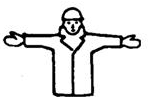
СТАРТ обе руки раздвинуты
Внимание горизонтально со смотрящими
Начало подачи указаний вперед ладонями
?????????????????????????????????????????????????????????????????????????

СТОП правая рука указывает вверх с
Пауза ладонью, смотрящей вперед
Завершение движения
?????????????????????????????????????????????????????????????????????????

ЗАВЕРШЕНИЕ работы правая рука указывает вверх с
ладонью, смотрящей вперед <*>
?????????????????????????????????????????????????????????????????????????
?????????????????????????????????????????????????????????????????????????
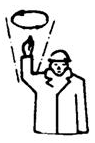
ВЫШЕ правая рука указывает вверх с
ладонью, смотрящей вперед, и
медленно совершает движения по
кругу
?????????????????????????????????????????????????????????????????????????

НИЖЕ правая рука указывает вниз с
ладонью, смотрящей внутрь, и
медленно совершает движения по
кругу
?????????????????????????????????????????????????????????????????????????

ВЕРТИКАЛЬНОЕ РАССТОЯНИЕ руки указывают соответствующее
расстояние
?????????????????????????????????????????????????????????????????????????
?????????????????????????????????????????????????????????????????????????
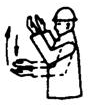
ДВИЖЕНИЕ ВПЕРЕД обе руки согнуты с ладонями,
смотрящими вверх, и предплечья
совершают медленные движения
по направлению к телу
?????????????????????????????????????????????????????????????????????????
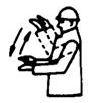
ДВИЖЕНИЕ НАЗАД обе руки согнуты с ладонями,
смотрящими вниз, и предплечья
совершают медленные движения
по направлению от тела
?????????????????????????????????????????????????????????????????????????
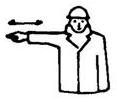
ВПРАВО правая рука вытянута более или
от сигнальщика менее горизонтально с ладонью,
смотрящей вниз, и медленно
совершает небольшие движения
вправо
?????????????????????????????????????????????????????????????????????????
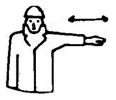
ВЛЕВО левая рука вытянута более или
от сигнальщика менее горизонтально с ладонью,
смотрящей вниз, и медленно
совершает небольшие движения
влево
?????????????????????????????????????????????????????????????????????????

ГОРИЗОНТАЛЬНОЕ руки указывают соответствующее
РАССТОЯНИЕ расстояние
?????????????????????????????????????????????????????????????????????????
?????????????????????????????????????????????????????????????????????????

ОПАСНОСТЬ обе руки указывают вверх с
Экстренная остановка ладонями, смотрящими вперед
?????????????????????????????????????????????????????????????????????????
БЫСТРО все движения совершаются
быстрее
?????????????????????????????????????????????????????????????????????????
МЕДЛЕННО все движения совершаются
медленнее
???????????????????????????????????????????????????????????????????????????
--------------------------------
<*> В оригинале, скорее всего, допущена ошибка. Описание не соответствует изображению. Должно быть: ладони сжаты на уровне груди - прим. перев.
ON THE MINIMUM REQUIREMENTS FOR THE PROVISION OF SAFETY
AND/OR HEALTH SIGNS AT WORK (NINTH INDIVIDUAL
DIRECTIVE WITHIN THE MEANING OF ARTICLE 16(1)
OF DIRECTIVE 89/391/EEC)
(24.VI.1992)
(Amended by Directive 2007/30/EC of the European Parliament
and of the Council of 20 June 2007)
The Council of the European Communities,
Having regard to the Treaty establishing the European Economic Community, and in particular Article 118a thereof,
Having regard to the proposal from the Commission <*>, submitted following consultation of the Advisory Committee on Safety, Hygiene and Health Protection at Work,
--------------------------------
<*> OJ No C 53, 28.2.1991, p. 46 and OJ No C 279, 26.10.1991, p. 13.
In cooperation with the European Parliament <*>,
--------------------------------
<*> OJ No C 240, 16.9.1991, p. 102 and OJ No C 150, 15.6.1992.
Having regard to the opinion of the Economic and Social Committee <*>,
--------------------------------
<*> OJ No C 159, 17.6.1991, p. 9.
Whereas Article 118a of the Treaty provides that the Council must adopt, by means of directives, minimum requirements to encourage improvements, especially in the working environment, as regards the health and safety of workers;
Whereas, under that Article, such directives must avoid imposing administrative, financial and legal constraints in a way which would hold back the creation and development of small and medium-sized undertakings;
Whereas the Commission communication on its programme concerning safety, hygiene and health at work <*> provides for a revision and extension of the scope of Council Directive 77/576/EEC of 25 July 1977 on the approximation of the laws, regulations and administrative provisions of the Member States relating to the provision of safety signs at places at work <**>;
--------------------------------
<*> OJ No C 28, 3.2.1988, p. 3.
<**> OJ No L 229, 7.9.1977, p. 12. Last amended by Commission Directive 79/640/EEC. (OJ No L 183, 19.7.1979, p. 11.).
Whereas, in its Resolution of 21 December 1987 on safety, hygiene, and health at work <*>, the Council took note of the Commission's intention of submitting to it within a short period of time a proposal for revising and extending the abovementioned Directive;
--------------------------------
<*> OJ No C 28, 3.2.1989, p. 1.
Whereas Directive 77/576/EEC should be replaced by this Directive for the sake of consistency and clarity;
Whereas this Directive is an individual Directive within the meaning of Article 16 (1) of Council Directive 89/391/EEC of 12 June 1989 on the introduction of measures to encourage improvements in the safety and health of workers at work <*>; wheres the provisions of Directive 89/391/EEC therefore apply in full to the provision of safety and health signs at work, without prejudice to more stringent and/or specific provisions contained in this Directive;
--------------------------------
<*> OJ No L 183, 29.6.1989, p. 1.
Whereas existing Community rules relate mainly to safety signs and the marking of dangerous obstacles and locations, and are therefore restricted to a limited number of types of signs;
Whereas the effect of this restriction is that some hazards are not appropriately marked; whereas new types of signs should therefore be introduced in order to enable employers and workers to identify and avoid risks to safety and/or health at work;
Whereas safety and/or health signs must be provided where hazards cannot be adequately reduced by techniques for collective protection or by measures, methods or procedures used in the organization of work;
Whereas the many differences between the safety and/or health signs currently in use in the Member States lead to uncertainty, and this may become more widespread with the free movement of workers within the internal market;
Whereas the use of standardized signs at work is, in general, likely to reduce the hazards which may arise from linguistic and cultural differences between workers;
Whereas this Directive constitutes a tangible step towards developing the social dimension of the internal market;
Whereas, pursuant to Decision 74/325/EEC <*>, as last amended by the Act of Accession of Spain and Portugal, the Advisory Committee on Safety, Hygiene and Health Protection at Work is to be consulted by the Commission on the drafting of proposals in this field,
--------------------------------
<*> OJ No L 185, 9.7.1974, p. 15.
Has adopted this Directive:
Object
1. This Directive, which is the ninth individual Directive within the meaning of Article 16(1) of Directive 89/391/EEC, lays down minimum requirements for the provision of safety and/or health signs at work.
2. This Directive shall not apply to signs for the placing on the market of dangerous substances and preparations, products and/or equipment, unless other Community provisions make specific reference thereto.
3. This Directive shall not apply to signs used for regulating road, rail, inland waterway, sea or air transport.
4. The provisions of Directive 89/391/EEC shall apply in full to the whole area referred to in paragraph 1, without prejudice to more stringent and/or specific provisions in this Directive.
Definitions
For the purposes of this Directive:
(a) safety and/or health signs means signs referring to a specific object, activity or situation and providing information or instructions about safety and/or health at work by means of a signboard, a colour, an illuminated sign or acoustic signal, a verbal communication or a hand signal, as the case may be;
(b) prohibition sign means a sign prohibiting behaviour likely to incur or cause danger;
(c) warning sign means a sign giving warning of a hazard or danger;
(d) mandatory sign means a sign prescribing specific behaviour;
(e) emergency escape or first-aid sign means a sign giving information on emergency exits or first-aid or rescue facilities;
(f) information sign means a sign providing information other than that referred to in (b) to (e);
(g) signboard means a sign which provides specific information by a combination of a geometric shape, colours and a symbol or pictogram and which is rendered visible by lighting of sufficient intensity;
(h) supplementary signboard means a signboard used together with one of the signs described under (g), which provides supplementary information;
(i) safety colour means a colour to which a specific meaning is assigned;
(j) Symbol or pictogram means a figure which describes a situation or prescribes specific behaviour and which is used on a signboard or illuminated surface;
(k) illuminated sign means a sign produced by a device made of transparent or translucent materials which are illuminated from the inside or the rear in such a way as to give the appearance of a luminous surface;
(l) acoustic signal means a coded sound signal which is released and transmitted by a device designed for that purpose, without the use of a human or artificial voice;
(m) verbal communication means a predetermined spoken message communicated by a human or artificial voice;
(n) hand signal a movement and/or position of the arms and/or hands, in coded form, for guiding persons who are carrying out manoeuvres which constitute a hazard or danger for workers.
General rules
1. Employers shall provide safety and/or health signs as laid down in this Directive where hazards cannot be avoided or adequately reduced by techniques for collective protection or measures, methods or procedures used in the organization of work, or ensure that such signs are in place.
Employers shall take into account any risk evaluation made in accordance with Article 6(3)(a) of Directive 89/391/EEC.
2. Without prejudice to the provisions of Annex V, the signs used for road, rail, inland waterway, sea and air transport shall be installed, wherever appropriate for such forms of transport, inside undertakings and/or firms.
Safety and/or health signs used for the first time
Without prejudice to Article 6, a safety and/or health sign used at work for the first time on or after the date referred to in Article 11(1) first subparagraph must fulfil the minimum requirements set out in Annexes I to IX.
Safety and/or health signs already in use
Without prejudice to Article 6, a safety and/or health sign which was already in use at work before the date referred to in Article 11(1) first subparagraph must fulfil the minimum requirements set out in Annexes I to IX by no later than eighteen months after that date.
Exemptions
1. Taking account of the types of activity and/or size of the undertakings concerned, Member States may specify categories of undertakings allowed to replace totally, partially or temporarily the illuminated signs, and/or acoustic signals provided for in this Directive by alternative measures which afford the same level of protection.
2. Member States may derogate, after consulting both sides of industry, from the application of Annex VIII, section 2 and/or Annex IX, section 3, whilst laying down alternative measures guaranteeing the same level of protection.
3. Member States shall consult, in accordance with national laws and/or practice, employers' and workers' organizations when implementing paragraph 1.
Information and instruction for workers
1. Without prejudice to Article 10 of Directive 89/391/EEC, workers and/or their representatives shall be informed of all the measures to be taken concerning the safety and/or health signs used at work.
2. Without prejudice to Article 12 of Directive 89/391/EEC, workers must be given suitable instruction, in particular in the form of specific directions concerning the safety and/or health signs used at work.
In particular, the instruction referred to in the first subparagraph shall cover the meaning of the signs, especially signs incorporating words, and the general and specific behaviour to be adopted.
Consultation of workers and workers' participation
Consultation and participation of workers and/or their representatives shall take place in accordance with Article 11 of Directive 89/391/EEC on the matters covered by this Directive, including Annexes I to IX.
Adaptation of the Annexes
Adaptations of a technical nature to Annexes I to IX shall be adopted, in accordance with the procedure provided for in Article 17 of Directive 89/391/EEC, in the light of:
- the adoption of directives on technical harmonization and standardization concerning the design and manufacture of safety and/or health signs or devices at work,
- technical progress, changes in international rules or specifications and advances in knowledge in the field of safety and/or health signs at work.
1. Directive 77/576/EEC shall be repealed on the date referred to in Article 11(1), first subparagraph.
However, in the cases referred to in Article 5, that Directive shall continue to apply for a maximum period of eighteen months following that date.
2. Any reference to the repealed Directive shall be taken to refer to the corresponding provisions of this Directive.
Final provisions
1. Member States shall bring into force the laws, regulations and administrative provisions required to comply with this Directive no later than 24 June 1994.
They shall immediately inform the Commission thereof.
2. When Member States adopt these measures they shall contain a reference to this Directive or shall be accompanied by such reference on the occasion of their official publication. The methods of making such a reference shall be laid down by the Member States.
3. Member States shall communicate to the Commission the text of the provisions of domestic law which they have already adopted or adopt in the field covered by this Directive.
This Directive is addressed to the Member States.
GENERAL MINIMUM REQUIREMENTS
CONCERNING SAFETY AND/OR HEALTH SIGNS AT WORK
1. Preliminary remarks
1.1. Where health and/or safety signs are required by the general rule in Article 3 of the Directive, they must conform to the specific requirements in Annexes II to IX.
1.2. This Annex introduces those requirements, describes the different uses of safety and/or health signs, and gives general rules on the interchanging and combining of signs.
1.3. Health and/or safety signs must be used only to convey the message or information specified in the Directive.
2. Types of signs
2.1. Permanent signs
2.1.1. Permanent signboards must be used for signs relating to prohibitions, warnings and mandatory requirements and the location and identification of emergency escape routes and first-aid facilities.
Signboards and/or a safety colour must be used to mark permanently the location and identification of fire-fighting equipment.
2.1.2. Signboards on containers and pipes must be placed as laid down in Annex III.
2.1.3. Places where there is a risk of colliding with obstacles or of falling must be permanently marked with a safety colour and/or with signboards.
2.1.4. Traffic routes must be permanently marked with a safety colour.
2.2. Occasional signs
2.2.1. Illuminated signs, acoustic signals and/or verbal communication must be used where the occasion requires, taking into account the possibilities for interchanging and combining signs set out in Section 3, to signal danger, to call persons to take a specific course of action and for the emergency evacuation of persons.
2.2.2. Hand signals and/or verbal communication must be used where the occasion requires, to guide persons carrying out hazardous or dangerous manoeuvres.
3. Interchanging and combining signs
3.1. Any one of the following may be used if equally effective:
- a safety colour or a signboard to mark places where there is an obstacle or a drop,
- illuminated signs, acoustic signals or verbal communication,
- hand signals or verbal communication.
3.2. Some types of signs may be used together:
- illuminated signs and acoustic signals,
- illuminated signs and verbal communication,
- hand signals and verbal communication.
4. The instructions in the table below apply to all signs incorporating a safety colour:
Colour | Meaning or purpose | Instructions and information |
Red | Prohibition sign | Dangerous behaviour |
Danger alarm | Stop, shutdown, emergency cutout devices Evacuate | |
Fire-fighting equipment | Identification and location | |
Yellow or Amber | Warning sign | Be careful, take precautions Examine |
Blue | Mandatory sign | Specific behaviour or action Wear personal protective equipment |
Green | Emergency escape, first aid sign | Doors, exits, routes, equipment, facilities |
No danger | Return to normal |
5. The effectiveness of a sign must not be adversely affected by:
5.1. the presence of another emission source of the same type which interferes with visibility or audibility; therefore, in particular,
5.1.1. the placing of too many signs too close together should be avoided;
5.1.2. two illuminated signs which are likely to be confused are not to be used at the same time;
5.1.3. an illuminated sign is not to be used in the proximity of another similar illuminated source;
5.1.4. two acoustic signals are not to be used at the same time;
5.1.5. an acoustic signal is not be used if there is too much ambient noise;
5.2. poor design, insufficient number, incorrect positioning, poor state of repair or incorrect functioning of the signs or signalling devices.
6. Depending on requirements, signs and signalling devices must be cleaned, maintained, checked, repaired, and if necessary replaced on a regular basis to ensure that they retain their intrinsic and/or functional qualitities.
7. The number and positioning of signs or signalling devices to be installed will depend on the extent of the hazards or dangers or on the zone to be covered.
8. Signs requiring some form of power must be provided with a guaranteed emergency supply in the event of a power cut, unless the hazard has thereby been eliminated.
9. The triggering of an illuminated sign and/or acoustic signal indicates when the required action should start, the sign or signal must be activated for as long as the action requires.
Illuminated signs and acoustic signals must be reactivated immediately after use.
10. Illuminated signs and acoustic signals must be checked to ensure that they function correctly and that they are effective before they are put into service and subsequently at sufficiently frequent intervals.
11. If the hearing or the sight of the workers concerned is impaired, including impairment caused by the wearing of personal protective equipment, measures must be taken to supplement or replace the signs concerned.
12. Areas, rooms or enclosures used for the storage of significant quantities of dangerous substances or preparations must be indicated by a suitable warning sign taken from section 3.2. of Annex II, or marked as provided in section 1 of Annex III, unless the labelling of the individual packages or containers is adequate for this purpose.
MINIMUM GENERAL REQUIREMENTS
CONCERNING SIGNBOARDS
1.1. The shape and colours of signboards are set out in section 3, in accordance with their specific object (signboards indicating a prohibition, a warning, a mandatory action, an escape route, an emergency or fire-fighting equipment).
1.2. Pictograms must be as simple as possible and should contain only essential details.
1.3. The pictograms used may be slightly different from or more detailed than those shown in section 3, provided that they convey the same meaning and that no difference or adaptation obscures the meaning.
1.4. Signboards are to be made of shock and weather-resistant material suitable for the surrounding environment.
1.5. The dimensions and colorimetric and photometric features of signoboards must be such that they can be easily seen and understood.
2.1. Signboards are in principle to be installed at a suitable height and in a position appropriate to the line of sight, taking account of any obstacles, either at the access point to an area in the case of a general hazard, or in the immediate vicinity of a specific hazard or object and in a well-lit and easily accessible and visible location.
Without prejudice to the provisions of Directive 89/654/EEC, phosphorescent colours, reflective materials or artificial lighting should be used where the level of natural light is poor.
2.2. The signboard must be removed when the situation to which it refers ceases to exist.
Intrinsic features:
- round shape
- black pictogram on white background, red edging and diagonal line (the red part to take up at least 35% of the area of the sign).
Sign to be used




No smoking Smoking and No access for Do not
naked flames pedestrians exinguish
forbidden with water




Not Not access for No access for Do not
drinkable unauthorized industrial touch
persons vehicles
Intrinsic features:
- triangular shape
- black pictogram on a yellow background with black edging (the yellow part to take up at least 50% of the area of the sign).

Flammable material or high temperature <*>
--------------------------------
<*> In the absence of a specific sign for high temperature.



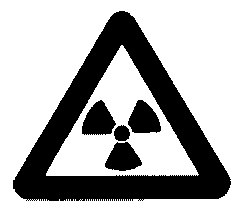
Explosive Toxic material Corrosive Radioactive
material material material
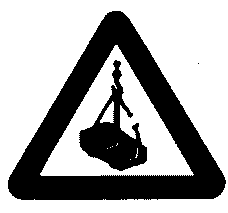
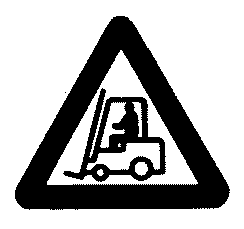
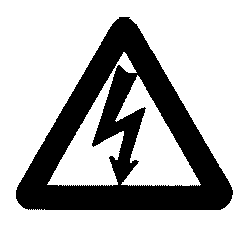

Overhead load Industrial Danger: General danger
vehicles electricity




Laser beam Oxidant Non-ionizing Strong magnetic
material radiation field

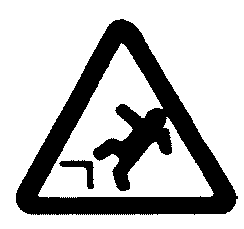


Obstacles Drop Biological Low temperature
risk <*>
--------------------------------
<*> Pictogram laid down in Council Directive 90/679/EEC of 26 November 1990 on the protection of workers from the risks related to exposure to biological agents at work (Seventh individual Directive within the meaning of Article 16(1) of Directive 89/391/EEC)/OJ No L 374, 31.12.1990, p. 1.

Harmful or irritant material <*>
--------------------------------
<*> The background to this sign may exceptionally be amber if justified in order to differentiate it from a similar road safety sign.
Intrinsic features:
- round shape
- white pictogram on a blue background (the blue part to take up at least 50% of the area of the sign).




Eye Safety helmet Ear Respiratory
protection must be worn protection equipment
must be worn must be worn must be worn




Safety Safety Safety Face
boots must gloves must overalls protection
be worn be worn must be worn must be worn
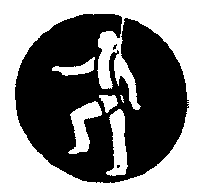


Safety Pedestrians General mandatory
harness must must use sign (to be
be worn this route accompanied where
necessary by
another sign)
Intrinsic features:
- rectangular or square shape
- white pictogram on a green background (the green part to take up at least 50% of the area of the sign)





Emergency exit/escape route




This way (supplementary information sign)





First-aid Stretcher Safety shower Eyewash Emergency
post telephone
for first-aid
or escape
Intrinsic features:
- rectangular or square shape
- white pictogram on a red background (the red part to take up at least 50% of the area of the sign).
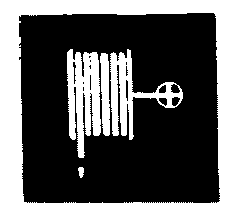



Fire hose Ladder Fire Emergency fire
esctinguisher telephone




This way (supplementary information sign)
MINIMUM REQUIREMENTS
GOVERNING SIGNS ON CONTAINERS AND PIPES
1. Containers used at work for dangerous substances or preparations defined in Directives 67/548/EEC <*> and 88/379/EEC <**> and containers used for the storage of such dangerous substances or preparations, together with the visible pipes containing or transporting dangerous substances and preparations, must be labelled (pictogram or symbol against a coloured background) in accordance with those Directives.
--------------------------------
<*> OJ No 196, 16.8.1967, p. 1.
<**> OJ L No 187, 16.7.1988, p. 14.
Paragraph 1 does not apply to containers used at work for brief periods nor to containers whose contents change frequently, provided that alternative adequate measures are taken, in particular for information and/or training, which guarantee the same level of protection.
The labels referred to in paragraph 1 may be:
- replaced by warning signs as provided for in Annex II, using the same pictograms or symbols,
- supplemented by additional information, such as the name and/or formula of the dangerous substance or preparation and details of the hazard,
- for the transporting of containers at the place of work, supplemented or replaced by signs applicable throughout the Community for the transport of dangerous substances or preparations.
2. Signs must be mounted as follows:
- on the visible side(s),
- in unpliable, self-adhesive or painted form.
3. Where appropriate, the signs referred to in section 1 of this Annex must have the intrinsic features defined in section 1.4 of Annex II and must fulfill the conditions of use for signboards laid down in section 2 of Annex II.
4. Without prejudice to sections 1, 2 and 3, the labels used on pipes must be positioned visibly in the vicinity of the most dangerous points, such as valves and joint, and at reasonable intervals.
5. Areas, rooms or enclosures used for the storage of significant quantities of dangerous substances or preparations must be indicated by a suitable warning sign taken from section 3.2 of Annex II, or marked as provided in section 1 of Annex HI, unless the labelling of the individual packages or containers is adequate for this purpose, taking into account Annex II, point 1.5 with regard to dimensions.
Stores of a number of dangerous substances or preparations may be indicated by the warning sign for general danger.
The signs or labels referred to above must be positioned, as appropriate, near the storage area or on the door leading into the storage room.
MINIMUM REQUIREMENTS
FOR THE IDENTIFICATION AND LOCATION
OF FIRE-FIGHTING EQUIPMENT
1. Preliminary remark
This Annex applies to equipment used exclusively for fire-fighting purposes.
2. Fire-fighting equipment must be identified by using a specific colour for the equipment and placing a location signboard, and/or by using a specific colour for the places where such equipment is kept, or their access points.
3. The colour for identifying this equipment is red.
The red area must be sufficiently large to allow the equipment to be identified easily.
4. The signboards provided for in section 3.5 of Annex Ii must be used to mark the locations of this equipment.
MINIMUM REQUIREMENTS
GOVERNING SIGNS USED FOR OBSTACLES AND DANGEROUS LOCATIONS,
AND FOR MARKING TRAFFIC ROUTES
1.1. Places where there is a risk of colliding with obstacles, of falling or of objects falling should be marked with alternating yellow and black, or red and white stripes in built-up zones in the undertaking to which workers have access during their work.
1.2. The dimensions of the markings must be commensurate with the scale of the obstacle or dangerous location in question.
1.3. The yellow and black or red and white stripes must be at an angle of approximately 45° and of more or less equal size.
1.4. Example:

2.1. Where the use and equipment of rooms so requires for the protection of workers, traffic routes for vehicles must be clearly identified by continous stripes in a clearly visible colour, preferably white or yellow, taking into account the colour of the ground.
2.2. The stripes must be located so as to indicate the necessary safe distance between the vehicles and any object which may be near by, and between pedestrians and vehicles.
2.3. Permanent traffic routes in built-up areas outdoors should, as far as is practicable, be similarly marked, unless they are provided with suitable barriers or pavements.
MINIMUM REQUIREMENTS
FOR ILLUMINATED SIGNS
1.1. The light emitted by a sign must produce a luminous contrast which is appropriate to its environment, in accordance with the intended conditions of use of the sign, but without producing glare for an excessive amount of light or poor visibility as a result of insufficient light.
1.2. The luminous area emitting a sign may be of a single colour or contain a pictogram on a specified background.
1.3. The single colour must correspond to the table of colours and their meanings set out in section 4 of Annex I.
1.4. Likewise, when the sign contains a pictogram, the latter must comply with all the relevant rules set out in Annex II.
2.1. If a device can emit both continuous and intermittent signs, the intermittent sign should be used to indicate a higher level of danger or a more urgent need for the requested/imposed intervention or action than is indicated by the continuous sign.
The duration of each flash and the frequency of the flashers of an intermittent illuminated sign must be such as to
- ensure the proper perception of the message, and
- avoid any confusion either between different illuminated signs or with a continuous illuminated sign.
2.2. If a flashing sign is used instead of - or together with - an acoustic signal, identical codes must be used.
2.3. Devices for emitting flashing signs in the event of grave danger must be under special surveillance or be fitted with an auxiliary lamp.
MINIMUM REQUIREMENTS
FOR ACOUSTIC SIGNS
1.1. Acoustic signals must:
(a) have a sound level which is considerably higher than the level of ambient noise, so that it is audible without being excessive or painful;
(b) be easily recognizable, particularly in terms of pulse length and the interval between pulses or groups of pulses, and be clearly distinct from any other acoustic signal and ambient noises.
1.2. If a device can emit an acoustic signal at variable and constant frequencies, the variable frequency should be used to indicate a higher level of danger or a more urgent need for the requested/imposed intervention or action in relation to the stable frequency.
The signal for evacuation must be continuous.
MINIMUM REQUIREMENTS
FOR VERBAL COMMUNICATION
1.1. Verbal communication between a speaker or emitter and one or more hearers is to take the form of (sometimes coded) short texts, phrases, groups of words and/or individual words.
1.2. Spoken messages are to be as short, simple and clear as possible; the verbal skills of the speaker and the hearing abilities of the hearer(s) must be such as to ensure reliable verbal communication.
1.3. Verbal communication is direct (by means of the human voice) or indirect (by means of a human or artificial voice which is broadcast by whatever means is appropriate).
2.1. The persons involved must have a good knowledge of the language used so that they are able to pronounce and understand the spoken message correctly and consequently behave in a way which is appropriate to health and/or safety.
2.2. If verbal communication is used instead of - or together with - gestures, code words should be used such as:
- start to indicate the start of a command
- stop to interrupt or end a movement
- end to stop the operation
- raise to have a load raised
- lower to have a load lowered
?
- forwards ?
- backwards > to be coordinated with the corresponding hand
- right ? signals
- left ?
?
- danger for an emergency stop
- quickly to speed up a movement for safety reasons.
MINIMUM REQUIREMENTS
FOR HAND SIGNALS
Hand signals must be precise, simple, expansive, easy to make and to understand, and clearly distinct from other such signals.
Where both arms are used at the same time, they must be moved symmetrically and for giving one sign only.
Provided that they fulfil the conditions given above, the signals used may vary slightly from or be more detailed than those shown in section 3; they must, however, be equally meaningful and comprehensible.
2.1. The person giving the signs, hereinafter referred to as the "signalman", will use arm/hand movements to give manoeuvring instructions to the person receiving the signs, hereinafter referred to as the (operator).
2.2. The signalman must be able to monitor all manoeuvres visually without being endangered thereby.
2.3. The signalman's duties must consist exclusively of directing manoeuvres and ensuring the safety of workers in the vicinity.
2.4. If the conditions described in point 2.2 are not fulfilled, one or more extra singnalmen should be deployed.
2.5. The operator must interrupt the ongoing manoeuvre in order to request new instructions when he is unable to carry out the orders he has received with the necessary safety guarantees.
2.6. Accessories:
The operator must be able to recognize the signalman without difficulty.
The signalman is to wear one or more appropriate distinctive items, e.g. a jacket, helmet, sleeves or armbandds, or carry bats.
The distinctive items are to be brightly coloured, preferably all of the same colour and for the exclusive use of signalmen.
Preliminary remark:
The following set of coded signals are without prejudice to other codes applicable at Community level, used for the same manoeuvres in certain sectors:
???????????????????????????????????????????????????????????????????????????
? Meaning ? Description ? Illustration ?
???????????????????????????????????????????????????????????????????????????
?????????????????????????????????????????????????????????????????????????
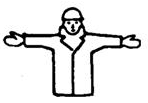
START both arms are extended
Attention horizontally with the
Start of command palms facing forward
?????????????????????????????????????????????????????????????????????????

STOP the right arm points
Interruption upwards with the palm
End of movement facing forwards
?????????????????????????????????????????????????????????????????????????

END the right arm points
of the operation upwards with the palm
facing forwards
?????????????????????????????????????????????????????????????????????????
?????????????????????????????????????????????????????????????????????????
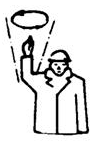
RAISE the right arm points
upwards with the palm
facing forward and
slowly makes a circle
?????????????????????????????????????????????????????????????????????????

LOWER the right arm points
downwards with the palm
facing inwards and
slowly makes a circle
?????????????????????????????????????????????????????????????????????????

VERTICAL DISTANCE the hands indicate the
relevant distance
?????????????????????????????????????????????????????????????????????????
?????????????????????????????????????????????????????????????????????????
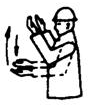
MOVE FORWARDS both arms are bent with
the palms facing
upwards, and the
forearms make slow
movements towards the body
?????????????????????????????????????????????????????????????????????????
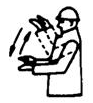
MOVE BACKWARDS both arms are bent with
the palms facing
downwards, and the
forearms make slow
movements away from the
body
?????????????????????????????????????????????????????????????????????????
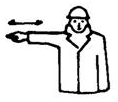
RIGHT the right arm is
to the signalman's extended more or less
horizontally with the palm
facing downwards
and slowly makes small
movements to the right
?????????????????????????????????????????????????????????????????????????
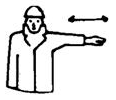
LEFT the left arm is extended
to the signalman's more or less
horizontally with the palm
facing downwards
and slowly makes small
movements to the left
?????????????????????????????????????????????????????????????????????????

HORIZONTAL DISTANCE the hands indicate the
relevant distance
?????????????????????????????????????????????????????????????????????????
?????????????????????????????????????????????????????????????????????????

DANGER both arms point upwards
Emergency with the palms facing
stop forwards
?????????????????????????????????????????????????????????????????????????
QUICK all movements faster
?????????????????????????????????????????????????????????????????????????
SLOW all movements slower
??????????????????????????????????????????????????????????????????????????
Вернуться в "Каталог нормативных документов"
Источник информации: https://internet-law.ru/documents/dop_documents/28/gost_94033/0/direk.html
На правах рекламы:
|
© Антон Серго, 1998-2026.
|
Разработка сайта |
|