

Полное меню
- Актуальное
законодательство - Интернет
и право- - Рассылка ''Закон есть закон''
- - Форум сайта (архив)
- - Законодательство
- - Судебная практика (необычная)
- - Судебная практика (авторская)
- - Процедура UDRP и и решения WIPO
- - Книги серии ''Интернет и Право''
- - Книги в открытом доступе
- - Учебный курс ''Интернет и Право''
- - Учебный курс ''Доменные споры''
- - Литература по ''Интернет и Право''
- - Литература по интел. собственности
- - Научный уголок (работы гостей)
- - Авторские публикации
- Информационные
материалы - ЮРИДИЧЕСКИЕ
УСЛУГИ- - Перечень юридических услуг
- - Карта юридических услуг
- - Юридическая консультация
- - Доменные споры (RU), авторское право
- - Международный суд по доменам (COM)
- - Защита прав на маркетплейсе (WB, Ozon)
- - Защита прав в соцсетях (Vk, Ok, FB)
- - Купля-продажа домена, сайта, ПО
- - Досудебное урегулирование конфликта
- - Защита чести и деловой репутации
- - Отмена блокировки сайта/домена РКН
- - ФАС: товарные знаки, авторское право
- - Регистрация ПО/сайта (Роспатент)
- - Юридическая проверка домена
- - Нотариальное заверение сайтов
- - Способы и формы оплаты услуг
- - Мы в СМИ
- - О компании, клиенты
- - Наши дела и победы
- - Контакты и реквизиты
- Информация
о сайте -


ОписаниеИсточник публикации Регламент на русском языке подготовлен для публикации в системах ИС NORMPROD. В данном виде Регламент на английском языке опубликован не был. Первоначальный текст Регламента на английском языке опубликован в Official Journal of the European Union N L 304. 22.11.2011. P. 18. (/template/go.php?url=https://eur-lex.europa.eu/). Примечание к документу Данная редакция документа вступила в силу 1 января 2018 года (официальный сайт законодательства Европейского Союза /template/go.php?url=https://eur-lex.europa.eu по состоянию на 03.07.2019). Россия не участвует. Первоначальная редакция данного документа вступила в силу 12 декабря 2011 года (официальный сайт законодательства Европейского Союза /template/go.php?url=https://eur-lex.europa.eu по состоянию на 02.07.2019). Россия не участвует. В информационный банк включен данный документ с изменениями и дополнениями от 22.11.2013 и в первоначальной редакции. Название документа Регламент N 1169/2011 Европейского парламента и Совета Европейского Союза "О предоставлении потребителям информации о продуктах питания, о внесении изменений в Регламенты (ЕС) 1924/2006 и (ЕС) 1925/2006 Европейского Парламента и Совета ЕС, а также об отмене Директивы 87/250/ЕЭС Европейской Комиссии, Директивы 90/496/ЕЭС Совета ЕС, Директивы 1999/10/ЕС Европейской Комиссии, Директивы 2000/13/ЕС Европейского Парламента и Совета ЕС, Директив 2002/67/ЕС и 2008/5/ЕС Европейской Комиссии и Регламента (ЕС) 608/2004 Европейской Комиссии" [рус., англ.] (Вместе со "Специальными определениями", <Веществами и продуктами, вызывающими аллергию или непереносимость, при маркировке которых указываются дополнительные сведения и отменено требование по обязательному указанию питательности>, "Определением X-высоты", <Наименованием и сопровождающими сведениями>, <Количественным указанием и обозначением ингредиентов>, "Информацией о количестве нетто", <Минимальным сроком годности, датами использования и заморозки>, "Видами мяса...", "Алкогольной крепостью", "Нормами потребления", <Коэффициентами перевода>) (Принят в г. Страсбурге 25.10.2011) (с изм. и доп. от 25.11.2015) Договаривающиеся стороны Регламент N 1169/2011 Европейского парламента и Совета Европейского Союза
|
|||||||||||||||||||||||||||||||||||||||||||||||||||||||||||||||||||||||||||||||||||||||||||||||||||||||||||||||||||||||||||||||||||||||||||||||||||||||||||||||||||||||||||||||||||||||||||||||||||||||||||||||||||||||||||||||||||||||||||||||||||||||||||||||||||||||||||||||||||||||||||||||||||||||||||||||||||||||||||||||||||||||||||||||||||||||||||||||||||||||||||||||||||||||||||||||||||||||||||||||||||||||||||||||||||||||||||||||||||||||||||||||||||||||||||||||||||||||||||||||||||||||||||||||||||||||||||||||||||||||||||||||||||||||||||||||||||||||||||||||||||||||||||||||||||||||||||||||||||||||||||||||||||||||||||||||||||||||||||||||||||||||||||||||||||||||||||||||||||||||||||||||||||||||||||||||||||||||||||||||||||||||||||||||||||||||||||||||||||||||||

2. Сведения, перечисленные в параграфе 1, указываются при помощи слов и чисел. Без ущерба действию Статьи 35 они дополнительно могут выражаться посредством пиктограмм и символов.
3. Если Европейской Комиссией принимаются нормативные акты делегированного или имплементационного законодательства, предусмотренные данной Статьей, то сведения, упомянутые, в частности, в параграфе 1, могут выражаться посредством пиктограмм и символов вместо слов и цифр.
Для того чтобы потребители получили выгоду от указания обязательных пищевых сведений альтернативными способами, а также в целях обеспечения такого же информационного уровня, что и посредством слов и цифр, Европейская Комиссия, принимая во внимание доказательства единообразного восприятия со стороны покупателей, вправе устанавливать требования к выражению одного или нескольких сведений, упомянутых в параграфе 1, пиктограммами или символами вместо слов и цифр. Подобное реализуется путем принятия делегированных актов в соответствии со Статьей 51.
4. В целях достижения единообразной имплементации параграфа 3 данной Статьи Европейской Комиссией принимаются имплементационные акты, содержащие правила применения критериев, предусмотренных параграфом 3, для выражения сведений при помощи пиктограмм и символов вместо слов и цифр. Вышеупомянутые имплементационные акты принимаются в соответствии с процедурой рассмотрения, упомянутой в Статье 48(2).
Дополнительные обязательные сведения
в отношении отдельных видов и категорий продуктов питания
1. В качестве дополнения к перечню Статьи 9(1) в Приложении III приведены дополнительные обязательные сведения, предоставление которых установлено для отдельных типов или категорий продуктов питания.
2. Чтобы при предоставлении информации потребителям учесть особенности отдельных видов и категорий продуктов, а также принять во внимание технический прогресс, научные достижения и интересы, связанные с защитой здоровья покупателей и безопасным использованием товаров, Европейская Комиссия вправе вносить изменения в Приложение III путем принятия делегированных актов в соответствии со Статьей 51.
Если того требуют обстоятельства крайней необходимости, связанные с опасностью для здоровья потребителей, процедура, предусмотренная Статьей 52, применяется к делегированным актам в соответствии с настоящей Статьей.
Меры и весы
Требования Статьи 9 реализуются без ущерба действию специальным положениям Европейского Союза в отношении мер и весов.
Доступность и размещение обязательной пищевой информации
1. Настоящим Регламентом предусматривается присутствие и доступность обязательной пищевой информации обо всех продуктах питания.
2. Обязательная пищевая информация о расфасованных товарах указывается непосредственно на упаковке либо на прилагаемой к ней этикетке.
3. Чтобы потребители получили выгоду от указания определенных обязательных пищевых сведений более эффективными альтернативными способами, а также в целях обеспечения такого же информационного уровня, что и посредством упаковки и этикетки, Европейская Комиссия, принимая во внимания доказательства единообразного восприятия со стороны покупателей и учитывая широкое использование вышеупомянутых методов, может устанавливать требования к определенным обязательным сведениям, выраженным иными способами, помимо указания их на упаковке или этикетке. Подобное реализуется путем принятия делегированных актов в соответствии со Статьей 51.
4. В целях обеспечения единообразной имплементации параграфа 3 данной Статьи, Европейской Комиссией принимаются имплементационные акты, содержащие правила применения критериев, предусмотренных параграфом 3, для выражения обязательных сведений другими способами, кроме как указание их на упаковке или этикетке. Вышеупомянутые имплементационные акты принимаются в соответствии с процедурой рассмотрения, упомянутой в Статье 48(2).
5. К нерасфасованным продуктам питания применяются положения Статьи 44.
Предоставление обязательных сведений
1. Без ущерба действию национальных мер, принятых в соответствии со Статьей 44(2), обязательная информация о продуктах питания наносится на видное место таким образом, чтобы быть хорошо заметной, разборчивой, а также при необходимости нестираемой. Сведения не должны быть спрятаны, скрыты, разделены или заслонены другим текстовым, изобразительным или иным сопутствующим материалом.
2. Без ущерба действию специальных национальных мер, применяемых к ряду продуктов питания, обязательные сведения, указанные в Статье 9(1), наносятся на упаковку либо этикетку, прилагаемую к продукту, таким образом, чтобы они были разборчивыми, с использованием шрифта, имеющего x-высоту букв, которая в соответствии с Приложением IV равна либо превышает 1,2 мм.
3. Если наибольшая поверхность упаковки либо контейнера составляет менее 80 см2, x-высота шрифта, упомянутая в параграфе 2, должна равняться либо превышать 0,9 мм.
4. В целях настоящего Регламента Европейская Комиссия посредством делегированных актов, принимаемых согласно Статье 51, устанавливает правила по читаемости и разборчивости информации.
В аналогичных целях, что указаны в первом подпараграфе, Европейская Комиссия посредством делегированных актов, принимаемых согласно Статье 51, распространяет требования, предусмотренные параграфом 5 данной Статьи, на дополнительные обязательные сведения о некоторых видах и категориях продуктов.
Дистанционная торговля
1. Без ущерба информационным требованиям, изложенным в Статье 9, для расфасованной продукции, реализуемой дистанционным способом:
(a) обязательная пищевая информация, за исключением сведений, упомянутых в пункте (f) Статьи 9(1), предоставляется до момента заключения сделки и указывается в сопроводительном материале либо предоставляется иным целесообразным способом, установленным предпринимателем пищевого сектора. При использовании альтернативных способов обязательная информация предоставляется без наложения дополнительных расходов на покупателей.
(b) все обязательные сведения должны быть доступны в момент доставки товара.
2. Для нерасфасованной продукции, реализуемой посредством дистанционной торговли, сведения, упомянутые в Статье 44, предоставляются в соответствии с параграфом 1 данной Статьи.
3. Пункт (a) параграфа 1 не применяется к продуктам, реализуемым через торговые автоматы или автоматизированные торговые помещения.
Языковые требования
1. Без ущерба действию Статьи 9(3) обязательная пищевая информация указывается на языке, легко понимаемом потребителями Государств-членов ЕС, на территории которых продукция реализовывается.
2. В рамках своей территории Государства-члены ЕС, где реализуется продукция, могут предусмотреть предоставление сведений на одном либо нескольких языках, принадлежащих к официальным в Европейском Союзе.
3. Параграфы 1 и 2 не препятствуют тому, чтобы сведения указывались на нескольких языках.
Пропуск некоторых обязательных сведений
1. Сведения, перечисленные в пунктах (a), (c), (e), (f) и (l) Статьи 9(1) подлежат обязательному указанию на стеклянных бутылках, предназначенных для повторного использования, на которые была нанесена нестираемая маркировка и которые не имеют ни этикетки, ни кольца, ни воротничка.
2. Если наибольшая поверхность упаковки либо контейнера составляет менее 10 см2, обязательному указанию подлежат сведения, перечисленные в пунктах (a), (c), (e) и (f) Статьи 9(1). Сведения, установленные пунктом (b) Статьи 9(1), предоставляются альтернативными способами либо по требованию потребителя.
3. Без ущерба действию прочих положений Европейского Союза, требующих указания питательности продукта, сведения, предусмотренные пунктом (l) Статьи 9(1), являются необязательными для товаров, перечисленных в Приложении V.
4. Без ущерба действию прочих положений Европейского Союза, требующих указания перечня ингредиентов либо питательности продукта, сведения, предусмотренные пунктами (b) и (l) Статьи 9(1), являются необязательными для напитков, обладающих крепостью более 1,2% по объему.
К 13 декабря 2014 г. Европейской Комиссии следует подготовить отчет по применению Статьи 18 и Статьи 30(1) к продуктам, упомянутым в данном параграфе. В нем также должна быть проанализирована необходимость распространения требований по указанию пищевой ценности на алкогольных напитках, и приведены основания для введения исключений с учетом потребности соответствия прочим политическим курсам Европейского Союза. В данном контексте Европейская Комиссия рассмотрит вопрос об отдельном определении "алкопопсов".
Вышеупомянутый отчет должен сопровождаться законодательными предложениями, а также, в случае необходимости, определять правила для списка ингредиентов либо по указанию пищевой ценности для рассматриваемых продуктов.
ПОДРОБНЫЕ ПОЛОЖЕНИЯ ОБ ОБЯЗАТЕЛЬНЫХ СВЕДЕНИЯХ
Название продукта питания
1. Под названием продукта питания понимается его официальное наименование. В случае отсутствия подобного названия, берется его обычное наименование. Если его нет или оно не используется, необходимо приводить описание продукции.
2. В Государстве-члене ЕС, на чьем рынке размещается продукт питания, должно быть разрешено использование того наименования продукта, под которым он легально изготавливается и реализуется в производящем Государстве-члене ЕС. Если применение прочих положений настоящего Регламента, в частности, тех, что перечислены в Статье 9, не позволяет потребителям Государства-члена ЕС, на чьем рынке размещен продукт питания, понять его подлинную сущность и отличить от продукции, с которой его можно спутать, наименование товара должна сопровождать прочая описательная информация, размещенная в его непосредственной близости.
3. В исключительных случаях название продукта питания, распространенное в Государстве-члене ЕС-производителе, не подлежит использованию в Государстве-члене ЕС, являющемся страной сбыта. Подобное возможно, когда продукт питания, носящий вышеупомянутое наименование в Государстве-члене ЕС-производителе, отличается по своему составу или производственному процессу от товара с таким же наименованием в Государстве-члене ЕС сбыта, и при этом в стране сбыта невозможно обеспечить надлежащее предоставление информации потребителям посредством соблюдения положений параграфа 2.
4. Название продукта не подлежит замене торговым или выдуманным наименованием, а также наименованием, являющимся объектом интеллектуальной собственности.
5. Специальные положения о названии продукта, а также о сведениях, которые должны его сопровождать, содержатся в Приложении VI.
Список ингредиентов
1. Список ингредиентов должен быть озаглавлен либо иметь надлежащее название, содержащее либо состоящее из слова "ингредиенты". Список включает все ингредиенты продукта питания, размещенные в порядке убывания по весу, зафиксированному в момент их использования при производстве продукта.
2. В соответствующих случаях ингредиенты обозначаются специальным наименованием согласно положениям Статьи 17 и Приложения VI.
3. Все вещества, представленные в форме сконструированных наноматериалов, должны быть четко обозначены в списке ингредиентов. Наименованию подобных веществ предшествует слово "нано" в скобках.
Пропуски в списке ингредиентов
(a) свежие фрукты и овощи, в том числе неочищенный, непорезанный и непеработанный картофель;
(b) газированная вода при условии, что в описании указано, что она была карбонизирована;
(c) натуральный уксус, полученный из одного основного продукта при условии, что никакой другой ингредиент не был добавлен;
(d) сыр, масло, сметана и кисломолочные продукты, не содержащие никаких ингредиентов, кроме молочных продуктов, пищевых ферментов и культур микроорганизмов, играющих важную роль при производстве; для сыра, кроме свежего и плавленого - никаких ингредиентов помимо соли, необходимой для производства;
(e) продукты питания, состоящие из единственного ингредиента при условии, что:
(i) наименование продукта идентично названию ингредиента;
(ii) по названию продукта легко распознать основные свойства ингредиента.
2. Учитывая важность, которую покупатели уделяют списку ингредиентов некоторых видов продуктов, в исключительных случаях Европейская Комиссия вправе посредством делегированных актов в соответствии со Статьей 51 внести дополнения к параграфу 1 данной Статьи при условии, что пропуск сведений не повлияет на надлежащую информированность конечного потребителя и организаций.
Пропуск пищевых компонентов в списке ингредиентов
Без ущерба действию Статьи 21 в список ингредиентов не требуется включать:
(a) составляющие ингредиента, которые были временно отделены в ходе производственного процесса, а затем вновь введены в количестве, не превышающем первоначальное;
(i) присутствие которых в продукте обусловлено исключительно тем, что они содержались в одном или нескольких ингредиентах с соблюдением принципа переноса, упомянутого в пунктах (a) и (b) Статьи 18(1) Регламента (ЕС) 1333/2008 при условии, что вышеупомянутые вещества не выполняют никакой технологической функции в конечном товаре;
(ii) используемые в качестве технологических добавок;
(c) носители и вещества, не являющиеся пищевыми добавками, но используемые аналогичным способом и в идентичных целях, что и носители, при условии, что они применяются в строго необходимых количествах;
(d) вещества, не являющиеся пищевыми добавками, но используемые аналогичным способом и в идентичных целях, что и технологические добавки, при условии, что они, хотя и в измененной форме, но присутствуют в конечном продукте;
(e) вода:
(i) при условии, что в ходе производственного процесса она используется исключительно для восстановления ингредиента в концентрированном либо дегидрированном виде;
(ii) при условии, что она содержится в жидкой среде, которая обычно не подлежит потреблению.
Маркировка некоторых веществ и продуктов,
вызывающих аллергию или непереносимость
1. Без ущерба действию норм, принятых в рамках Статьи 44(2), сведения, упомянутые в пункте (c) Статьи 9(1), должны соответствовать следующим требованиям:
(a) они должны указываться в списке ингредиентов в соответствии с положениями Статьи 18(1) с четким обозначением наименования вещества либо продукта согласно Приложению II;
(b) наименование вещества или продукта согласно Приложению II должно быть выделено в тексте таким образом, чтобы оно отличалось от прочих позиций перечня ингредиентов, например, посредством шрифта, стиля или цвета фона.
В случае отсутствия списка ингредиентов указание сведений, упомянутых в пункте (c) Статьи 9(1) должно содержать слово "включает", за которым следует наименование вещества или продукта согласно Приложению II.
Если несколько ингредиентов или технологических добавок продукта питания были получены из вещества, перечисленного в Приложении II, при маркировке необходимо упомянуть данный факт в отношении каждого из рассматриваемых веществ или технологических добавок.
Указание сведений, упомянутых в пункте (c) Статьи 9(1), не требуется, если наименование товара напрямую указывает на рассматриваемое вещество или продукт.
2. В целях обеспечения наилучшей информированности потребителей, а также чтобы учесть последние достижения научного и технического прогресса, Европейская Комиссия систематически пересматривает и в случае необходимости вносит изменения в Приложение II посредством делегированных актов согласно Статье 51.
В случае если подобного требуют обстоятельства крайней необходимости, связанные с опасностью для здоровья потребителей, процедура, предусмотренная Статьей 52, применяется к делегированным актам в соответствии с настоящей Статьей.
Количественное обозначение ингредиентов
1. Указание количества ингредиента либо категории ингредиентов, используемых при производстве либо приготовлении продукта питания, требуется, когда рассматриваемые ингредиенты либо категория ингредиентов:
(c) помогают охарактеризовать продукт питания и отличить его от прочих товаров, с которыми его можно спутать из-за названия или внешнего вида.
2. В Приложении VIII содержатся технические правила по применению параграфа 1, а также перечислены случаи, когда количественное обозначение не требуется в отношении ряда ингредиентов.
Количество нетто
1. Количество нетто продукта указывается в литрах, сантилитрах, миллилитрах, килограммах или граммах соответствующим образом:
(a) в единицах объема - для жидких продуктов;
(b) в единицах массы - для прочих продуктов.
2. Для лучшего понимания потребителями пищевой информации на упаковке, Европейская Комиссия путем принятия делегированных актов в соответствии со Статьей 51, устанавливает для ряда продуктов особый способ выражения количества нетто, отличающийся от указанного в параграфе 1 данной Статьи.
3. В Приложении IX содержатся технические правила по применению параграфа 1, а также перечислены случаи, когда обозначение количества нетто не требуется.
Минимальный срок годности, дата, "до которой продукт
должен быть использован", дата заморозки
1. Минимальный срок годности подлежит замене на "дату, до которой товар должен быть использован" для пищевых продуктов, которые с микробиологической точки зрения являются скоропортящимися и потому по истечении короткого периода времени могут подвергнуть непосредственной опасности здоровье человека. Подразумевается, что продукт, дата использования которого истекла, небезопасен в соответствии со Статьей 14(2) - (5) Регламента (ЕС) 178/2002.
2. Соответствующая дата указывается согласно Приложению X.
3. В целях обеспечения единообразного указания минимального срока годности, упомянутого в пункте 1(c) Приложения X Европейской Комиссией принимаются имплементационные акты, устанавливающие правила, регулирующие данный вопрос. Подобные имплементационные акты принимаются в соответствии с процедурой рассмотрения, упомянутой в Статье 48(2).
Условия хранения и использования
1. Если продукт требует особых условий хранения и/или использования, подобные условия подлежат указанию.
2. В целях обеспечения надлежащего хранения и использования продукта после вскрытия упаковки при необходимости также подлежат указанию условия хранения и/или предельный срок потребления.
Страна-производитель или место происхождения
1. Данная Статья применяется без ущерба требованиям по маркировке, установленным специальными положениями Европейского Союза, в частности, Регламентом (ЕС) 509/2006 Совета ЕС от 20 марта 2006 г. относительно сельскохозяйственных продуктов и продуктов питания с традиционными гарантированными особенностями <*>, а также Регламентом (ЕС) 510/2006 Совета ЕС от 20 марта 2006 г. о защите географических указаний и обозначений происхождения сельскохозяйственной продукции и продуктов питания <**>.
--------------------------------
<*> ОЖ N L 93, 31.3.2006, стр. 1.
<**> ОЖ N L 93, 31.3.2006, стр. 12.
2. Указание страны-производителя или места происхождения является обязательным в следующих случаях:
(a) если отсутствие подобного указания может ввести потребителя в заблуждение относительно настоящей страны-производителя или места происхождения, в частности, когда посредством информации на этикетке, сопровождающей товар, косвенно делается указание на другую страну-производителя или место происхождения;
(b) для мяса, включенного в Комбинированную Номенклатуру (CN) кодов, перечисленных в Приложении XI. При применении данного пункта необходимо прибегать к принятию имплементационных актов, упомянутых в параграфе 8.
3. Если упоминается страна-производитель или место происхождения пищевого продукта и оно не совпадает со страной-производителем или местом происхождения его основного ингредиента, то необходимо:
(a) также указать страну-производителя или место происхождения основного ингредиента; либо
(b) отметить, что страна-производитель или место происхождения основного ингредиента отличаются от тех, что указываются в отношении самого продукта.
При применении данного параграфа необходимо прибегать к принятию имплементационных актов, упомянутых в параграфе 8.
4. В течение 5 лет после применения пункта (b) параграфа 2 Европейская Комиссия должна передать Европейскому Парламенту и Совету ЕС отчет, содержащий оценку обязательного указания страны-производителя или места происхождения в отношении продуктов, упомянутых в данном пункте.
5. К 13 декабря 2014 г. Европейской Комиссии необходимо передать Европейскому Парламенту и Совету ЕС отчеты, содержащие оценку обязательного указания страны-производителя или места происхождения в отношении следующих продуктов:
(a) различных видов мяса, кроме говядины и тех, что перечислены в пункте (b) параграфа 2;
(b) молока;
(c) молока, используемого в качестве ингредиента молочных продуктов;
(d) необработанных пищевых продуктов;
(e) продуктов, состоящих из одного ингредиента;
(f) ингредиентов, составляющих более 50% продукта питания.
6. К 13 декабря 2013 г. Европейская Комиссия должна передать Европейскому Парламенту и Совету ЕС отчет, содержащий оценку обязательного указания страны-производителя или места происхождения в отношении мяса, используемого в качестве ингредиента.
7. При подготовке отчетов, упомянутых в параграфах 5 и 6, необходимо принимать во внимание потребность в информированности потребителя, осуществимость предоставления обязательных сведений о стране-производителе или месте происхождения товара, а также учитывать анализ издержек и выгоды введения подобных мер, в том числе правовые последствия на внутреннем рынке и влияние на международную торговлю.
Вышеупомянутые отчеты Европейской Комиссии могут сопровождаться предложениями по изменению соответствующих положений Европейского Союза.
8. К 13 декабря 2013 г. после проведения оценки воздействий Европейская Комиссия должна принять имплементационные акты, касающиеся применения пункта (b) параграфа 2 и параграфа 3 настоящей Статьи. Вышеупомянутые имплементационные акты принимаются в соответствии с процедурой рассмотрения, упомянутой в Статье 48(2).
9. При подготовке в рамках настоящей Статьи отчетов и оценки воздействия в отношении продуктов питания, упомянутых в пункте (b) параграфа 2, пункте (a) параграфа 5 и параграфе 6, необходимо рассмотреть, inter alia, различные способы указания страны-производителя или места происхождения, в частности, следующих определяющих мест в жизни животного:
(a) места рождения;
(b) места разведения;
(c) места убоя.
Инструкции по применению
1. Инструкции по применению продуктов питания приводятся таким образом, чтобы обеспечить надлежащее использование продукта.
2. Европейская Комиссия вправе принять имплементационные акты, устанавливающие подробные правила по имплементации параграфа 1 в отношении определенных продуктов питания. Данные акты принимаются в соответствии с процедурой рассмотрения, упомянутой в Статье 48(2).
Алкогольная крепость
1. Указание алкогольной крепости по объему для продуктов с CN кодом 2204 регулируется правилами, изложенными в специальных положениях Европейского Союза, применимых к вышеупомянутым товарам.
2. Действительная алкогольная крепость по объему напитков, содержащих более 1,2% алкоголя, за исключением тех, что упомянуты в параграфе 1, указывается в соответствии с Приложением XII.
УКАЗАНИЕ ПИТАТЕЛЬНОСТИ ПРОДУКТА
Соотношения с прочими нормативными актами
1. Данный Раздел не применяется к продуктам, подпадающим под действие следующих нормативных актов:
(a) Директива 2002/46/ЕС Европейского Парламента и Совета ЕС от 10 июня 2002 г. о сближении законодательства Государств-членов ЕС в отношении пищевых добавок <*>.
--------------------------------
<*> ОЖ N L 183, 12.7.2002, стр. 51.
(b) Директива 2009/54/ЕС Европейского Парламента и Совета ЕС от 18 июня 2009 г. относительно использования и маркетинга природных минеральных вод <*>.
--------------------------------
<*> ОЖ N L 164, 26.6.2009, стр. 45.
2. Данный Раздел применяется без ущерба действию Директивы 2009/39/ЕС Европейского Парламента и Совета ЕС от 6 мая 2009 г. о продуктах для специального питания <*>, а также Директив, упомянутых в Статье 4(1) вышеупомянутой Директивы.
--------------------------------
<*> ОЖ N L 124, 20.5.2009, стр. 21.
Содержание
(a) энергетическую ценность;
(b) количество жиров, насыщенных соединений, карбогидрата, сахаров, протеина и соли.
При необходимости в непосредственной близости от информации о питательности продукта может размещаться указание на то, что соль в содержании появляется исключительно благодаря присутствию натрия природного происхождения.
2. Сведения, включенные в обязательную информацию о питательности, упомянутую в параграфе 1, могут быть дополнены указанием количества одного или более из следующих веществ:
(a) мононенасыщенные соединения;
(b) полиненасыщенные соединения;
(c) полиолы;
(d) крахмал;
(e) волокна;
(f) любые витамины или минералы, перечисленные в пункте 1 части A Приложения XIII и присутствующие в значительных количествах в соответствии с определением пункта 2 Части A Приложения XIII.
3. Если на упаковке расфасованных продуктов указывается обязательная информация о питательности, предусмотренная параграфом 1, следующие сведения могут быть продублированы:
(a) энергетическая ценность; или
4. Путем частичного отступления от Статьи 36(1), если при маркировке продуктов, упомянутых в Статье 16(4), указывается информация о питательности, то она может ограничиваться энергетической ценностью.
5. Без ущерба действию Статьи 44 и путем частичного отступления от Статьи 36(1) в случаях, когда при маркировке продуктов, упомянутых в Статье 44(1), указывается информация о питательности, ее содержание может ограничиваться следующим:
(a) энергетической ценностью; или
(b) энергетической ценностью вместе с количеством жира, насыщенных соединений, сахара и соли.
6. Чтобы учесть значимость для потребителей сведений из параграфов 2 - 5, Европейская Комиссия вправе посредством делегированных актов в соответствии со Статьей 51 вносить изменения в перечень параграфов 2 - 5 настоящей Статьи путем включения либо исключения определенных данных.
7. К 13 декабря 2014 г. Европейская Комиссия, приняв во внимание научные данные и опыт, приобретенный Государствами-членами ЕС, представит отчет о присутствии транс-жиров в пище и рационе населения Европейского Союза. Целью отчета является оценка соответствующих способов, позволяющих потребителям осуществить выбор более здоровой пищи и рациона в целом, а также оценка мер, способствующих появлению продуктов, которые бы стали для покупателей альтернативой при выборе наиболее благоприятных для здоровья товаров, в том числе оценка предоставления информации по транс-жирам или ограничениям их использования. При необходимости Европейская Комиссия может сопроводить отчет законодательным предложением.
Расчеты
1. Энергетическая ценность рассчитывается с использованием коэффициентов конверсии, предусмотренных Приложением XIV.
2. Европейская Комиссия посредством делегированных актов в соответствии со Статьей 51 может устанавливать коэффициенты конверсии для витаминов и минералов, упомянутых в пункте 1 Части A Приложения XIII, которые позволяют более точно рассчитать содержание вышеупомянутых веществ. Данные коэффициенты подлежат включению в Приложение XIV.
3. Энергетическая ценность и количество питательных веществ, упомянутых в Статье 30(1) - (5), указывается на продукт в том виде, в котором он подлежит реализации.
В ряде случаев приводится информация о продукте после его приготовления при условии, что прилагаются достаточно подробные инструкции по применению, а вышеупомянутые сведения указываются на продукт, готовый к употреблению.
4. В каждом отдельном случае заявленные значения должны соответствовать средним показателям, основанным на:
(a) анализе продукта, осуществленном производителем;
(b) расчете исходя из известных либо действительных средних значений используемых ингредиентов; или
(c) расчете исходя из общеустановленных либо общепринятых данных.
Европейская Комиссия вправе принимать имплементационные акты, устанавливающие правила единообразной имплементации данного параграфа в том, что касается точности заявленных данных, а также разницы между вышеупомянутыми цифрами и теми, что выявлены в ходе официальных проверок. Данные имплементационные акты принимаются в соответствии с процедурой рассмотрения, упомянутой в Статье 48(2).
Указание из расчета на 100 г либо 100 мл
1. Энергетическая ценность и количество питательных веществ, упомянутых в Статье 30(1) - (5), выражаются с использованием единиц измерения, перечисленных в Приложении XV.
2. Энергетическая ценность и количество питательных веществ, упомянутых в Статье 30(1) - (5), указываются из расчета на 100 гр либо 100 мл
3. Информация о витаминах и минералах в дополнение к форме выражения, установленной параграфом 2, должна также указываться как процент от нормы потребления, определенной пунктом 1 Части A Приложения XIII на 100 г либо 100 мл.
4. В дополнение к форме выражения, установленной параграфом 2 данной Статьи, энергетическая ценность и количество питательных веществ, упомянутых в Статье 30(1), (3), (4) и (5), в случае необходимости может указываться как процент от нормы потребления, определенной Частью B Приложения XIII на 100 г либо 100 мл.
5. Если информация предоставляется в соответствии с параграфом 4, следующая надпись должна быть размещена в непосредственной ее близости: "Норма потребления для взрослого человека (8 400 кДж/2 000 ккал)".
Указание из расчета на порцию либо единицу потребления
1. В следующих случаях энергетическая ценность и количество питательных веществ, упомянутых в Статье 30(1) - (5), может рассчитываться на порцию и/или единицу потребления, легко узнаваемую покупателем, при условии, что данная порция либо единица количественно определена на этикетке, а также если указано количество порции или единиц, содержащихся в упаковке:
(a) в дополнение к форме выражения на 100 г или 100 мл, предусмотренной Статьей 32(2);
(b) в дополнение к форме выражения на 100 г или 100 мл, предусмотренной Статьей 32(3) для количества витаминов и минералов;
(c) в дополнение либо взамен формы выражения на 100 г или 100 мл, предусмотренной Статьей 32(4).
2. Путем частичного отступления от Статьи 32(2) в случаях, предусмотренных пунктом (b) Статьи 30(3), количество питательных веществ и/или процент от нормы потребления, установленной Частью B Приложения XIII, могут указываться из расчета на порцию либо единицу потребления.
Когда количество питательных веществ указывается из расчета на порцию либо единицу потребления в соответствии с первым подпараграфом, энергетическая ценность определяется из расчета на 100 г либо 100 мл порции или единицы потребления.
3. Путем частичного отступления от Статьи 32(2) в случаях, предусмотренных Статьей 30(5), энергетическая ценность и количество питательных веществ и/или процент от нормы потребления, установленной Частью B Приложения XIII, могут указываться из расчета на порцию либо единицу потребления.
4. Используемая порция либо единица подлежат указанию в непосредственной близости от информации о питательности.
5. В целях достижения единообразной имплементации норм выражения информации о питательности из расчета на порцию либо единицу потребления, а также создания общей основы сравнения для потребителей, Европейская Комиссия, учитывая потребительскую динамику и рекомендации по питанию, устанавливает посредством принятия имплементационных актов правила выражения вышеупомянутых данных на порцию или единицу потребления отдельных категорий продуктов. Данные имплементационные акты принимаются в соответствии с процедурой рассмотрения, упомянутой в Статье 48(2).
Представление
1. Сведения, упомянутые в Статье 30(1) и (2), подлежат размещению на одном поле видимости, где вместе указываются в понятном формате с соблюдением порядка, предусмотренного Приложением XV.
2. Если имеется достаточное количество пространства, то сведения, упомянутые в Статье 30(1) и (2), представляются в форме таблицы с расположенными на одной линии цифрами. Если пространства недостаточно, то указание информации осуществляется в линейном формате.
3. Сведения, предусмотренные Статьей 30(3), представляются:
(a) на основном поле видимости;
(b) с использованием размера шрифта согласно Статье 13(2).
Сведения, предусмотренные Статьей 30(3), могут представляться в формате, отличающемся от того формата, который указан в параграфе 2 настоящей Статьи.
4. Сведения, предусмотренные Статьей 30(4) и (5), могут представляться в формате, отличающемся от того формата, который указан в параграфе 2 настоящей Статьи.
5. В случаях когда энергетическая ценность или количество питательных веществ(ва) продукта незначительны, информация о таких элементах может быть заменена надписью "Содержит незначительное количество ..." и размещена в непосредственной близости от информации о питательности, если она присутствует.
В целях обеспечения единообразной имплементации данного параграфа Европейская Комиссия в соответствии с процедурой рассмотрения, упомянутой в Статье 48(2), вправе принимать имплементационные акты по энергетической ценности и количеству питательных веществ, которые согласно Статье 30(1) - (5) могут рассматриваться как несущественные. Данные имплементационные акты принимаются в соответствии с процедурой рассмотрения, упомянутой в Статье 48(2).
6. В целях достижения единообразия в представлении информации о питательности в форматах, предусмотренных параграфами 1 - 4 данной Статьи, Европейская Комиссия вправе принимать имплементационные акты по данному вопросу в соответствии с процедурой рассмотрения, упомянутой в Статье 48(2).
Дополнительные формы выражения и представления
1. Наряду с формами выражения, упомянутыми в Статье 32(2), (4), Статье 33, и формами представления сведений в соответствии со Статьей 34(2), энергетическая ценность и количество питательных веществ согласно Статье 30(1) - (5) могут также выражаться иными способами и/или представляться с использованием графических символов в добавление к словам и цифрам, при условии, что выполняются следующие требования:
(a) данные способы основаны на надежных и научно обоснованных исследованиях потребителей и не вводят их в заблуждение таким образом, как это описано в Статье 7;
(b) развитие данных способов является результатом проведения консультаций с широким кругом заинтересованных лиц;
(c) данные способы направлены на осознание потребителем той важности, которой обладает продукт питания для энергетического и питательного содержания рациона;
(d) использование данных способов обусловлено реальными научными доказательствами понимания среднестатистическим покупателем подобных форм выражения и представления;
(e) в случае с прочими формами выражения, они основаны на упорядоченных нормах потребления, предусмотренных Приложением XIII, а в их отсутствие - на общепринятых научных и технических сведениях по потреблению энергии и питательных веществ;
(f) данные способы носят объективный и недискриминационный характер;
2. Государства-члены ЕС вправе рекомендовать предпринимателям пищевого сектора использование одной или нескольких дополнительных форм выражения и представления информации о питательности, которая, по их мнению, наилучшим образом позволяет выполнить требования, изложенные в пунктах (a) - (g) параграфа 1. Государства-члены ЕС передают Европейской Комиссии подробную информацию о дополнительных формах выражения и представления.
3. Государства-члены ЕС обеспечивают надлежащий мониторинг дополнительных форм выражения и представления информации о питательности, которые используются на их рынке.
Чтобы облегчить мониторинг использования альтернативных способов, Европейская Комиссия вправе требовать от предпринимателей пищевого сектора, размещающих на рынке продукты питания, чтобы они информировали уполномоченный орган об использовании дополнительных форм выражения и представления, и, помимо этого, чтобы ими передавались подтверждения выполнения требований, изложенных в пунктах (a) - (g) параграфа 1. Кроме того, Европейской Комиссией может запрашиваться информация о прекращении использования дополнительных форм выражения и представления.
4. Европейская Комиссия способствует обмену информацией и организовывает его между Государствами-членами ЕС, а также между собой и заинтересованными лицами по вопросам, связанным с использованием дополнительных форм выражения или представления информации о питательности.
5. В свете приобретенного опыта к 13 декабря 2017 г. Европейской Комиссии необходимо отправить Европейскому Парламенту и Совету ЕС отчет по использованию дополнительных форм выражения или представления информации об их влиянии на внутренний рынок, а также о целесообразности дальнейшего упорядочивания данных форм. В рамках данной цели Государства-члены ЕС предоставляют Европейской Комиссии соответствующие данные относительно использования дополнительных форм выражения на их рынке. Европейская Комиссия вправе включить в данный отчет предложения по внесению изменений в соответствующие положения Европейского Союза.
6. В целях обеспечения единообразной имплементации данной Статьи Европейской Комиссией в соответствии с процедурой рассмотрения, упомянутой в Статье 48(2), принимаются имплементационные акты, предусматривающие подробные правила имплементации параграфов 1, 3 и 4 настоящей Статьи.
ПРЕДОСТАВЛЯЕМАЯ НА ДОБРОВОЛЬНОЙ ОСНОВЕ
Применимые требования
1. В случае если информация о продуктах питания, предусмотренная Статьями 9 и 10, предоставляется на добровольной основе, она должна соответствовать критериям, изложенным в Разделах 2 и 3 Главы IV.
2. Пищевой информации, предоставляемой на добровольной основе, необходимо отвечать следующим требованиям:
(a) не вводить в заблуждение потребителя согласно Статье 7;
(b) не быть двусмысленной либо неясной для потребителя;
(c) в уместных случаях - основываться на соответствующих научных данных.
3. Европейской Комиссией принимаются имплементационные акты по применению требований, перечисленных в параграфе 2 данной Статьи, к следующим сведениям о продуктах, предоставляемым на добровольной основе:
(a) информация о возможном и непреднамеренном присутствии в продукте веществ, вызывающих аллергию или непереносимость;
(b) информация о том, подходит ли рассматриваемый продукт питания вегетарианцам и строгим вегетарианцам;
(c) указание норм потребления для специальных групп населения в дополнение к сведениям, предусмотренным Приложением XIII.
(d) информации об отсутствии либо пониженном содержании глютена в пищевом продукте.
Имплементационные акты принимаются в соответствии с процедурой рассмотрения, упомянутой в Статье 48(2).
4. В целях обеспечения надлежащей осведомленности потребителей в случаях, когда добровольная информация о продуктах питания предоставляется предпринимателями пищевого сектора на различных началах, что может ввести в заблуждение либо запутать покупателя, Европейская Комиссия вправе посредством делегированных актов согласно Статье 51 расширить круг добровольной информации о продуктах питания, предоставляемой в дополнение к той, что предусмотрена параграфом 3 данной Статьи.
Представление сведений
Добровольная информация о продуктах питания не должна размещаться в ущерб пространству, выделенному под обязательные сведения.
Национальные меры
1. Государства-члены ЕС не вправе принимать либо придерживаться национальных мер по вопросам, специально урегулированным настоящим Регламентом, если иное не разрешено законодательством Европейского Союза. Подобные национальные меры не должны препятствовать свободному движению товаров, в том числе вызывать дискриминацию по отношению к пищевым продуктам из других Государств-членов ЕС.
2. Без ущерба действию Статьи 39 Государства-члены ЕС принимают национальные меры по вопросам, специально не урегулированным настоящим Регламентом при условии, что данные нормы не запрещают, не затрудняют и не ограничивают свободный оборот товаров в соответствии с Регламентом.
Национальные меры в отношении
дополнительных обязательных сведений
1. В дополнение к обязательным сведениям, предусмотренным Статьей 9(1) и Статьей 10, Государства-члены вправе в соответствии с процедурой, изложенной в Статье 45, принимать меры, вводящие требования по дополнительной обязательной информации для некоторых типов и категорий продуктов, при условии, что это связано, по крайней мере, с одним из следующих мотивов:
(a) защита здоровья населения;
(b) защита потребителей;
(c) предотвращение мошенничества;
(d) защита прав на производственное и коммерческое имущество, указание происхождения, наименования места производства товара и предотвращение недобросовестной конкуренции.
2. Действуя в рамках параграфа 1, Государства-члены ЕС вправе принимать меры в отношении обязательного указания страны производства и места происхождения продукта. Подобное возможно только в тех случаях, когда была выявлена и доказана связь между определенными характеристиками товара и его местом происхождения либо производства. После уведомления Европейской Комиссии о подобных мерах Государства-члены представляют доказательства того, что большинство потребителей придают большое значение доступности подобной информации.
Молоко и молочные продукты
Государства-члены ЕС принимают меры, отступающие от требований Статьи 9(1) и Статьи 10(1), в отношении молока и молочных продуктов, реализуемых в стеклянных бутылках, предназначенных для повторного использования.
Они обязаны незамедлительно передавать Европейской Комиссии текст подобных мер.
Алкогольные напитки
До тех пор пока не приняты положения Европейского Союза в рамках Статьи 16(4), Государства-члены ЕС вправе придерживаться национальных мер, предусматривающих перечень ингредиентов для напитков крепостью более 1,2% по объему.
Выражение количества нетто продукта
В отсутствие положений Европейского Союза, предусмотренных Статьей 23(2) по выражению количества нетто некоторых пищевых продуктов иным способом, отличающимся от установленного Статьей 23(1), Государства-члены ЕС вправе придерживаться национальных мер, принятых до 12 декабря 2011 г.
К 13 декабря 2014 г. Государствам-членам ЕС необходимо проинформировать Европейскую Комиссию о подобных мерах. Европейской Комиссии следует довести их до сведения других Государств-членов ЕС.
Добровольное указание норм потребления
для специальных групп населения
До момента принятия положений Европейского Союза в рамках пункта (c) Статьи 36(3) Государства-члены ЕС вводят национальные меры по добровольному указанию норм потребления для специальных групп населения.
Государства-члены обязаны незамедлительно передавать Европейской Комиссии текст подобных мер.
Национальные меры в отношении нерасфасованных продуктов
1. В случаях если продукты питания предлагаются к реализации конечному потребителю или учреждениям общественного питания без предварительной расфасовки либо если товары упаковываются на месте реализации по просьбе покупателя либо исключительно для прямых продаж:
(a) обязательным является предоставление сведений, указанных в пункте (c) Статьи 9(1);
(b) предоставление прочих сведений согласно Статьям 9 и 10 не является обязательным, если Государствами-членами ЕС не были приняты национальные меры, требующие указания всей вышеупомянутой информации либо ее части.
2. Государства-члены ЕС вправе принимать национальные меры относительно способов, посредством которых сведения либо их элементы, упомянутые в параграфе 1, становятся доступными, а также положения по формам их выражения и представления.
3. Государства-члены обязаны незамедлительно передавать Европейской Комиссии текст нормативных актов, предусмотренных пунктом (b) параграфа 1 и параграфом 2.
Процедура уведомления
1. В случае ссылки к данной Статье Государства-члены ЕС, которые сочли необходимым принять новые нормативные акты в области информации о продуктах питания, должны заранее уведомить Европейскую Комиссию и прочие Государства-члены ЕС о намеченных мерах, а также указать причины, оправдывающие их введение.
2. Европейская Комиссия проводит консультации с Постоянным комитетом по пищевой цепи и здоровью животных, учрежденным Статьей 58(1) Регламента (ЕС) 178/2002, если подобное, по ее мнению, является необходимым либо если соответствующий запрос сделают Государства-члены ЕС. В вышеупомянутых случаях Европейской Комиссией обеспечивается прозрачность процесса для всех заинтересованных сторон.
3. Государства-члены ЕС, решившие принять новые нормативные акты в области пищевой информации, могут реализовать намеченные меры только через 3 месяца после процедуры уведомления согласно параграфу 1 при условии, что негативные отзывы со стороны Европейской Комиссии отсутствуют.
4. Если Европейская Комиссия дает отрицательное заключение, то до окончания срока, указанного в параграфе 3 данной Статьи, ей инициируется процедура рассмотрения, упомянутая в Статье 48(2), для того, чтобы определить, могут ли планируемые меры быть имплементированы и при необходимости модифицированы.
5. Директива 98/34/ЕС Европейского Парламента и Совета ЕС от 22 июня 1998 г. о процедуре предоставления информации в области технических стандартов и регламентов, а также правилах оказания услуг в информационном обществе <*> не применяется к мерам, подпадающим под процедуру уведомления, предусмотренную данной Статьей.
--------------------------------
<*> ОЖ N L 204, 21.7.1998, стр. 37.
И ВНЕСЕНИЕ ИЗМЕНЕНИЙ
Изменения Приложений
Европейская Комиссия, соблюдая положения Статьи 10(2) и Статьи 21(2) в части внесения изменений в Приложения II и III, вправе посредством делегированных актов согласно Статье 51 вносить изменения в Приложения к настоящему Регламенту. Осуществляется подобное с тем, чтобы принять во внимание достижения технического и научного прогресса, состояние здоровья потребителей либо их потребность в информации.
Переходный период, дата применения имплементационных
мер или делегированных актов
1. Без ущерба действию параграфа 2 данной Статьи Европейская Комиссия, осуществляя предоставленные в рамках настоящего Регламента полномочия по принятию мер посредством имплементационных актов в соответствии с процедурой рассмотрения, упомянутой в Статье 48(2) либо посредством делегированных актов согласно Статье 51, должна:
(a) устанавливать соответствующий переходный период для применения новых мер, в течение которого продукты питания с этикетками, не отвечающими новым требованиям, могут быть размещены на рынке, а запасы подобных товаров, попавшие на рынок до окончания переходного периода, могут быть реализованы до конца;
(b) обеспечить, чтобы подобные меры применялись с 1 апреля любого календарного года.
2. Параграф 1 не применяется в неотложных ситуациях, когда целью рассматриваемых мер является защита здоровья людей.
Комитет
1. Постоянный Комитет по пищевой цепи и здоровью животных, учрежденный Статьей 58(1) Регламента (ЕС) 178/2002, оказывает содействие Европейской Комиссии. Данный Комитет является комитетом в значении Регламента (ЕС) 182/2011.
Если Комитет не дает никакого заключения, проект исполнительного акта Европейской Комиссией не принимается, и должен применяться третий подпараграф Статьи 5(4) Регламента (ЕС) 182/2011.
Внесение изменений в Регламент (ЕС) 1924/2006
Первый и второй параграфы Статьи 7 Регламента (ЕС) 1924/2006 заменяются следующим:
"Обязательной является маркировка питательности продуктов, в отношении которых было сделано замечание относительно их полезности для здоровья и/или питательности, за исключением рекламы общего характера. Информация, подлежащая указанию, включает данные, предусмотренные Статьей 30(1) Регламента (ЕС) 1169/2011 Европейского Парламента и Совета ЕС от 25 октября 2011 г. о предоставлении информации потребителям <*>. В случае если замечание о полезности для здоровья и/или питательности было внесено в отношении питательного вещества, упомянутого в Статье 30(2) Регламента (ЕС) 1169/2011, его количество заявляется согласно Статьям 31 - 34 упомянутого Регламента.
Сведения о количестве вещества (веществ), в отношении которых было сделано замечание о полезности для здоровья и/или питательности и которые не были упомянуты при указании питательности, должны размещаться на одном поле видимости с информацией о питательности с соблюдением требований Статей 31, 32 и 33 Регламента (ЕС) 1169/2011. Единицы измерения, используемые для выражения количества, отдельно подбираются для каждого рассматриваемого вещества.
--------------------------------
<*> ОЖ N L 304, 22.11.2011, стр. 18".
Внесение изменений в Регламент (ЕС) 1925/2006
Параграф 3 Статьи 7 Регламента (ЕС) 1925/2006 заменяется следующим:
"3. Обязательной является маркировка питательности продуктов, к которым были добавлены витамины и минералы и которые подпадают под действие настоящего Регламента. Информация, подлежащая указанию, включает данные, предусмотренные Статьей 30(1) Регламента (ЕС) 1169/2011 Европейского Парламента и Совета ЕС от 25 октября 2011 г. о предоставлении информации потребителям <*>, а также общее количество присутствующих витаминов и минералов, добавленных в продукт.
--------------------------------
<*> ОЖ N L 304, 22.11.2011, стр. 18".
Осуществление делегирования
1. Европейской Комиссии предоставляется право принимать делегированные акты с соблюдением требований, изложенных в данной Статье.
2. Право принимать делегированные акты, предусмотренное Статьей 9(3), Статьей 10(2), Статьей 12(3), Статьей 13(4), Статьей 18(5), Статьей 19(2), Статьей 21(2), Статьей 23(2), Статьей 30(6), Статьей 31(2), Статьей 36(4) и Статьей 46, предоставляется Европейской Комиссии на 5 лет с 12 декабря 2011 г. Европейской Комиссии надлежит составить отчет по делегированию полномочий не позднее 9 месяцев до момента окончания 5-летнего периода. Предоставление полномочий автоматически продлевается на аналогичный срок, если Европейский Парламент и Совет ЕС не выскажутся против подобной пролонгации не позднее 3-х месяцев до окончания каждого периода.
3. Передача полномочий, предусмотренных Статьей 9(3), Статьей 10(2), Статьей 12(3), Статьей 13(4), Статьей 18(5), Статьей 19(2), Статьей 21(2), Статьей 23(2), Статьей 30(6), Статьей 31(2), Статьей 36(4) и Статьей 46, в любой момент может быть прекращена Европейским Парламентом или Советом ЕС. Решением отменяется предоставление прав, упомянутых в нем. Подобный документ вступает в силу на следующий день после его опубликования в Официальном Журнале Европейского Союза либо на любую более позднюю указанную дату. Прекращение не влияет на действие вступивших в силу делегированных актов.
4. Как только Европейской Комиссией принимается делегированный акт, она одновременно оповещает об этом Европейский Парламент и Совет ЕС.
5. Делегированный акт, принятый в рамках Статьи 9(3), Статьи 10(2), Статьи 12(3), Статьи 13(4), Статьи 18(5), Статьи 19(2), Статьи 21(2), Статьи 23(2), Статьи 30(6), Статьи 31(2), Статьи 36(4) и Статьи 46, вступает в силу при условии, что со стороны Европейского Парламента и Совета ЕС не поступало никаких возражений в течение 2-х месяцев после их уведомления о подобном акте либо если до истечения данного срока Европейский Парламент и Совет ЕС проинформировали Европейскую Комиссию о том, что возражений у них не имеется. По инициативе Европейского Парламента и Совета ЕС вышеупомянутый период может быть продлен на 2 месяца.
Неотложная процедура принятия
1. Делегированные акты, принятые в рамках данной Статьи, вступают в силу незамедлительно и применяются до тех пор, пока не заявлено возражение в соответствии с параграфом 2. В уведомлении о делегированном акте, которое передается Европейскому Парламенту и Совету ЕС, должны быть изложены причины, по которым была применена неотложная процедура.
2. Европейский Парламент и Совет ЕС могут выразить возражение против делегированного акта в порядке, установленном Статьей 51(5). В подобных случаях акт отменяется Европейской Комиссией незамедлительно после получения соответствующего решения от Европейского Парламента и Совета ЕС.
Прекращение действия
1. Директивы 87/250/ЕЭС, 90/496/ЕЭС, 1999/10/ЕС, 2000/13/ЕС, 2002/67/ЕС и 2008/5/ЕС и Регламент (ЕС) 608/2004 утрачивают силу с 13 декабря 2014 г.
2. Ссылки на отмененные акты необходимо рассматривать как ссылки на настоящий Регламент.
Меры переходного характера
1. До конца могут быть реализованы запасы продуктов, размещенных на рынке либо промаркированных до 13 декабря 2014 г. и не соответствующих требованиям настоящего Регламента.
До конца могут быть реализованы запасы продуктов, размещенных на рынке либо промаркированных до 13 декабря 2016 г. и не соответствующих требованиям пункта (l) Статьи 9(1).
До конца могут быть реализованы запасы продуктов, размещенных на рынке либо промаркированных до 1 января 2014 г. и не соответствующих требованиям, изложенным в Части B Приложения VI.
2. В течение периода между 13 декабря 2014 г. и 13 декабря 2016 г. указание питательности, осуществляемое на добровольной основе, должно соответствовать требованиям Статей 30 - 35.
3. Несмотря на положения Директивы 90/496/ЕЭС, Статьи 7 Регламента (ЕС) 1924/2006 и Статьи 7(3) Регламента (ЕС) 1925/2006, пищевые продукты, промаркированные согласно Статьям 30 - 35 данного Регламента, могут размещаться на рынке до 13 декабря 2014 г.
Несмотря на положения Регламента (ЕС) 1162/2009 Европейской Комиссии от 30 ноября 2009 г., устанавливающего переходные меры по имплементации Регламентов (ЕС) 853/2004, (ЕС) 854/2004 и (ЕС) 882/2004 Европейского Парламента и Совета ЕС <*>, продукты питания, промаркированные согласно Части B Приложения VI к настоящему Регламенту, могут размещаться на рынке до 1 января 2014 г.
--------------------------------
<*> ОЖ N L 314, 1.12.2009, стр. 10.
Вступление в силу и дата применения
Настоящий Регламент вступает в силу через 20 дней после его опубликования в Официальном Журнале Европейского Союза. Он подлежит применению с 13 декабря 2014 г., за исключением пункта (l) Статьи 9(1), применяемого с 13 декабря 2016 г., а также Части B Приложения VI, применяемой с 1 января 2014 г.
Настоящий Регламент является обязательным в полном объеме и подлежит прямому применению во всех Государствах-членах ЕС.
Совершено в Страсбурге, 25 октября 2011 г.
(Подписи)
СОГЛАСНО СТАТЬЕ 2(4)
1. Под "информацией о питательности" либо "маркировкой питательности" подразумеваются сведения, включающие:
(a) энергетическую ценность; или
(b) энергетическую ценность и указание одного либо нескольких из следующих питательных веществ:
- жиры (насыщенные, мононенасыщенные, полиненасыщенные),
- углеводы (сахар, полиолы, крахмал),
- соль,
- волокна,
- протеин,
- любые витамины или минералы, перечисленные в пункте 1 Части A Приложения XIII и присутствующие в значительных количествах согласно пункту 2 Части A Приложения XIII.
2. Под "жирами" подразумеваются все липиды, в том числе фосфолипиды.
3. Под "насыщенными" подразумеваются жирные кислоты без двойной связи.
4. Под "транс-жирами" подразумеваются жирные кислоты, имеющие как минимум одну несопряженную (прерванную по крайней мере одной группой метилена) двойную связь "углерод-углерод" в транс-конфигурации.
5. Под "мононенасыщенными" подразумеваются жирные кислоты с одной цис- двойной связью.
6. Под "полиненасыщенными" подразумеваются жирные кислоты с двумя либо более цис-, цис-метилен прерванными двойными связями.
7. Под "углеводом" понимаются любые углеводы, метаболизированные человеком и включающие полиолы.
8. Под "сахаром" подразумеваются все моносахариды и дисахариды, представленные в продукте питания за исключением полиолов.
9. Под "полиолами" понимаются спирты, содержащие более двух гидроксильных групп.
10. Под "протеином" понимается содержание белка, рассчитанное с использованием формулы: протеин = общий азот по Кьельдалю x 6,25.
11. Под "солью" понимается эквивалентное содержание соли, рассчитанное с использованием формулы: соль = натрий x 2,5.
12. Под "волокнами" понимаются полимеры углевода с тремя либо более мономерными звеньями, которые не усваиваются и не абсорбируются в тонкой кишке человека и принадлежат к одной из следующих категорий:
- съедобные полимеры углевода, появляющиеся в продукте естественным образом при его употреблении;
- съедобные полимеры углевода, которые были получены из пищевого сырья физическими, химическими или энзимными мерами воздействия и оказывающие положительный физиологический эффект, имеющий общепринятое научное подтверждение;
- съедобные синтетические полимеры углевода, оказывающие положительный физиологический эффект, имеющий общепринятое научное подтверждение.
13. Под "средним значением" понимается величина, которая наилучшим образом отображает количество питательного вещества, содержащегося в рассматриваемом продукте, и учитывает поправки на сезонные изменения, структуру потребления и прочие факторы, вызывающие колебания действительного значения.
ВЫЗЫВАЮЩИЕ АЛЛЕРГИЮ ИЛИ НЕПЕРЕНОСИМОСТЬ
1. Злаковые, содержащие глютен, а именно: пшеница (в том числе спельта, пшеница Хорасан), рожь, ячмень, овес либо их гибридные штаммы и продукты из них, за исключением:
(a) пшеничного глюкозного сиропа, в том числе декстрозы <*>;
--------------------------------
<*> И продукты из него при условии, что процесс, которому они были подвергнуты, не повысил уровень аллергенности, установленный Уполномоченным органом для исходного вещества.
(b) пшеничного мальтодекстрина <*>;
--------------------------------
<*> И продукты из него при условии, что процесс, которому они были подвергнуты, не повысил уровень аллергенности, установленный Уполномоченным органом для исходного вещества.
(c) ячменного глюкозного сиропа;
(d) злаковых, используемых для приготовления спиртовых погонов, в том числе этиловый спирт сельскохозяйственного происхождения;
2. ракообразные и продукты из них;
3. яйца и продукты из них;
4. рыба и продукты из нее, за исключением:
(a) рыбного желатина, используемого как носитель витамина или каротиноидных препаратов;
(b) рыбного желатина или рыбьего клея, используемого в качестве осветлителя для пива и вина;
5. арахис и продукты из него;
6. соя и продукты из нее, за исключением:
(a) полностью рафинированного соевого масла и жира <*>;
--------------------------------
<*> И продукты из него при условии, что процесс, которому они были подвергнуты, не повысил уровень аллергенности, установленный Уполномоченным органом для исходного вещества.
(b) натурального смешанного токоферола (E306), натурального D-альфа токоферола, натурального D-альфа токоферола ацетата и натурального D-альфа токоферола сукцината из сои;
(c) фитостерина и эфиров фитостерина из растительных масел сои;
(d) эфира растительного станола, полученного из стеролов из растительного масла сои;
7. молоко и продукты из него (в том числе лактоза) за исключением:
(a) продуктов, используемых для приготовления спиртовых погонов, в том числе этилового спирта сельскохозяйственного происхождения;
(b) лактитола;
8. орехи, а именно: миндаль (Amygdalus communis L.), фундук (Corylus avellana), грецкий орех (Juglans regia), кешью (Anacardium occidentale), орех пекан (Carya illinoinensis (Wangenh.) K. Koch), бразильский орех (Bertholletia excelsa), фисташки (Pistacia vera), макадамия или квинслендский орех (Macadamia ternifolia) и продукты из них, за исключением орехов, используемых для приготовления спиртовых погонов, в том числе этилового спирта сельскохозяйственного происхождения;
9. сельдерей и продукты из него;
10. горчица и продукты из нее;
11. семена кунжута и продукты из них;
12. диоксид и сульфит серы в концентрации более 10 мг/кг или 10 мг/литр при условии, что общее количество SO2 рассчитывается для продукта, готового к употреблению либо восстановленного в соответствии с инструкциями производителя;
13. люпин и продукты из него;
14. моллюски и продукты из них.
ПРИ МАРКИРОВКЕ КОТОРЫХ УКАЗЫВАЮТСЯ ДОПОЛНИТЕЛЬНЫЕ СВЕДЕНИЯ
ТИП ИЛИ КАТЕГОРИЯ ПРОДУКТА ПИТАНИЯ | СВЕДЕНИЯ |
1. Продукты, упакованные в определенной газовой среде | |
1.1. Продукты, чей срок годности был продлен за счет упаковки в газовой среде согласно Регламенту (ЕС) 1333/2008. | "упаковано в защитной среде" |
2. Продукты, содержащие подсластители | |
2.1. Продукты, содержащие подсластитель или подсластители, разрешенные Регламентом (ЕС) 1333/2008. | "с подсластителем (подсластителями)" - данное упоминание должно сопровождать название продукта питания. |
2.2. Продукты, содержащие как добавленный сахар или сахара, так и подсластитель или подсластители, разрешенные Регламентом 1333/2008. | "с сахаром (сахарами) и подсластителем (подсластителями)" - данное упоминание должно сопровождать название продукта питания. |
2.3. Продукты, содержащие аспартам/аспартам-ацесульфама соль, разрешенные Регламентом (ЕС) 1333/2008. | "содержит аспартам (источник фенилаланина)" - данное упоминание размещается на этикетке в случаях, если аспартам/аспартам-ацесульфама соль обозначены в списке ингредиентов только указанием номера E. "содержит источник фенилаланина" - размещается на этикетке в случаях, если аспартам/аспартам-ацесульфама соль обозначены в списке ингредиентов под своим специальным названием. |
2.4. Продукты, содержащие более 10% добавленных полиолов, разрешенных Регламентом (ЕС) 1333/2008. | "чрезмерное употребление может оказать слабительное действие" |
3. Продукты, содержащие глицирризиновую кислоту или ее аммониевую соль | |
3.1. Кондитерские изделия и напитки, содержащие глицирризиновую кислоту или ее аммониевую соль в связи с добавлением соответствующего вещества (веществ) или лакричника (Glycyrrhiza glabra) в концентрации 100 мг/кг или 10 мг/л либо более. | "содержит лакрицу" - необходимо указать сразу после списка ингредиентов, за исключением случаев, когда термин "лакрица" уже включен в перечень ингредиентов или в название продукта питания. При отсутствии списка ингредиентов данное упоминание должно сопровождать название продукта питания. |
3.2. Кондитерские изделия, содержащие глицирризиновую кислоту или ее аммониевую соль в связи с добавлением соответствующего вещества (веществ) или лакричника (Glycyrrhiza glabra) в концентрации 4 г/кг либо более. | "содержит лакрицу - людям, страдающим гипертонией, следует избегать избыточного потребления" - указывается сразу после списка ингредиентов. При отсутствии списка ингредиентов данное упоминание должно сопровождать название продукта питания. |
3.3. Напитки, содержащие глицирризиновую кислоту или ее аммониевую соль в связи с добавлением соответствующего вещества (веществ) или лакричника (Glycyrrhiza glabra) в концентрации 50 мг/и либо более или 300 мг/л либо более в случае напитков крепостью более 1,2% по объему <*>. | "содержит лакрицу - людям, страдающим гипертонией, следует избегать избыточного потребления" - необходимо указать сразу после списка ингредиентов. При отсутствии списка ингредиентов данное упоминание должно сопровождать наименование продукта питания. |
4. Напитки с высоким содержанием кофеина либо продукты с добавлением кофеина | |
4.1. Напитки, за исключением тех, которые приготовлены на основе кофе, чая, кофейных или чайных экстрактов при условии, что в название продукта включено слово "кофе" или "чай", которые: - предназначены для потребления в неизмененном виде и содержат кофеин (вне зависимости от его источника) в количестве более 150 мг/л; или - находятся в концентрированном или высушенном виде и после восстановления содержат кофеин (вне зависимости от его источника) в количестве более 150 мг/л | "высокое содержание кофеина. Не рекомендовано для детей, а также для беременных и кормящих женщин" - данные сведения размещаются на том же поле видимости, что и название напитка, а за ними в скобках в соответствии со Статьей 13(1) данного Регламента следует указание содержания кофеина, выраженное в мг на 100 мл. |
4.2. Продукты кроме напитков, в которые кофеин добавляется с целью достижения физиологического эффекта. | "содержит кофеин. Не рекомендовано для детей и беременных женщин" - данные сведения размещаются на том же поле видимости, что и название продукта, а за ними в скобках в соответствии со Статьей 13(1) данного Регламента следует указание содержания кофеина, выраженное в мг на 100 мл. В случае с пищевыми добавками содержание кофеина должно выражаться на порцию в соответствии с рекомендованным ежедневным потреблением, указанным на этикетке. |
5. Продукты с фитостеролами, эфирами фитостерола, фитостанолами, эфирами фитостанола | |
5.1. Продукты или пищевые ингредиенты с добавлением фитостеролов, эфиров фитостерола, фитостанолов, эфиров фитостанола. | (1) "с добавлением растительных стеролов" либо "с добавлением растительных станолов" - на том же поле видимости, где размещено название продукта; (2) количество добавленных фитостеролов, эфиров фитостерола, фитостанолов, эфиров фитостанола (выраженное в % либо в г свободных растительных стеролов/растительных станолов на 100 г или 100 мл продукта) необходимо указывать в списке ингредиентов; (3) указание на то, что продукт питания не предназначен для людей, которым не нужно контролировать уровень холестерина в крови; (4) указание на то, что пациенты, принимающие препараты, понижающие холестерин, могут употреблять продукт только под медицинским наблюдением; (5) легко различимое указание на то, что продукт может не подойти для питания беременных или кормящих грудью женщин, а также детей младше 5 лет; (6) рекомендации по поводу того, что продукт питания должен являться частью сбалансированного и разнообразного рациона, включающего, в том числе, регулярное потребление фруктов и овощей, способствующих поддержанию уровня каротиноида; (7) указание на то, что необходимо избегать потребления более 3 г добавленных растительных стеролов/растительных станолов в день, размещается на том же поле видимости, что и сведения, требуемые в соответствии с вышеупомянутым пунктом (3); (8) определение порции рассматриваемого продукта или пищевого ингредиента (предпочтительно в г либо мл) с указанием количества растительного стерола/растительного станола на каждую порцию. |
6.1. Замороженное мясо, замороженные мясные заготовки, а также замороженные непереработанные рыбные продукты. | Дата заморозки либо первой заморозки в случаях, когда продукты подвергались данному процессу несколько раз, указанная в соответствии с пунктом (3) Приложения X. |
--------------------------------
<*> Уровень определяется по продуктам, готовым к потреблению либо восстановленным в соответствии с указаниями производителя.
X-ВЫСОТА
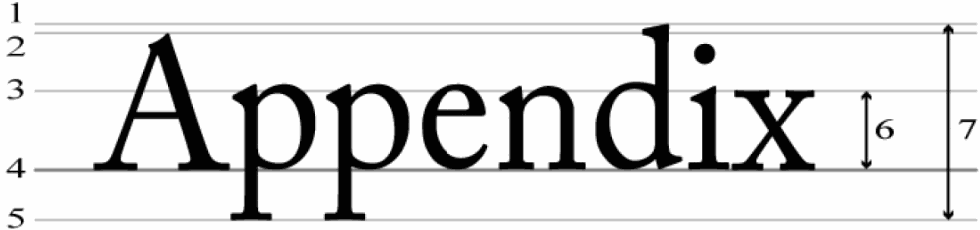
Обозначения
1 | верхняя линия строчных букв с верхним выносным элементом |
2 | верхняя линия букв |
3 | средняя линия |
4 | опорная линия |
5 | линия нижних выносных элементов |
6 | x-высота |
7 | размер шрифта |
ДЛЯ КОТОРЫХ ОТМЕНЕНО ТРЕБОВАНИЕ
ПО ОБЯЗАТЕЛЬНОМУ УКАЗАНИЮ ПИТАТЕЛЬНОСТИ
1. Непереработанные продукты питания, включающие один единственный ингредиент либо категорию ингредиентов;
2. обработанные продукты, подвергавшиеся исключительно процессу дозревания и включающие один единственный ингредиент либо категорию ингредиентов;
3. вода, предназначенная для потребления людьми, в том числе та, в которую в качестве ингредиента были добавлены только углекислый газ и/или ароматизаторы;
4. травы, приправы и их смеси;
5. соль и заменители соли;
6. столовые подсластители;
7. продукты, подпадающие под действие Директивы 1999/4/ЕС Европейского Парламента и Совета ЕС от 22 февраля 1999 г. относительно экстрактов кофе и цикория <*>, цельные и молотые кофейные зерна, цельные и молотые декофеинизированные кофейные зерна;
--------------------------------
<*> ОЖ N L 66, 13.3.1999, стр. 26.
8. травяные настои, настои на фруктах, чай, декофеинизированный, чай, растворимый или быстрорастворимый чай либо экстракт чая, декофеинизированный растворимый или быстрорастворимый чай либо экстракт чая, не содержащий никаких ингредиентов кроме ароматизаторов, не влияющих на пищевую ценность чая;
9. ферментированный уксус и заменители уксуса, в том числе те, в которых единственным ингредиентом являются ароматизаторы;
10. ароматизаторы;
11. пищевые добавки;
12. технологические добавки;
13. пищевые ферменты;
14. желатин;
15. сгущающий компонент для джема;
16. дрожжи;
17. жевательная резинка;
18. пищевые продукты в упаковке или контейнерах, наибольшая поверхность которых составляет менее 25 см2;
19. пищевые продукты, в том числе изготовленные вручную, которые производитель в маленьких количествах напрямую поставляет потребителю либо в местные предприятия розничной торговли, реализующие товар конечному покупателю.
И СОПРОВОЖДАЮЩИЕ ЕГО СПЕЦИАЛЬНЫЕ СВЕДЕНИЯ
Обязательные сведения,
сопровождающие название продукта питания
1. Название продукта должно включать сведения либо сопровождаться сведениями о физической кондиции товара либо о специальной обработке, которой он был подвергнут (например, превращению в порошок, повторной заморозке, сублимационной сушке, быстрой заморозке, концентрации, копчению), при условии, что отсутствие подобной информации введет покупателя в заблуждение.
2. Если продукты, замороженные до продажи, реализуются в размороженном виде, название товара должно сопровождаться указанием "размороженный".
Данное требование не применяется к:
(a) ингредиентам, присутствующим в конечном продукте;
(b) продуктам, для которых заморозка является технологически необходимым этапом производственного процесса;
(c) продуктам, на безопасность и качество которых размораживание не оказывает никакого негативного воздействия;
Данный пункт применяется без ущерба действию пункта 1.
3. Продукты, обработанные ионизирующим излучением, должны содержать одно из следующих указаний:
"облученный" или "обработанный ионизирующим излучением", а также прочие указания, предусмотренные в Директиве 1999/2/ЕС Европейского Парламента и Совета ЕС от 22 февраля 1999 г. о сближении законодательств Государств-членов ЕС относительно пищевых продуктов и их компонентов, обработанных ионизирующим излучением <*>.
--------------------------------
<*> ОЖ N L 66, 13.03.1999 г., стр. 16
4. Если компонент или ингредиент, который, по мнению потребителя, естественным образом используется или присутствует в продукте питания, был заменен другим компонентом или ингредиентом, на этикетке, в дополнение к списку ингредиентов, должно указываться, что компонент или ингредиент был частично или полностью заменен:
(a) в непосредственной близости от названия продукта;
(b) с использованием шрифта, имеющего x-высоту, составляющую по крайней мере 75% от x-высоты наименования продукта, которая не меньше минимального размера в соответствии с требованиями Статьи 13(2) настоящего Регламента.
5. Если мясные продукты, мясные заготовки и рыбные продукты содержат добавки протеинов, в том числе гидролизованных, различного животного происхождения, то в названии продукта должно содержаться указание на присутствие вышеупомянутых веществ и их происхождение.
6. Если мясные продукты и заготовки представляют собой вырезку, часть, кусок, порцию или мясную тушу, то в названии товара должно иметься указание на присутствие добавленной воды при условии, что она составляет более 5% веса конечного продукта. Аналогичные правила применяются к рыбным продуктам и готовым рыбным продуктам, представляющим собой вырезку, часть, кусок, порцию, филе либо рыбный продукт целиком.
7. Следующие указания должны содержаться на мясных продуктах и заготовках, рыбных продуктах, по внешнему виду которых кажется, что они состоят из цельного куска мяса либо рыбы, а на самом деле - из различных кусков, собранных вместе посредством прочих ингредиентов, в том числе пищевых добавок, ферментов либо иными способами:
на болгарском: "формовано месо" и "формована риба";
на испанском: "elaborado a partir de piezas de carne" и "elaborado a partir de piezas de pescado";
на чешском: "ze 
 masa" и "ze

 masa";
masa" и "ze masa";на датском: "Sammensat af stykker af  " и "Sammensat af stykker af fisk";
" и "Sammensat af stykker af fisk";на немецком: "aus 
 " и "aus
 ";
";
" и "aus ";на эстонском: "liidetud liha" и "liidetud kala";
на греческом: "
 " и "
" и "
 ";
";
" и " ";на английском: "formed meat" и "formed fish";
на французском: "viande  " и "poisson
  ";
";
" и "poisson ";на ирландском: " feola ceangailte" и "
 ceangailte";
feola ceangailte" и " ceangailte";на итальянском: "carne ricomposta" и "pesce ricomposto";
на латвийском: "
 " и "
" и " zivs";
" и " zivs";на литовском: "sudarytas (-a) 

 " и "sudarytas (-a)

 ";
";
" и "sudarytas (-a) ";на венгерском: "

 " и "
" и "
 hal";
hal";
" и " hal";на мальтийском: " rikostitwit" и "
 rikostitwit";
rikostitwit" и " rikostitwit";на голландском: "samengesteld uit stukjes vlees" и "samengesteld uit stukjes vis";
на польском: "z 

 " и "z
 ryby";
" и "z ryby";на португальском: "carne  " и "peixe
  ";
";
" и "peixe ";на румынском: "carne  " и "carne de
 ";
";
" и "carne de ";на словацком: "zo 

 " и "zo
 ryby";
" и "zo ryby";на словенском: "sestavljeno, iz  oblikovano meso" и "sestavljene, iz
  oblikovane ribe";
oblikovano meso" и "sestavljene, iz oblikovane ribe";на финском: "paloista yhdistetty liha" и "paloista yhdistetty kala";
на шведском: "sammanfogade bitar av  " и "sammanfogade bitar av fisk".
" и "sammanfogade bitar av fisk".Специальные требования в отношении "мясного фарша"
Содержание жира | соотношение коллаген/мясной протеин <*> | |
- постный мясной фарш | <= 7% | <= 12% |
- фарш из чистого мяса | <= 20% | <= 15% |
- мясной фарш, содержащий свинину | <= 30% | <= 18% |
- мясной фарш из других животных | <= 25% | <= 15% |
2. В дополнение к требованиям, изложенным в Главе IV Раздела V Приложения III Регламента (ЕС) 853/2004, следующие указания должны размещаться на этикетке:
- "процентное содержание жира согласно...";
- "соотношение коллаген/мясной протеин согласно...".
3. Государства-члены ЕС могут позволить размещение на их национальном рынке мясного фарша, не отвечающего критериям, изложенным в пункте 1 данной Части, при условии, что он выпускается под национальным знаком, который не может быть спутан с обозначениями, установленными Статьей 5(1) Регламента (ЕС) 853/2004.
Специальные требования
по обозначению оболочки для колбасных изделий
Если оболочка изделия не является съедобной, это должно быть указано.
Специальные положения относительно указания
ингредиентов в порядке убывания по весу
Категория ингредиента | Положения относительно указаний по весу |
1. Добавленная вода и летучие вещества. | Перечисляются в порядке, соответствующем весу в конечном продукте. Количество воды, добавленной в качестве ингредиента, рассчитывается путем вычитания из общей массы конечного продукта количества прочих использованных ингредиентов. Данную величину можно не принимать во внимание, если она не превышает 5% от веса конечного продукта. Подобное отклонение от правил не действует для мяса, мясных заготовок, непереработанных рыбных продуктов и двухстворчатых моллюсков. |
2. Ингредиенты, использованные в концентрированной или дегидрированной форме и восстановленные при производстве. | Перечисляются в порядке, соответствующем весу до концентрации и дегидратации. |
3. Ингредиенты, использованные в концентрированной или дегидрированной форме и предназначенные для восстановления путем добавления воды. | Перечисляются в порядке, соответствующем доле в восстановленном продукте при условии, что в списке ингредиентов содержится фраза "ингредиенты восстановленного продукта" или "ингредиенты продукта, готового к использованию". |
Группируются вместе в списке ингредиентов под названием "фрукты", "овощи" или "грибы", за которым следует фраза "в различных пропорциях" и перечень присутствующих фруктов, овощей или грибов. Подобные смеси подлежат включению в список ингредиентов в соответствии со Статьей 18(1) на основе общего веса присутствующих фруктов, овощей или грибов. | |
Перечисляются в разном порядке при условии, что в списке ингредиентов их сопровождает фраза "в различных пропорциях". | |
6. Ингредиенты, составляющие менее 2% от конечного продукта. | Перечисляются в разном порядке после прочих ингредиентов. |
7. Схожие либо взаимно заменимые ингредиенты, которые при использовании в производстве или приготовлении продукта питания не меняют его состава, свойств и ощущаемой ценности, поскольку составляют менее 2% конечного продукта. | Могут указываться в списке ингредиентов следующим способом: "содержит... и/или..." при условии, что как минимум один из как максимум двух ингредиентов присутствует в конечном продукте. Данное положение не применяется к пищевым добавкам или ингредиентам, перечисленным в Части C настоящего Приложения, а также к веществам и продуктам, упомянутым в Приложении II и вызывающим аллергию или непереносимость. |
8. Рафинированные масла растительного происхождения. | Группируются вместе в списке ингредиентов под названием "растительные масла", за которым сразу следует указание на особое растительное происхождение, а также, возможно, фраза "в различных пропорциях". При группировании растительные масла включаются в список ингредиентов в соответствии со Статьей 18(1) исходя из общего веса присутствующих растительных масел. Выражения "полностью гидрогенизированное" или "частично гидрогенизированное", где уместно, сопровождают указания на гидрогенизированное масло. |
9. Рафинированные жиры растительного происхождения. | Группируются вместе в списке ингредиентов под названием "растительные жиры", за которым сразу следует указание на особое растительное происхождение, а также, возможно, фраза "в различных пропорциях". При группировании растительные жиры включаются в список ингредиентов в соответствии со Статьей 18(1) исходя из общего веса присутствующих растительных жиров. Выражения "полностью гидрогенизированное" или "частично гидрогенизированное", где уместно, сопровождают обозначение гидрогенизированного жира. |
Обозначение определенных ингредиентов
при помощи категории, а не через специальное наименование
Без ущерба действию Статьи 21 ингредиенты, принадлежащие к одной из нижеперечисленных категорий товаров и служащие компонентом другого продукта, могут обозначаться названием категории, а не специальным именем.
Определение категории продукта | Обозначение | ||
1. Рафинированные масла животного происхождения. | "Масло" вместе с прилагательным "животное" либо указанием на специфическое животное происхождение. Выражения "полностью гидрогенизированное" или "частично гидрогенизированное", где уместно, сопровождают обозначение гидрогенизированного масла. | ||
2. Рафинированные жиры животного происхождения. | "Жир" вместе с прилагательным "животный" либо указанием на специфическое животное происхождение. Выражения "полностью гидрогенизированный" или "частично гидрогенизированный", где уместно, сопровождают обозначение гидрогенизированного жира. | ||
3. Мучная смесь, полученная из двух либо нескольких злаковых культур. | "Мука", затем указывается список злаковых, из которых она была получена в порядке убывания по весу. | ||
4. Крахмалы, в том числе те, что модифицированы физическим воздействием либо при помощи ферментов. | "Крахмал". | ||
5. Все виды рыбы, являющиеся ингредиентом другого продукта питания, при условии, что название и способ представления подобного товара никак не указывает на конкретный вид рыбы. | "Рыба". | ||
6. Все виды сыра и сырные смеси, являющиеся ингредиентом другого продукта питания, при условии, что название и способ представления товара не указывает на конкретный вид сыра. | "Сыр". | ||
7. Все специи, не превышающие 2% от веса продукта питания. | "Специя(ии)" или "смесь из специй". | ||
8. Все травы либо их часть, не превышающая 2% от веса продукта питания. | "Трава(вы)" либо "смесь из трав". | ||
9. Все виды заготовок, используемых при производстве гуммиосновы для жевательной резинки. | "Гуммиоснова". | ||
10. Все виды измельченных печеных зерновых продуктов. | "Крошки" или, где уместно, "сухари". | ||
11. Все виды сахарозы. | "Сахар". | ||
12. Ангидридная декстроза или глюкоза моногидрат. | "Декстроза". | ||
13. Глюкозный сироп и безводный глюкозный сироп. | "Глюкозный сироп". | ||
14. Все виды молочных протеинов (казеины, казеинаты и сывороточные белки), а также их смеси. | "Молочные протеины". | ||
15. Прессованное, экспеллерное, рафинированное какао-масло. | "Какао-масло". | ||
16. Все виды вина, упомянутые в Приложении XIb к Регламенту (ЕС) 1234/2007 <*>. | "Вино". | ||
17. Скелетная мускулатура <**> млекопитающих и птиц, признанная пригодной для употребления в пищу человеком вместе с натуральными либо прилегающими покровными тканями при условии, что общее содержание жира и соединительных тканей не превышает нижеприведенных показателей, а также что мясо является ингредиентом другого продукта питания. Максимальное содержание жира и соединительных тканей для ингредиентов обозначается фразой "...мяса" | "... мяса" и указание животного <***>, из которого оно было получено | ||
Виды мяса | Содержание жира | Коллаген/мясной протеин соотношение <*> | |
- Млекопитающие (за исключением кроликов и свиней), а также смеси из мяса животных с преобладанием млекопитающих | 25% | 25% | |
- Свиньи | 30% | 25% | |
- Птицы и кролики | 15% | 10% | |
Если данные максимальные показатели превышены, но прочие требования по "мясу" удовлетворены, надлежит снизить содержание "...мяса" соответствующим образом, а в списке ингредиентов кроме фразы "...мяса" - упомянуть присутствие жира и/или соединительных тканей. Продукты, подпадающие под понятие "мясо механической обвалки" исключаются из данного определения. | |||
18. Все виды продуктов, подпадающих под понятие "мясо механической обвалки" | "мясо механической обвалки" и указание животного <***>, из которого оно было получено | ||
<*> Регламент (ЕС) 1234/2007 Совета от 22 октября 2007 г. об учреждении общей организации сельскохозяйственного сектора и о специальных положениях относительно некоторых продуктов (Единый Регламент общей организации сельхозрынка) (ОЖ N L 299, 16.11.2007, стр. 1). | |||
Обозначение некоторых ингредиентов наименованием
их категории, за которым следует специальное имя или E номер
Без ущерба действию Статьи 21 пищевые добавки и ферменты, за исключением перечисленных в пункте (b) Статьи 20, принадлежащие к одной из категорий, упомянутых в данной Части, обозначаются названием данной категории, за которым следует специальное наименование или, где уместно, номер E. Если ингредиент принадлежит к более чем одной категории, указывается категория, соответствующая основной функции в рассматриваемом продукте питания.
Кислота | Пенообразующий агент |
Регулятор кислотности | Вещества-гелеобразователи |
Антислеживающий агент | Глазирователь |
Пеногаситель | Влагоудерживающий агент |
Антиоксидант | Модифицированный крахмал <**> |
Наполнитель | Консервант |
Краситель | Пропеллент |
Эмульгатор | Разрыхлитель |
Соль-эмульгатор <*> | Секвестрант |
Уплотнитель | Стабилизатор |
Усилитель вкуса | Подсластитель |
Вещество для обработки муки | Загуститель |
--------------------------------
Обозначение вкусовых ароматизирующих
веществ в списке ингредиентов
1. Вкусовые ароматизирующие вещества обозначаются следующим образом:
- фразой "ароматизатор(ы)" либо при помощи специального наименования или описания при условии, что вкусовой ароматизирующий компонент содержит ароматизаторы в соответствии с пунктами (b), (c), (d), (e), (f), (g) и (h) Статьи 3(2) Регламента (ЕС) 1334/2008,
- "ароматизатор(ы) дыма, произведенный из пищевого продукта, категории пищевых продуктов, иного источника" (например, ароматизатор дыма, произведенный из бука) при условии, что вкусовой ароматизирующий компонент содержит ароматизаторы в соответствии с пунктом (f) Статьи 3(2) Регламента (ЕС) 1334/2008 и придает копченый запах продукту.
2. Термин "натуральный" по отношению к описанию вкусового ароматизирующего вещества должен использоваться в соответствии со Статьей 16 Регламента (ЕС) 1334/2008.
3. Хинин и/или кофеин, используемые в качестве вкусового ароматизирующего вещества при производстве или приготовлении продукта питания, упоминаются под своим наименованием в списке ингредиентов сразу после слова "ароматизатор(ы)".
Обозначение сложных компонентов
1. Сложный компонент включается в список ингредиентов под собственным именем, если подобное предусмотрено законодательством или установлено правовым обычаем с указанием общего веса, за которым сразу следует перечень его ингредиентов.
2. Без ущерба действию Статьи 21 перечень ингредиентов для сложных компонентов не является обязательным:
(a) если состав сложного компонента определен действующими положениями Европейского Союза, а также в силу того, что данный компонент представляет менее 2% в конечном продукте; данное положение не применяется к пищевым добавкам, подпадающим под действие пунктов (a) - (d) Статьи 20;
(b) к сложным компонентам, состоящим из смеси специй и/или трав, составляющих менее 2% в конечном продукте, за исключением пищевых добавок, подпадающих под действие пунктов (a) - (d) Статьи 20;
(c) если сложный компонент является продуктом, для которого не требуется предоставления списка ингредиентов в соответствии с положениями Европейского Союза.
1. Количественное указание не требуется:
(a) в отношении ингредиента либо категории ингредиентов:
(i) вес нетто которых в высушенном виде указывается согласно пункту 5 Приложения IX;
(ii) количество которых и так должно присутствовать на этикетке в соответствии с положениями Европейского Союза;
(iii) которые используются в малых количествах в качестве вкусового ароматического вещества или
(iv) которые несмотря на то, что появляются в наименовании продукта питания, никак не влияют на выбор потребителя в стране реализации, поскольку их количественные изменения не являются определяющими для продукта и не играют различительной роли при сравнении его с другими продуктами;
(b) если положениями Европейского Союза оговаривается исключительно количество ингредиента либо категории ингредиентов без указания самих веществ на этикетке;
(c) в случаях, предусмотренных пунктами 4 и 5 Части A Приложения VII.
2. Пункты (a) и (b) Статьи 22(1) не применяются:
(a) к ингредиенту или категории ингредиентов, подпадающих под определение "с подсластителем(ями)" или "с сахаром(ами) и подсластителем(ями)", при условии, что подобное указание сопровождает наименование продукта питания согласно Приложению III; или
(b) к любому добавленному витамину и минералу при условии, что данное вещество подлежит включению в информацию о питательности продукта.
(a) выражается в процентном отношении, соответствующем количеству ингредиента или ингредиентов на момент использования; и
(b) размещается непосредственно в названии продукта питания либо сразу после него, а также в списке ингредиентов рядом с рассматриваемым ингредиентом или категорией ингредиентов.
4. Путем частичного отступления от пункта 3:
(a) если продукт потерял жидкость вследствие тепловой или иной обработки, количество выражается в процентах, соответствующих объему использованного ингредиента(ов) по отношению к конечному продукту. Исключение составляют случаи, при которых данное количество или общее количество ингредиентов, указанных на этикетке, превышает 100%, когда следует указывать количество исходя из веса ингредиента, используемого для приготовления 100 г конечного продукта.
(b) количество летучих ингредиентов указывается исходя из их отношения к весу конечного продукта;
(c) количество ингредиентов, использованных в концентрированном или дегидрированном виде и восстановленных в ходе производства, указывается исходя из их весовой доли, установленной до концентрации или дегидратации.
(d) для концентрированных или дегидрированных продуктов, которые восстанавливаются путем добавления воды, количество ингредиентов указывается исходя из весовой доли в восстановленном продукте.
1. Информация о количестве нетто не является обязательной для продуктов питания:
(a) которые существенно теряют в объеме и массе и продаются поштучно либо взвешиваются в присутствии покупателя;
(b) количество нетто которых менее 5 г или 5 мл; данное положение не применяется к специям и травам; или
(c) которые продаются поштучно при условии, что данное количество единиц может быть легко определено на глаз и посчитано снаружи, а если это невозможно, то указано на упаковке.
2. Если положениями Европейского Союза или, если таковые отсутствуют, национальными нормативными актами предусматривается указание количества (номинального, минимального либо среднего), под ним в интересах настоящего Регламента подразумевается количество нетто.
3. Если расфасованный товар состоит из двух или более отдельных упакованных единиц, содержащих одинаковое количество одного и того же продукта, количество нетто указывается для каждой индивидуальной упаковки, а также для их совокупности. Приведение данных сведений не является обязательным, если количество единиц может быть легко определено на глаз и посчитано снаружи, а также если с внешней стороны видно, по крайней мере, одно из указаний количества нетто, размещенных на каждой из индивидуальных упаковок.
4. В случаях если расфасованный товар состоит из двух или более отдельных упаковок, не рассматриваемых в качестве продажных единиц, указывается общее количество нетто и число индивидуальных упаковок.
5. Если твердая пища находится в жидкой среде, указывается также сухой вес нетто. Если продукт питания был покрыт глазурью, то заявляемый вес нетто товара приводится за вычетом глазури.
В целях данного пункта, под "жидкой средой" понимаются следующие продукты, которые могут быть смешаны между собой, находиться в замороженном либо быстрозамороженном состоянии при условии, что жидкость является исключительно вспомогательным веществом для основных элементов приготовления и потому не играет решающей роли при покупке: вода, водные растворы соли, рассол, водные растворы пищевых кислот, уксус, водные растворы сахара и прочих подслащивающих веществ, фруктовые либо овощные соки в случае фруктов или овощей.
ДО КОТОРОЙ ТОВАР ДОЛЖЕН БЫТЬ ИСПОЛЬЗОВАН, И ДАТА ЗАМОРОЗКИ
1. Минимальный срок годности указывается следующим образом:
- "использовать до..." - если дата содержит указание на конкретный день,
- "использовать до конца..." - в прочих случаях,
(b) фразы, приведенные в пункте (a), сопровождаются:
- самой датой, или
- указанием на то, где дата содержится на упаковке.
В случае необходимости данные сведения сопровождаются описанием условий хранения, подлежащих соблюдению в течение установленного периода;
Для пищевых продуктов:
- которые не хранятся более 3 месяцев - достаточно указания дня и месяца,
- которые хранятся более 3-х месяцев, но менее 18 - достаточно указания месяца и г.,
- которые хранятся более 18 месяцев - достаточно указания г.,
(d) не требуется предоставления информации о минимальном сроке годности, регулируемой положениями Европейского Союза, вводящими другие способы ее указания:
- для свежих фруктов и овощей, в том числе неочищенного, непорезанного и непеработанного картофеля; данное отступление не применяется к пророщенным семенам и аналогичным продуктам таким, как бобовые ростки;
- для простых, ликерных, игристых, ароматизированных вин и аналогичных продуктов, полученных из фруктов, кроме винограда, а также напитки из винограда и виноградного сусла, подпадающие под код CN 2206 00;
- напитки с 10% содержанием спирта по объему либо более;
- хлебобулочные и кондитерские изделия, которые по причине составляющих компонентов должны быть употреблены в течение 24 часов после их производства;
- уксус;
- поваренная соль;
- твердый сахар;
- кондитерские изделия, практически полностью состоящие из ароматизированного и/или цветного сахара;
- жевательная резинка и аналогичные жевательные продукты.
2. "Дата, до которой продукт должен быть использован" указывается следующим образом:
(b) фразу из пункта (a) сопровождает:
- сама дата, или
- ссылка на то, где находится дата на этикетке;
Подобные сведения сопровождаются описанием условий хранения, подлежащих соблюдению;
(c) дата состоит из дня, месяца и, возможно, г. - в данном порядке и незакодированной форме;
(d) дата, да которой продукт подлежит использованию, указывается на каждой отдельной упакованной порции.
3. Дата заморозки или первой заморозки, упомянутая в пункте 6 Приложения III, указывается следующим образом:
(b) фразу из пункта (a) сопровождает:
- сама дата, или
- ссылка на то, где находится дата на этикетке;
(c) дата состоит из дня, месяца и, возможно, г. - в данном порядке и незакодированной форме.
ЛИБО ПРОИЗВОДСТВА ЯВЛЯЕТСЯ ОБЯЗАТЕЛЬНЫМ
CN коды (Объединенная номенклатура 2010) | Описание |
0203 | Свежая, охлажденная или замороженная свинина |
0204 | Свежая, охлажденная или замороженная баранина или козлятина |
Ex 0207 | Свежее, охлажденное или замороженное мясо птицы под номером 0105 |
Действительная алкогольная крепость напитков, содержащих более 1,2% спирта по объему, указывается числом не более чем с одним десятичным знаком. За числом следует знак "%", а предшествует ему слово "алкоголь" либо аббревиатура "алк.".
Алкогольная крепость определяется при 20 °C.
Допустимые положительные и отрицательные отклонения алкогольной крепости по объему, выраженные абсолютными значениями, должны соответствовать указанным в таблице. Они применяются без ущерба допускам, полученным с помощью аналитического метода, используемого для определения алкогольной крепости.
Описание напитка | Положительные и отрицательные отклонения |
1. Пиво с кодом CN 2203 00, имеющее алкогольную крепость, не превышающую 5,5% по объему; негазированные напитки, подпадающие под код CN 2206 00, полученные из винограда | 0,5% по объему |
2. Пиво, имеющее алкогольную крепость, превышающую 5,5% по объему; газированные напитки, подпадающие под код CN 2206 00 и полученные из винограда, сидра, грушевого сидра, фруктовых вин и аналогичных продуктов, а также из фруктов, кроме винограда, вне зависимости от того, являются ли они газированными либо слабогазированными; медовые напитки | 1% по объему |
3. Напитки, содержащие вымоченные фрукты либо части растений | 1,5% по объему |
4. Иные напитки, содержащие более 1,2% спирта по объему | 0,3% по объему |
Ежедневные нормы потребления витаминов
и минералов (взрослые)
1. Витамины и минералы, которые могут указываться, а также их номинальная питательная ценность (НПЦ)
Витамин A (мкг) | 800 | Хлорид (мг) | 800 |
Витамин D (мкг) | 5 | Кальций (мг) | 800 |
Витамин E (мг) | 12 | Фосфор (мг) | 700 |
Витамин K (мкг) | 75 | Магний (мг) | 375 |
Витамин C (мг) | 80 | Железо (мг) | 14 |
Тиамин (мг) | 1,1 | Цинк (мг) | 10 |
Рибофлавин (мг) | 1,4 | Медь (мг) | 1 |
Ниацин (мг) | 16 | Марганец (мг) | 2 |
Витамин B6 (мг) | 1,4 | Фторид (мг) | 3,5 |
Фолиевая кислота (мкг) | 200 | Селен (мкг) | 55 |
Витамин B12 (мкг) | 2,5 | Хром (мкг) | 40 |
Биотин (мкг) | 50 | Молибден (мкг) | 50 |
Пантотеновая кислота (мг) | 6 | Йод (мкг) | 150 |
Калий (мг) | 2 000 |
При решении вопроса о том, что считать значительным количеством, необходимо принимать во внимание следующие значения:
- 15% номинальной питательной ценности, указанной в пункте 1, из расчета на 100 г или 100 мл для продуктов за исключением напитков;
- 7,5% номинальной питательной ценности, указанной в пункте 1, из расчета на 100 мл для напитков; или
- 15% номинальной питательной ценности, указанной в пункте 1, из расчета на порцию при условии, что в упаковке она одна.
Нормы потребления по калорийности и отдельным питательным
веществам, не являющимся витаминами и минералами (взрослые)
Калорийность или питательное вещество | Норма потребления |
Калорийность | 8 400 кДж/2 000 ккал |
Всего жира | 70 г |
Насыщенные углеводы | 20 г |
Углеводы | 260 г |
Сахара | 90 г |
Протеины | 50 г |
Соль | 6 г |
Коэффициенты перевода для расчета калорийности
Указываемая энергетическая ценность рассчитывается с использованием следующих коэффициентов перевода:
- углеводы (за исключением полиолов) | 17 кДж/г - 4 ккал/г |
- полиолы | 10 кДж/г - 2,4 ккал/г |
- протеины | 17 кДж/г - 4 ккал/г |
- жир | 37 кДж/г - 9 ккал/г |
- салатримы | 25 кДж/г - 6 ккал/г |
- спирт (этиловый) | 29 кДж/г - 7 ккал/г |
- органическая кислота | 13 кДж/г - 3 ккал/г |
- волокна | 8 кДж/г - 2 ккал/г |
- эритритол | 0 кДж/г - 0 ккал/г |
Применению подлежит следующий порядок предоставления сведений, а также единицы измерения, используемые для выражения информации о калорийности (килоджоули (кДж), килокалории (ккал)) и массе (граммы (г), миллиграммы (мг) и микрограммы (мкг)):
Калорийность | кДж/ккал |
Жиры | г |
из которых: | |
- насыщенные | г |
- мононенасыщенные | г |
- полиненасыщенные | г |
Углеводы | г |
из которых: | |
- сахара | г |
- полиолы | г |
- крахмал | г |
Волокна | г |
Протеины | г |
Соль | г |
Витамины и минералы | Единицы, упомянутые в пункте 1 Части A Приложения XIII |
OF THE EUROPEAN PARLIAMENT AND
OF THE COUNCIL ON THE PROVISION
OF FOOD INFORMATION TO CONSUMERS,
AMENDING REGULATIONS (EC) No 1924/2006
AND (EC) No 1925/2006 OF THE EUROPEAN PARLIAMENT AND OF THE
COUNCIL, AND REPEALING COMMISSION DIRECTIVE 87/250/EEC,
COUNCIL DIRECTIVE 90/496/EEC, COMMISSION DIRECTIVE
1999/10/EC, DIRECTIVE 2000/13/EC OF THE EUROPEAN
PARLIAMENT AND OF THE COUNCIL, COMMISSION
DIRECTIVES 2002/67/EC AND 2008/5/EC AND
COMMISSION REGULATION (EC) No 608/2004 <*>
(Strasbourg, 25.X.2011)
(Text with EEA relevance)
(Amended by: Commission Delegated
Regulation (EU) No 1155/2013 of 21 August 2013,
Commission Delegated Regulation (EU) No 78/2014 of 22
November 2013, Regulation (EU) 2015/2283 of the European
Parliament and of the Council of 25 November 2015)
(Corrected by: Corrigendum, OJ L 247, 13.9.2012,
p. 17 (1169/2011), Corrigendum, OJ L 266,
30.9.2016, p. 7 (1169/2011))
--------------------------------
<*> This text is meant purely as a documentation tool and has no legal effect. The Union's institutions do not assume any liability for its contents. The authentic versions of the relevant acts, including their preambles, are those published in the Official Journal of the European Union and available in EUR-Lex. Those official texts are directly accessible through the links embedded in this document
Subject matter and scope
1. This Regulation provides the basis for the assurance of a high level of consumer protection in relation to food information, taking into account the differences in the perception of consumers and their information needs whilst ensuring the smooth functioning of the internal market.
2. This Regulation establishes the general principles, requirements and responsibilities governing food information, and in particular food labelling. It lays down the means to guarantee the right of consumers to information and procedures for the provision of food information, taking into account the need to provide sufficient flexibility to respond to future developments and new information requirements.
3. This Regulation shall apply to food business operators at all stages of the food chain, where their activities concern the provision of food information to consumers. It shall apply to all foods intended for the final consumer, including foods delivered by mass caterers, and foods intended for supply to mass caterers.
This Regulation shall apply to catering services provided by transport undertakings when the departure takes place on the territories of the Member States to which the Treaties apply.
4. This Regulation shall apply without prejudice to labelling requirements provided for in specific Union provisions applicable to particular foods.
Definitions
1. For the purposes of this Regulation, the following definitions shall apply:
(a) the definitions of "food", "food law", "food business", "food business operator", "retail", "placing on the market" and "final consumer" in Article 2 and in points (1), (2), (3), (7), (8) and (18) of Article 3 of Regulation (EC) No 178/2002;
(b) the definitions of "processing", "unprocessed products" and "processed products" in points (m), (n) and (o) of Article 2(1) of Regulation (EC) No 852/2004 of the European Parliament and of the Council of 29 April 2004 on the hygiene of foodstuffs <*>;
--------------------------------
<*> OJ L 139, 30.4.2004, p. 1.
(c) the definition of "food enzyme" in point (a) of Article 3(2) of Regulation (EC) No 1332/2008 of the European Parliament and of the Council of 16 December 2008 on food enzymes <*>;
--------------------------------
<*> OJ L 354, 31.12.2008, p. 7.
(d) the definitions of "food additive", "processing aid" and "carrier" in points (a) and (b) of Article 3(2) of, and in point 5 of Annex I to, Regulation (EC) No 1333/2008 of the European Parliament and of the Council of 16 December 2008 on food additives <*>;
--------------------------------
<*> OJ L 354, 31.12.2008, p. 16.
(e) the definition of "flavourings" in point (a) of Article 3(2) of Regulation (EC) No 1334/2008 of the European Parliament and of the Council of 16 December 2008 on flavourings and certain food ingredients with flavouring properties for use in and on foods <*>;
--------------------------------
<*> OJ L 354, 31.12.2008, p. 34.
(f) the definitions of "meat", "mechanically separated meat", "meat preparations", "fishery products" and "meat products" in points 1.1, 1.14, 1.15, 3.1 and 7.1 of Annex I to Regulation (EC) No 853/2004 of the European Parliament and of the Council of 29 April 2004 laying down specific hygiene rules for food of animal origin <*>;
--------------------------------
<*> OJ L 139, 30.4.2004, p. 55.
(g) the definition of "advertising" in point (a) of Article 2 of Directive 2006/114/EC of the European Parliament and of the Council of 12 December 2006 concerning misleading and comparative advertising <*>;
--------------------------------
<*> OJ L 376, 27.12.2006, p. 21.
(h) the definition of "engineered nanomaterials" as established by point (f) of Article 3(2) of Regulation (EU) 2015/2283 of the European Parliament and of the Council <*>.
--------------------------------
<*> Regulation (EU) 2015/2283 of the European Parliament and of the Council of 25 November 2015 on novel foods, amending Regulation (EU) No 1169/2011 of the European Parliament and of the Council and repealing Regulation (EC) No 258/97 of the European Parliament and of the Council and Commission Regulation (EC) No 1852/2001 (OJ L 327, 11.12.2015, p. 1).
2. The following definitions shall also apply:
(a) "food information" means information concerning a food and made available to the final consumer by means of a label, other accompanying material, or any other means including modern technology tools or verbal communication;
(b) "food information law" means the Union provisions governing the food information, and in particular labelling, including rules of a general nature applicable to all foods in particular circumstances or to certain categories of foods and rules which apply only to specific foods;
(c) "mandatory food information" means the particulars that are required to be provided to the final consumer by Union provisions;
(d) "mass caterer" means any establishment (including a vehicle or a fixed or mobile stall), such as restaurants, canteens, schools, hospitals and catering enterprises in which, in the course of a business, food is prepared to be ready for consumption by the final consumer;
(e) "prepacked food" means any single item for presentation as such to the final consumer and to mass caterers, consisting of a food and the packaging into which it was put before being offered for sale, whether such packaging encloses the food completely or only partially, but in any event in such a way that the contents cannot be altered without opening or changing the packaging; "prepacked food" does not cover foods packed on the sales premises at the consumer's request or prepacked for direct sale;
(f) "ingredient" means any substance or product, including flavourings, food additives and food enzymes, and any constituent of a compound ingredient, used in the manufacture or preparation of a food and still present in the finished product, even if in an altered form; residues shall not be considered as "ingredients";
(g) "place of provenance" means any place where a food is indicated to come from, and that is not the "country of origin" as determined in accordance with Articles 23 to 26 of Regulation (EEC) No 2913/92; the name, business name or address of the food business operator on the label shall not constitute an indication of the country of origin or place of provenance of food within the meaning of this Regulation;
(h) "compound ingredient" means an ingredient that is itself the product of more than one ingredient;
(i) "label" means any tag, brand, mark, pictorial or other descriptive matter, written, printed, stencilled, marked, embossed or impressed on, or attached to the packaging or container of food;
(j) "labelling" means any words, particulars, trade marks, brand name, pictorial matter or symbol relating to a food and placed on any packaging, document, notice, label, ring or collar accompanying or referring to such food;
(k) "field of vision" means all the surfaces of a package that can be read from a single viewing point;
(l) "principal field of vision" means the field of vision of a package which is most likely to be seen at first glance by the consumer at the time of purchase and that enables the consumer to immediately identify a product in terms of its character or nature and, if applicable, its brand name. If a package has several identical principal fields of vision, the principal field of vision is the one chosen by the food business operator;
(m) "legibility" means the physical appearance of information, by means of which the information is visually accessible to the general population and which is determined by various elements, inter alia, font size, letter spacing, spacing between lines, stroke width, type colour, typeface, width-height ratio of the letters, the surface of the material and significant contrast between the print and the background;
(n) "legal name" means the name of a food prescribed in the Union provisions applicable to it or, in the absence of such Union provisions, the name provided for in the laws, regulations and administrative provisions applicable in the Member State in which the food is sold to the final consumer or to mass caterers;
(o) "customary name" means a name which is accepted as the name of the food by consumers in the Member State in which that food is sold, without that name needing further explanation;
(p) "descriptive name" means a name providing a description of the food, and if necessary of its use, which is sufficiently clear to enable consumers to know its true nature and distinguish it from other products with which it might be confused;
(q) "primary ingredient" means an ingredient or ingredients of a food that represent more than 50% of that food or which are usually associated with the name of the food by the consumer and for which in most cases a quantitative indication is required;
(r) "date of minimum durability of a food" means the date until which the food retains its specific properties when properly stored;
(s) "nutrient" means protein, carbohydrate, fat, fibre, sodium, vitamins and minerals listed in point 1 of Part A of Annex XIII to this Regulation, and substances which belong to or are components of one of those categories;
ИС NORMPROD: примечание. Нумерация пунктов дана в соответствии с источником опубликования. |
(u) "means of distance communication" means any means which, without the simultaneous physical presence of the supplier and the consumer, may be used for the conclusion of a contract between those parties.
3. For the purposes of this Regulation the country of origin of a food shall refer to the origin of a food as determined in accordance with Articles 23 to 26 of Regulation (EEC) No 2913/92.
4. The specific definitions set out in Annex I shall also apply.
General objectives
1. The provision of food information shall pursue a high level of protection of consumers' health and interests by providing a basis for final consumers to make informed choices and to make safe use of food, with particular regard to health, economic, environmental, social and ethical considerations.
2. Food information law shall aim to achieve in the Union the free movement of legally produced and marketed food, taking into account, where appropriate, the need to protect the legitimate interests of producers and to promote the production of quality products.
3. When food information law establishes new requirements, a transitional period after the entry into force of the new requirements shall be granted, except in duly justified cases. During such transitional period, foods bearing labels not complying with the new requirements may be placed on the market, and stocks of such foods that have been placed on the market before the end of the transitional period may continue to be sold until exhausted.
4. An open and transparent public consultation shall be conducted, including with stakeholders, directly or through representative bodies, during the preparation, evaluation and revision of food information law, except where the urgency of the matter does not allow it.
Principles governing mandatory food information
1. Where mandatory food information is required by food information law, it shall concern information that falls, in particular, into one of the following categories:
(a) information on the identity and composition, properties or other characteristics of the food;
(b) information on the protection of consumers' health and the safe use of a food. In particular, it shall concern information on:
(i) compositional attributes that may be harmful to the health of certain groups of consumers;
(ii) durability, storage and safe use;
(iii) the health impact, including the risks and consequences related to harmful and hazardous consumption of a food;
(c) information on nutritional characteristics so as to enable consumers, including those with special dietary requirements, to make informed choices.
2. When considering the need for mandatory food information and to enable consumers to make informed choices, account shall be taken of a widespread need on the part of the majority of consumers for certain information to which they attach significant value or of any generally accepted benefits to the consumer.
Consultation of the European Food Safety Authority
Any Union measure in the field of food information law which is likely to have an effect on public health shall be adopted after consultation of the European Food Safety Authority ("the Authority").
AND RESPONSIBILITIES OF FOOD BUSINESS OPERATORS
Basic requirement
Any food intended for supply to the final consumer or to mass caterers shall be accompanied by food information in accordance with this Regulation.
Fair information practices
1. Food information shall not be misleading, particularly:
(a) as to the characteristics of the food and, in particular, as to its nature, identity, properties, composition, quantity, durability, country of origin or place of provenance, method of manufacture or production;
(b) by attributing to the food effects or properties which it does not possess;
(c) by suggesting that the food possesses special characteristics when in fact all similar foods possess such characteristics, in particular by specifically emphasising the presence or absence of certain ingredients and/or nutrients;
(d) by suggesting, by means of the appearance, the description or pictorial representations, the presence of a particular food or an ingredient, while in reality a component naturally present or an ingredient normally used in that food has been substituted with a different component or a different ingredient.
2. Food information shall be accurate, clear and easy to understand for the consumer.
3. Subject to derogations provided for by Union law applicable to natural mineral waters and foods for particular nutritional uses, food information shall not attribute to any food the property of preventing, treating or curing a human disease, nor refer to such properties.
4. Paragraphs 1, 2 and 3 shall also apply to:
(a) advertising;
(b) the presentation of foods, in particular their shape, appearance or packaging, the packaging materials used, the way in which they are arranged and the setting in which they are displayed.
Responsibilities
1. The food business operator responsible for the food information shall be the operator under whose name or business name the food is marketed or, if that operator is not established in the Union, the importer into the Union market.
2. The food business operator responsible for the food information shall ensure the presence and accuracy of the food information in accordance with the applicable food information law and requirements of relevant national provisions.
3. Food business operators which do not affect food information shall not supply food which they know or presume, on the basis of the information in their possession as professionals, to be non-compliant with the applicable food information law and requirements of relevant national provisions.
4. Food business operators, within the businesses under their control, shall not modify the information accompanying a food if such modification would mislead the final consumer or otherwise reduce the level of consumer protection and the possibilities for the final consumer to make informed choices. Food business operators are responsible for any changes they make to food information accompanying a food.
5. Without prejudice to paragraphs 2 to 4, food business operators, within the businesses under their control, shall ensure compliance with the requirements of food information law and relevant national provisions which are relevant to their activities and shall verify that such requirements are met.
6. Food business operators, within the businesses under their control, shall ensure that information relating to non-prepacked food intended for the final consumer or for supply to mass caterers shall be transmitted to the food business operator receiving the food in order to enable, when required, the provision of mandatory food information to the final consumer.
7. In the following cases, food business operators, within the businesses under their control, shall ensure that the mandatory particulars required under Articles 9 and 10 shall appear on the prepackaging or on a label attached thereto, or on the commercial documents referring to the foods where it can be guaranteed that such documents either accompany the food to which they refer or were sent before or at the same time as delivery:
(a) where prepacked food is intended for the final consumer but marketed at a stage prior to sale to the final consumer and where sale to a mass caterer is not involved at that stage;
(b) where prepacked food is intended for supply to mass caterers for preparation, processing, splitting or cutting up.
Notwithstanding the first subparagraph, food business operators shall ensure that the particulars referred to in points (a), (f), (g) and (h) of Article 9(1) also appear on the external packaging in which the prepacked foods are presented for marketing.
8. Food business operators that supply to other food business operators food not intended for the final consumer or to mass caterers shall ensure that those other food business operators are provided with sufficient information to enable them, where appropriate, to meet their obligations under paragraph 2.
CONTENT AND PRESENTATION
List of mandatory particulars
1. In accordance with Articles 10 to 35 and subject to the exceptions contained in this Chapter, indication of the following particulars shall be mandatory:
(a) the name of the food;
(b) the list of ingredients;
(c) any ingredient or processing aid listed in Annex II or derived from a substance or product listed in Annex II causing allergies or intolerances used in the manufacture or preparation of a food and still present in the finished product, even if in an altered form;
(d) the quantity of certain ingredients or categories of ingredients;
(e) the net quantity of the food;
(f) the date of minimum durability or the "use by" date;
(g) any special storage conditions and/or conditions of use;
(h) the name or business name and address of the food business operator referred to in Article 8(1);
(i) the country of origin or place of provenance where provided for in Article 26;
(j) instructions for use where it would be difficult to make appropriate use of the food in the absence of such instructions;
(k) with respect to beverages containing more than 1,2% by volume of alcohol, the actual alcoholic strength by volume;
(l) a nutrition declaration.
2. The particulars referred to in paragraph 1 shall be indicated with words and numbers. Without prejudice to Article 35, they may additionally be expressed by means of pictograms or symbols.
3. Where the Commission adopts delegated and implementing acts referred to in this Article, the particulars referred to in paragraph 1 may alternatively be expressed by means of pictograms or symbols instead of words or numbers.
In order to ensure that consumers benefit from other means of expression of mandatory food information than words and numbers, and provided that the same level of information as with words and numbers is ensured, the Commission, taking into account evidence of uniform consumer understanding, may establish, by means of delegated acts in accordance with Article 51, the criteria subject to which one or more particulars referred to in paragraph 1 may be expressed by pictograms or symbols instead of words or numbers.
4. For the purpose of ensuring the uniform implementation of paragraph 3 of this Article, the Commission may adopt implementing acts on the modalities of application of the criteria defined in accordance with paragraph 3 to express one or more particulars by means of pictograms or symbols instead of words or numbers. Those implementing acts shall be adopted in accordance with the examination procedure referred to in Article 48(2).
Additional mandatory particulars
for specific types or categories of foods
1. In addition to the particulars listed in Article 9(1), additional mandatory particulars for specific types or categories of foods are laid down in Annex III.
2. In order to ensure consumer information with respect to specific types or categories of foods and to take account of technical progress, scientific developments, the protection of consumers' health or the safe use of a food, the Commission may amend Annex III by means of delegated acts, in accordance with Article 51.
Where, in the case of the emergence of a risk to consumers' health, imperative grounds of urgency so require, the procedure provided for in Article 52 shall apply to delegated acts adopted pursuant to this Article.
Weights and measures
Article 9 shall be without prejudice to more specific Union provisions regarding weights and measures.
Availability and placement of mandatory food information
1. Mandatory food information shall be available and shall be easily accessible, in accordance with this Regulation, for all foods.
2. In the case of prepacked food, mandatory food information shall appear directly on the package or on a label attached thereto.
3. In order to ensure that consumers benefit from other means of provision of mandatory food information better adapted for certain mandatory particulars, and provided that the same level of information as by means of the package or the label is ensured, the Commission, taking into account evidence of uniform consumer understanding and of the wide use of these means by consumers, may establish, by means of delegated acts in accordance with Article 51, criteria subject to which certain mandatory particulars may be expressed by means other than on the package or on the label.
4. For the purposes of ensuring the uniform implementation of paragraph 3 of this Article, the Commission may adopt implementing acts on the modalities of application of the criteria referred to in paragraph 3 in order to express certain mandatory particulars by means other than on the package or on the label. Those implementing acts shall be adopted in accordance with the examination procedure referred to in Article 48(2).
5. In the case of non-prepacked food, the provisions of Article 44 shall apply.
Presentation of mandatory particulars
1. Without prejudice to the national measures adopted under Article 44(2), mandatory food information shall be marked in a conspicuous place in such a way as to be easily visible, clearly legible and, where appropriate, indelible. It shall not in any way be hidden, obscured, detracted from or interrupted by any other written or pictorial matter or any other intervening material.
2. Without prejudice to specific Union provisions applicable to particular foods, when appearing on the package or on the label attached thereto, the mandatory particulars listed in Article 9(1) shall be printed on the package or on the label in such a way as to ensure clear legibility, in characters using a font size where the x-height, as defined in Annex IV, is equal to or greater than 1,2 mm.
3. In case of packaging or containers the largest surface of which has an area of less than 80 cm2, the x-height of the font size referred to in paragraph 2 shall be equal to or greater than 0,9 mm.
4. For the purpose of achieving the objectives of this Regulation, the Commission shall, by means of delegated acts in accordance with Article 51, establish rules for legibility.
For the same purpose as referred to in the first subparagraph, the Commission may, by means of delegated acts in accordance with Article 51, extend the requirements under paragraph 5 of this Article to additional mandatory particulars for specific types or categories of foods.
5. The particulars listed in points (a), (e) and (k) of Article 9(1) shall appear in the same field of vision.
6. Paragraph 5 of this Article shall not apply in the cases specified in Article 16(1) and (2).
Distance selling
1. Without prejudice to the information requirements laid down in Article 9, in the case of prepacked foods offered for sale by means of distance communication:
(a) mandatory food information, except the particulars provided in point (f) of Article 9(1), shall be available before the purchase is concluded and shall appear on the material supporting the distance selling or be provided through other appropriate means clearly identified by the food business operator. When other appropriate means are used, the mandatory food information shall be provided without the food business operator charging consumers supplementary costs;
(b) all mandatory particulars shall be available at the moment of delivery.
2. In the case of non-prepacked foods offered for sale by means of distance communication, the particulars required under Article 44 shall be made available in accordance with paragraph 1 of this Article.
3. Point (a) of paragraph 1 shall not apply to foods offered for sale by means of automatic vending machines or automated commercial premises.
Language requirements
1. Without prejudice to Article 9(3), mandatory food information shall appear in a language easily understood by the consumers of the Member States where a food is marketed.
2. Within their own territory, the Member States in which a food is marketed may stipulate that the particulars shall be given in one or more languages from among the official languages of the Union.
3. Paragraphs 1 and 2 shall not preclude the particulars from being indicated in several languages.
Omission of certain mandatory particulars
1. In the case of glass bottles intended for reuse which are indelibly marked and which therefore bear no label, ring or collar only the particulars listed in points (a), (c), (e), (f) and (l) of Article 9(1) shall be mandatory.
2. In the case of packaging or containers the largest surface of which has an area of less than 10 cm2 only the particulars listed in points (a), (c), (e) and (f) of Article 9(1) shall be mandatory on the package or on the label. The particulars referred to in point (b) of Article 9(1) shall be provided through other means or shall be made available at the request of the consumer.
3. Without prejudice to other Union provisions requiring a mandatory nutrition declaration, the declaration referred to in point (l) of Article 9(1) shall not be mandatory for the foods listed in Annex V.
4. Without prejudice to other Union provisions requiring a list of ingredients or a mandatory nutrition declaration, the particulars referred to in points (b) and (l) of Article 9(1) shall not be mandatory for beverages containing more than 1,2% by volume of alcohol.
By 13 December 2014, the Commission shall produce a report concerning the application of Article 18 and Article 30(1) to the products referred to in this paragraph, and addressing whether alcoholic beverages should in future be covered, in particular, by the requirement to provide the information on the energy value, and the reasons justifying possible exemptions, taking into account the need to ensure coherence with other relevant Union policies. In this context, the Commission shall consider the need to propose a definition of "alcopops".
The Commission shall accompany that report by a legislative proposal, if appropriate, determining the rules for a list of ingredients or a mandatory nutrition declaration for those products.
DETAILED PROVISIONS ON MANDATORY PARTICULARS
Name of the food
1. The name of the food shall be its legal name. In the absence of such a name, the name of the food shall be its customary name, or, if there is no customary name or the customary name is not used, a descriptive name of the food shall be provided.
2. The use in the Member State of marketing of the name of the food under which the product is legally manufactured and marketed in the Member State of production shall be allowed. However, where the application of the other provisions of this Regulation, in particular those set out in Article 9, would not enable consumers in the Member State of marketing to know the true nature of the food and to distinguish it from foods with which they could confuse it, the name of the food shall be accompanied by other descriptive information which shall appear in proximity to the name of the food.
3. In exceptional cases, the name of the food in the Member State of production shall not be used in the Member State of marketing when the food which it designates in the Member State of production is so different, as regards its composition or manufacture, from the food known under that name in the Member State of marketing that paragraph 2 is not sufficient to ensure, in the Member State of marketing, correct information for consumers.
4. The name of the food shall not be replaced with a name protected as intellectual property, brand name or fancy name.
5. Specific provisions on the name of the food and particulars that shall accompany it are laid down in Annex VI.
List of ingredients
1. The list of ingredients shall be headed or preceded by a suitable heading which consists of or includes the word "ingredients". It shall include all the ingredients of the food, in descending order of weight, as recorded at the time of their use in the manufacture of the food.
2. Ingredients shall be designated by their specific name, where applicable, in accordance with the rules laid down in Article 17 and in Annex VI.
3. All ingredients present in the form of engineered nanomaterials shall be clearly indicated in the list of ingredients. The names of such ingredients shall be followed by the word "nano" in brackets.
4. Technical rules for applying paragraphs 1 and 2 of this Article are laid down in Annex VII.
Omission of the list of ingredients
1. The following foods shall not be required to bear a list of ingredients:
(a) fresh fruit and vegetables, including potatoes, which have not been peeled, cut or similarly treated;
(b) carbonated water, the description of which indicates that it has been carbonated;
(c) fermentation vinegars derived exclusively from a single basic product, provided that no other ingredient has been added;
(d) cheese, butter, fermented milk and cream, to which no ingredient has been added other than lactic products, food enzymes and microorganism cultures essential to manufacture, or in the case of cheese other than fresh cheese and processed cheese the salt needed for its manufacture;
(e) foods consisting of a single ingredient, where:
(i) the name of the food is identical to the ingredient name; or
(ii) the name of the food enables the nature of the ingredient to be clearly identified.
2. In order to take into account the relevance for the consumer of a list of ingredients for specific types or categories of foods, the Commission may, in exceptional cases, by means of delegated acts, in accordance with Article 51, supplement paragraph 1 of this Article, provided that omissions do not result in the final consumer or mass caterers being inadequately informed.
Omission of constituents of food
from the list of ingredients
Without prejudice to Article 21, the following constituents of a food shall not be required to be included in the list of ingredients:
(a) the constituents of an ingredient which have been temporarily separated during the manufacturing process and later reintroduced but not in excess of their original proportions;
(b) food additives and food enzymes:
(i) whose presence in a given food is solely due to the fact that they were contained in one or more ingredients of that food, in accordance with the carry-over principle referred to in points (a) and (b) of Article 18(1) of Regulation (EC) No 1333/2008, provided that they serve no technological function in the finished product; or
(ii) which are used as processing aids;
(c) carriers and substances which are not food additives but are used in the same way and with the same purpose as carriers, and which are used in the quantities strictly necessary;
(d) substances which are not food additives but are used in the same way and with the same purpose as processing aids and are still present in the finished product, even if in an altered form;
(e) water:
(i) where the water is used during the manufacturing process solely for the reconstitution of an ingredient used in concentrated or dehydrated form; or
(ii) in the case of a liquid medium which is not normally consumed.
Labelling of certain substances
or products causing allergies or intolerances
1. Without prejudice to the rules adopted under Article 44(2), the particulars referred to in point (c) of Article 9(1) shall meet the following requirements:
(a) they shall be indicated in the list of ingredients in accordance with the rules laid down in Article 18(1), with a clear reference to the name of the substance or product as listed in Annex II; and
(b) the name of the substance or product as listed in Annex II shall be emphasised through a typeset that clearly distinguishes it from the rest of the list of ingredients, for example by means of the font, style or background colour.
In the absence of a list of ingredients, the indication of the particulars referred to in point (c) of Article 9(1) shall comprise the word "contains" followed by the name of the substance or product as listed in Annex II.
Where several ingredients or processing aids of a food originate from a single substance or product listed in Annex II, the labelling shall make it clear for each ingredient or processing aid concerned.
The indication of the particulars referred to in point (c) of Article 9(1) shall not be required in cases where the name of the food clearly refers to the substance or product concerned.
2. In order to ensure better information for consumers and to take account of the most recent scientific progress and technical knowledge, the Commission shall systematically re-examine and, where necessary, update the list in Annex II by means of delegated acts, in accordance with Article 51.
Where, in the case of the emergence of a risk to consumers' health, imperative grounds of urgency so require, the procedure provided for in Article 52 shall apply to delegated acts adopted pursuant to this Article.
Quantitative indication of ingredients
1. The indication of the quantity of an ingredient or category of ingredients used in the manufacture or preparation of a food shall be required where the ingredient or category of ingredients concerned:
(a) appears in the name of the food or is usually associated with that name by the consumer;
(b) is emphasised on the labelling in words, pictures or graphics; or
(c) is essential to characterise a food and to distinguish it from products with which it might be confused because of its name or appearance.
2. Technical rules for applying paragraph 1, including specific cases where the quantitative indication shall not be required in respect of certain ingredients, are laid down in Annex VIII.
Net quantity
1. The net quantity of a food shall be expressed using litres, centilitres, millilitres, kilograms or grams, as appropriate:
(a) in units of volume in the case of liquid products;
(b) in units of mass in the case of other products.
2. In order to ensure a better understanding by the consumer of the food information on the labelling, the Commission may establish for certain specified foods, by means of delegated acts, in accordance with Article 51, a manner for the expression of the net quantity other than the one laid down in paragraph 1 of this Article.
3. Technical rules for applying paragraph 1, including specific cases where the indication of the net quantity shall not be required, are laid down in Annex IX.
Minimum durability date, "use by" date and date of freezing
1. In the case of foods which, from a microbiological point of view, are highly perishable and are therefore likely after a short period to constitute an immediate danger to human health, the date of minimum durability shall be replaced by the "use by" date. After the "use by" date a food shall be deemed to be unsafe in accordance with Article 14(2) to (5) of Regulation (EC) No 178/2002.
2. The appropriate date shall be expressed in accordance with Annex X.
3. In order to ensure a uniform application of the manner of indicating the date of minimum durability referred to in point 1(c) of Annex X, the Commission may adopt implementing acts setting out rules in this regard. Those implementing acts shall be adopted in accordance with the examination procedure referred to in Article 48(2).
Storage conditions or conditions of use
1. In cases where foods require special storage conditions and/or conditions of use, those conditions shall be indicated.
2. To enable appropriate storage or use of the food after opening the package, the storage conditions and/or time limit for consumption shall be indicated, where appropriate.
Country of origin or place of provenance
1. This Article shall apply without prejudice to labelling requirements provided for in specific Union provisions, in particular Council Regulation (EC) No 509/2006 of 20 March 2006 on agricultural products and foodstuffs as traditional specialties guaranteed <*> and Council Regulation (EC) No 510/2006 of 20 March 2006 on the protection of geographical indications and designations of origin for agricultural products and foodstuffs <**>.
--------------------------------
<*> OJ L 93, 31.3.2006, p. 1.
<**> OJ L 93, 31.3.2006, p. 12.
2. Indication of the country of origin or place of provenance shall be mandatory:
(a) where failure to indicate this might mislead the consumer as to the true country of origin or place of provenance of the food, in particular if the information accompanying the food or the label as a whole would otherwise imply that the food has a different country of origin or place of provenance;
(b) for meat falling within the Combined Nomenclature ("CN") codes listed in Annex XI. The application of this point shall be subject to the adoption of implementing acts referred to in paragraph 8.
3. Where the country of origin or the place of provenance of a food is given and where it is not the same as that of its primary ingredient:
(a) the country of origin or place of provenance of the primary ingredient in question shall also be given; or
(b) the country of origin or place of provenance of the primary ingredient shall be indicated as being different to that of the food.
The application of this paragraph shall be subject to the adoption of the implementing acts referred to in paragraph 8.
4. Within 5 years from the date of application of point (b) of paragraph 2, the Commission shall submit a report to the European Parliament and the Council to evaluate the mandatory indication of the country of origin or place of provenance for products referred to in that point.
5. By 13 December 2014, the Commission shall submit reports to the European Parliament and the Council regarding the mandatory indication of the country of origin or place of provenance for the following foods:
(a) types of meat other than beef and those referred to in point (b) of paragraph 2;
(b) milk;
(c) milk used as an ingredient in dairy products;
(d) unprocessed foods;
(e) single ingredient products;
(f) ingredients that represent more than 50% of a food.
6. By 13 December 2013, the Commission shall submit a report to the European Parliament and the Council regarding the mandatory indication of the country of origin or place of provenance for meat used as an ingredient.
7. The reports referred to in paragraphs 5 and 6 shall take into account the need for the consumer to be informed, the feasibility of providing the mandatory indication of the country of origin or place of provenance and an analysis of the costs and benefits of the introduction of such measures, including the legal impact on the internal market and the impact on international trade.
The Commission may accompany those reports with proposals to modify the relevant Union provisions.
8. By 13 December 2013, following impact assessments, the Commission shall adopt implementing acts concerning the application of point (b) of paragraph 2 of this Article and the application of paragraph 3 of this Article. Those implementing acts shall be adopted in accordance with the examination procedure referred to in Article 48(2).
9. In the case of foods referred to in point (b) of paragraph 2, in point (a) of paragraph 5 and in paragraph 6, the reports and the impact assessments under this Article shall consider, inter alia, the options for the modalities of expressing the country of origin or place of provenance of those foods, in particular with respect to each of the following determining points in the life of the animal:
(a) place of birth;
(b) place of rearing;
(c) place of slaughter.
Instructions for use
1. The instructions for use of a food shall be indicated in such a way as to enable appropriate use to be made of the food.
2. The Commission may adopt implementing acts setting out detailed rules concerning the implementation of paragraph 1 for certain foods. Those implementing acts shall be adopted in accordance with the examination procedure referred to in Article 48(2).
Alcoholic strength
1. The rules concerning indication of the alcoholic strength by volume shall, in the case of products classified in CN code 2204, be those laid down in the specific Union provisions applicable to such products.
2. The actual alcoholic strength by volume of beverages containing more than 1,2% by volume of alcohol other than those referred to in paragraph 1 shall be indicated in accordance with Annex XII.
NUTRITION DECLARATION
Relationship with other legislation
1. This Section shall not apply to foods falling within the scope of the following legislation:
(a) Directive 2002/46/EC of the European Parliament and of the Council of 10 June 2002 on the approximation of the laws of the Member States relating to food supplements <*>;
--------------------------------
<*> OJ L 183, 12.7.2002, p. 51.
(b) Directive 2009/54/EC of the European Parliament and of the Council of 18 June 2009 on the exploitation and marketing of natural mineral waters <*>.
--------------------------------
<*> OJ L 164, 26.6.2009, p. 45.
2. This Section shall apply without prejudice to Directive 2009/39/EC of the European Parliament and of the Council of 6 May 2009 on foodstuffs intended for particular nutritional uses <*> and specific Directives as referred to in Article 4(1) of that Directive.
--------------------------------
<*> OJ L 124, 20.5.2009, p. 21.
Content
1. The mandatory nutrition declaration shall include the following:
(a) energy value; and
(b) the amounts of fat, saturates, carbohydrate, sugars, protein and salt.
Where appropriate, a statement indicating that the salt content is exclusively due to the presence of naturally occurring sodium may appear in close proximity to the nutrition declaration.
2. The content of the mandatory nutrition declaration referred to in paragraph 1 may be supplemented with an indication of the amounts of one or more of the following:
(a) mono-unsaturates;
(b) polyunsaturates;
(c) polyols;
(d) starch;
(e) fibre;
(f) any of the vitamins or minerals listed in point 1 of Part A of Annex XIII, and present in significant amounts as defined in point 2 of Part A of Annex XIII.
3. Where the labelling of a prepacked food provides the mandatory nutrition declaration referred to in paragraph 1, the following information may be repeated thereon:
(a) the energy value; or
(b) the energy value together with the amounts of fat, saturates, sugars, and salt.
4. By way of derogation from Article 36(1), where the labelling of the products referred to in Article 16(4) provides a nutrition declaration, the content of the declaration may be limited to the energy value only.
5. Without prejudice to Article 44 and by way of derogation from Article 36(1), where the labelling of the products referred to in Article 44(1) provides a nutrition declaration, the content of that declaration may be limited only to:
(a) the energy value; or
(b) the energy value together with the amounts of fat, saturates, sugars, and salt.
6. In order to take account of the relevance of particulars referred to in paragraphs 2 to 5 of this Article for the information of consumers, the Commission may, by means of delegated acts, in accordance with Article 51, amend the lists in paragraphs 2 to 5 of this Article, by adding or removing particulars.
7. By 13 December 2014, the Commission, taking into account scientific evidence and experience acquired in Member States, shall submit a report on the presence of trans fats in foods and in the overall diet of the Union population. The aim of the report shall be to assess the impact of appropriate means that could enable consumers to make healthier food and overall dietary choices or that could promote the provision of healthier food options to consumers, including, among others, the provision of information on trans fats to consumers or restrictions on their use. The Commission shall accompany this report with a legislative proposal, if appropriate.
Calculation
1. The energy value shall be calculated using the conversion factors listed in Annex XIV.
2. The Commission may adopt, by means of delegated acts, in accordance with Article 51, conversion factors for the vitamins and minerals referred to in point 1 of Part A of Annex XIII, in order to calculate more precisely the content of such vitamins and minerals in foods. Those conversion factors shall be added to Annex XIV.
3. The energy value and the amounts of nutrients referred to in Article 30(1) to (5) shall be those of the food as sold.
Where appropriate, the information may relate to the food after preparation, provided that sufficiently detailed preparation instructions are given and the information relates to the food as prepared for consumption.
4. The declared values shall, according to the individual case, be average values based on:
(a) the manufacturer's analysis of the food;
(b) a calculation from the known or actual average values of the ingredients used; or
(c) a calculation from generally established and accepted data.
The Commission may adopt implementing acts setting out detailed rules for the uniform implementation of this paragraph with regard to the precision of the declared values such as the differences between the declared values and those established in the course of official checks. Those implementing acts shall be adopted in accordance with the examination procedure referred to in Article 48(2).
Expression per 100 g or per 100 ml
1. The energy value and the amount of nutrients referred to in Article 30(1) to (5) shall be expressed using the measurement units listed in Annex XV.
2. The energy value and the amount of nutrients referred to in Article 30(1) to (5) shall be expressed per 100 g or per 100 ml.
3. When provided, the declaration on vitamins and minerals shall, in addition to the form of expression referred to in paragraph 2, be expressed as a percentage of the reference intakes set out in point 1 of Part A of Annex XIII in relation to per 100 g or per 100 ml.
4. In addition to the form of expression referred to in paragraph 2 of this Article, the energy value and the amounts of nutrients referred to in Article 30(1), (3), (4) and (5) may be expressed, as appropriate, as a percentage of the reference intakes set out in Part B of Annex XIII in relation to per 100 g or per 100 ml.
5. Where information is provided pursuant to paragraph 4, the following additional statement shall be indicated in close proximity to it: "Reference intake of an average adult (8 400 kJ/2 000 kcal)".
Expression on a per portion basis or per consumption unit
1. In the following cases, the energy value and the amounts of nutrients referred to in Article 30(1) to (5) may be expressed per portion and/or per consumption unit, easily recognisable by the consumer, provided that the portion or the unit used is quantified on the label and that the number of portions or units contained in the package is stated:
(a) in addition to the form of expression per 100 g or per 100 ml referred to in Article 32(2);
(b) in addition to the form of expression per 100 g or per 100 ml referred to in Article 32(3) regarding the amounts of vitamins and minerals;
(c) in addition to or instead of the form of expression per 100 g or per 100 ml referred to in Article 32(4).
2. By way of derogation from Article 32(2), in the cases referred to in point (b) of Article 30(3) the amount of nutrients and/or the percentage of the reference intakes set out in Part B of Annex XIII may be expressed on the basis of per portion or per consumption unit alone.
When the amounts of nutrients are expressed on the basis of per portion or per consumption unit alone in accordance with the first subparagraph, the energy value shall be expressed per 100 g or per 100 ml and on the basis of per portion or per consumption unit.
3. By way of derogation from Article 32(2), in the cases referred to in Article 30(5) the energy value and the amount of nutrients and/or the percentage of the reference intakes set out in Part B of Annex XIII may be expressed on the basis of per portion or per consumption unit alone.
4. The portion or unit used shall be indicated in close proximity to the nutrition declaration.
5. In order to ensure the uniform implementation of the expression of the nutrition declaration per portion or per unit of consumption and to provide for a uniform basis of comparison for the consumer, the Commission shall, taking into account actual consumption behaviour of consumers as well as dietary recommendations, adopt, by means of implementing acts, rules on the expression per portion or per consumption unit for specific categories of foods. Those implementing acts shall be adopted in accordance with the examination procedure referred to in Article 48(2).
Presentation
1. The particulars referred to in Article 30(1) and (2) shall be included in the same field of vision. They shall be presented together in a clear format and, where appropriate, in the order of presentation provided for in Annex XV.
2. The particulars referred to in Article 30(1) and (2) shall be presented, if space permits, in tabular format with the numbers aligned. Where space does not permit, the declaration shall appear in linear format.
3. The particulars referred to in Article 30(3) shall be presented:
(a) in the principal field of vision; and
(b) using a font size in accordance with Article 13(2).
The particulars referred to in Article 30(3) may be presented in a format different from that specified in paragraph 2 of this Article.
4. The particulars referred to in Article 30(4) and (5) may be presented in a format different from that specified in paragraph 2 of this Article.
5. In cases where the energy value or the amount of nutrient(s) in a product is negligible, the information on those elements may be replaced by a statement such as "Contains negligible amounts of ..." and shall be indicated in close proximity to the nutrition declaration when present.
In order to ensure the uniform implementation of this paragraph, the Commission may adopt implementing acts regarding the energy value and amounts of nutrients referred to in Article 30(1) to (5) which can be regarded as negligible. Those implementing acts shall be adopted in accordance with the examination procedure referred to in Article 48(2).
6. In order to ensure a uniform application of the manner of presenting the nutrition declaration under the formats referred to in paragraphs 1 to 4 of this Article, the Commission may adopt implementing acts in this regard. Those implementing acts shall be adopted in accordance with the examination procedure referred to in Article 48(2).
Additional forms of expression and presentation
1. In addition to the forms of expression referred to in Article 32(2) and (4) and Article 33 and to the presentation referred to in Article 34(2), the energy value and the amount of nutrients referred to in Article 30(1) to (5) may be given by other forms of expression and/or presented using graphical forms or symbols in addition to words or numbers provided that the following requirements are met:
(a) they are based on sound and scientifically valid consumer research and do not mislead the consumer as referred to in Article 7;
(b) their development is the result of consultation with a wide range of stakeholder groups;
(c) they aim to facilitate consumer understanding of the contribution or importance of the food to the energy and nutrient content of a diet;
(d) they are supported by scientifically valid evidence of understanding of such forms of expression or presentation by the average consumer;
(e) in the case of other forms of expression, they are based either on the harmonised reference intakes set out in Annex XIII, or in their absence, on generally accepted scientific advice on intakes for energy or nutrients;
(f) they are objective and non-discriminatory; and
(g) their application does not create obstacles to the free movement of goods.
2. Member States may recommend to food business operators the use of one or more additional forms of expression or presentation of the nutrition declaration that they consider as best fulfilling the requirements laid down in points (a) to (g) of paragraph 1. Member States shall provide the Commission with the details of such additional forms of expression and presentation.
3. Member States shall ensure an appropriate monitoring of additional forms of expression or presentation of the nutrition declaration that are present on the market in their territory.
To facilitate the monitoring of the use of such additional forms of expression or presentation, Member States may require food business operators placing on the market in their territory foods bearing such information to notify the competent authority of the use of an additional form of expression or presentation and to provide them with the relevant justifications regarding the fulfilment of the requirements laid down in points (a) to (g) of paragraph 1. In such cases, information on the discontinuation of the use of such additional forms of expression or presentation may also be required.
4. The Commission shall facilitate and organise the exchange of information between Member States, itself and stakeholders on matters relating to the use of any additional forms of expression or presentation of the nutrition declaration.
5. By 13 December 2017, in the light of the experience gained, the Commission shall submit a report to the European Parliament and the Council on the use of additional forms of expression and presentation, on their effect on the internal market and on the advisability of further harmonisation of those forms of expression and presentation. For this purpose, Member States shall provide the Commission with relevant information concerning the use of such additional forms of expression or presentation on the market in their territory. The Commission may accompany this report with proposals to modify the relevant Union provisions.
6. In order to ensure the uniform application of this Article, the Commission shall adopt implementing acts setting out detailed rules concerning the implementation of paragraphs 1, 3 and 4 of this Article. Those implementing acts shall be adopted in accordance with the examination procedure referred to in Article 48(2).
Applicable requirements
1. Where food information referred to in Articles 9 and 10 is provided on a voluntary basis, such information shall comply with the requirements laid down in Sections 2 and 3 of Chapter IV.
2. Food information provided on a voluntary basis shall meet the following requirements:
(a) it shall not mislead the consumer, as referred to in Article 7;
(b) it shall not be ambiguous or confusing for the consumer; and
(c) it shall, where appropriate, be based on the relevant scientific data.
3. The Commission shall adopt implementing acts on the application of the requirements referred to in paragraph 2 of this Article to the following voluntary food information:
(a) information on the possible and unintentional presence in food of substances or products causing allergies or intolerances;
(b) information related to suitability of a food for vegetarians or vegans;
(c) the indication of reference intakes for specific population groups in addition to the reference intakes set out in Annex XIII; and
(d) information on the absence or reduced presence of gluten in food.
Those implementing acts shall be adopted in accordance with the examination procedure referred to in Article 48(2).
4. In order to ensure that consumers are appropriately informed, where voluntary food information is provided by food business operators on a divergent basis which might mislead or confuse the consumer, the Commission may, by means of delegated acts, in accordance with Article 51, provide for additional cases of provision of voluntary food information to the ones referred to in paragraph 3 of this Article.
Presentation
Voluntary food information shall not be displayed to the detriment of the space available for mandatory food information.
National measures
1. As regards the matters specifically harmonised by this Regulation, Member States may not adopt nor maintain national measures unless authorised by Union law. Those national measures shall not give rise to obstacles to free movement of goods, including discrimination as regards foods from other Member States.
2. Without prejudice to Article 39, Member States may adopt national measures concerning matters not specifically harmonised by this Regulation provided that they do not prohibit, impede or restrict the free movement of goods that are in conformity with this Regulation.
National measures on additional mandatory particulars
1. In addition to the mandatory particulars referred to in Article 9(1) and in Article 10, Member States may, in accordance with the procedure laid down in Article 45, adopt measures requiring additional mandatory particulars for specific types or categories of foods, justified on grounds of at least one of the following:
(a) the protection of public health;
(b) the protection of consumers;
(c) the prevention of fraud;
(d) the protection of industrial and commercial property rights, indications of provenance, registered designations of origin and the prevention of unfair competition.
2. By means of paragraph 1, Member States may introduce measures concerning the mandatory indication of the country of origin or place of provenance of foods only where there is a proven link between certain qualities of the food and its origin or provenance. When notifying such measures to the Commission, Member States shall provide evidence that the majority of consumers attach significant value to the provision of that information.
Milk and milk products
Member States may adopt measures derogating from Article 9(1) and Article 10(1) in the case of milk and milk products presented in glass bottles intended for reuse.
They shall communicate to the Commission the text of those measures without delay.
Alcoholic beverages
Member States may, pending the adoption of the Union provisions referred to in Article 16(4), maintain national measures as regards the listing of ingredients in the case of beverages containing more than 1,2% by volume of alcohol.
Expression of the net quantity
In the absence of Union provisions referred to in Article 23(2) concerning the expression of net quantity for specified foods in a different manner to that provided for in Article 23(1), Member States may maintain national measures adopted before 12 December 2011.
By 13 December 2014, Member States shall inform the Commission about such measures. The Commission shall bring them to the attention of the other Member States.
Voluntary indication of reference intakes
for specific population groups
Pending the adoption of the Union provisions referred to in point (c) of Article 36(3), Member States may adopt national measures on the voluntary indication of reference intakes for specific population groups.
Member States shall communicate to the Commission the text of those measures without delay.
National measures for non-prepacked food
1. Where foods are offered for sale to the final consumer or to mass caterers without prepackaging, or where foods are packed on the sales premises at the consumer's request or prepacked for direct sale:
(a) the provision of the particulars specified in point (c) of Article 9(1) is mandatory;
(b) the provision of other particulars referred to in Articles 9 and 10 is not mandatory unless Member States adopt national measures requiring the provision of some or all of those particulars or elements of those particulars.
2. Member States may adopt national measures concerning the means through which the particulars or elements of those particulars specified in paragraph 1 are to be made available and, where appropriate, their form of expression and presentation.
3. Member States shall communicate to the Commission the text of the measures referred to in point (b) of paragraph 1 and in paragraph 2 without delay.
Notification procedure
1. When reference is made to this Article, the Member State which deems it necessary to adopt new food information legislation shall notify in advance the Commission and the other Member States of the measures envisaged and give the reasons justifying them.
2. The Commission shall consult the Standing Committee on the Food Chain and Animal Health set up by Article 58(1) of Regulation (EC) No 178/2002 if it considers such consultation to be useful or if a Member State so requests. In that case, the Commission shall ensure that this process is transparent for all stakeholders.
3. The Member State which deems it necessary to adopt new food information legislation may take the envisaged measures only 3 months after the notification referred to in paragraph 1, provided that it has not received a negative opinion from the Commission.
4. If the Commission's opinion is negative, and before the expiry of the period referred to in paragraph 3 of this Article, the Commission shall initiate the examination procedure referred to in Article 48(2) in order to determine whether the envisaged measures may be implemented subject, if necessary, to the appropriate modifications.
5. Directive 98/34/EC of the European Parliament and of the Council of 22 June 1998 laying down a procedure for the provision of information in the field of technical standards and regulations and of rules on Information Society services <*> shall not apply to the measures falling within the notification procedure specified in this Article.
--------------------------------
<*> OJ L 204, 21.7.1998, p. 37.
Amendments to the Annexes
In order to take into account technical progress, scientific developments, consumers' health, or consumers' need for information, and subject to the provisions of Article 10(2) and Article 21(2) relating to the amendments to Annexes II and III, the Commission may, by means of delegated acts in accordance with Article 51, amend the Annexes to this Regulation.
Transitional period for and date of application
of implementing measures or delegated acts
1. Without prejudice to paragraph 2 of this Article, in exercising the powers conferred by this Regulation to adopt measures by means of implementing acts in accordance with the examination procedure referred to in Article 48(2) or by means of delegated acts in accordance with Article 51 the Commission shall:
(a) establish an appropriate transitional period for application of the new measures, during which foods bearing labels not complying with the new measures may be placed on the market and after which stocks of such foods that have been placed on the market before the end of the transitional period may continue to be sold until exhausted; and
(b) ensure that those measures apply as from 1 April in any calendar year.
2. Paragraph 1 shall not apply in cases of urgency where the purpose of the measures referred to in that paragraph is the protection of human health.
Committee
1. The Commission shall be assisted by the Standing Committee on the Food Chain and Animal Health established by Article 58(1) of Regulation (EC) No 178/2002. That Committee is a committee within the meaning of Regulation (EU) No 182/2011.
2. Where reference is made to this paragraph, Article 5 of Regulation (EU) No 182/2011 shall apply.
Where the Committee delivers no opinion, the Commission shall not adopt the draft implementing act and the third subparagraph of Article 5(4) of Regulation (EU) No 182/2011 shall apply.
Amendments to Regulation (EC) No 1924/2006
The first and second paragraphs of Article 7 of Regulation (EC) No 1924/2006 are replaced by the following:
"Nutrition labelling of products on which a nutrition and/or health claim is made shall be mandatory, with the exception of generic advertising. The information to be provided shall consist of that specified in Article 30(1) of Regulation (EU) No 1169/2011 of the European Parliament and of the Council of 25 October 2011 on the provision of food information to consumers <*>. Where a nutrition and/or health claim is made for a nutrient referred to in Article 30(2) of Regulation (EU) No 1169/2011 the amount of that nutrient shall be declared in accordance with Articles 31 to 34 of that Regulation.
--------------------------------
<*> OJ L 304, 22.11.2011, p. 18.
The amount(s) of the substance(s) to which a nutrition or health claim relates that does not appear in the nutrition labelling shall be stated in the same field of vision as the nutrition labelling and be expressed in accordance with Articles 31, 32 and 33 of Regulation (EU) No 1169/2011. The units of measurement used to express the amount of the substance shall be appropriate for the individual substances concerned".
Amendments to Regulation (EC) No 1925/2006
Paragraph 3 of Article 7 of Regulation (EC) No 1925/2006 is replaced by the following:
"3. Nutrition labelling of products to which vitamins and minerals have been added and which are covered by this Regulation shall be compulsory. The information to be provided shall consist of that specified in Article 30(1) of Regulation (EU) No 1169/2011 of the European Parliament and of the Council of 25 October 2011 on the provision of food information to consumers <*> and of the total amounts present of the vitamins and minerals when added to the food.
--------------------------------
<*> OJ L 304, 22.11.2011, p. 18".
Exercise of the delegation
1. The power to adopt delegated acts is conferred on the Commission subject to the conditions laid down in this Article.
2. The power to adopt delegated acts referred to in Article 9(3), Article 10(2), Article 12(3), Article 13(4), Article 18(5), Article 19(2), Article 21(2), Article 23(2), Article 30(6), Article 31(2), Article 36(4) and Article 46 shall be conferred on the Commission for a period of 5 years after 12 December 2011. The Commission shall draw up a report in respect of the delegation of power not later than 9 months before the end of the 5-year period. The delegation of power shall be tacitly extended for periods of an identical duration, unless the European Parliament or the Council opposes such extension not later than 3 months before the end of each period.
3. The delegation of power referred to in Article 9(3), Article 10(2), Article 12(3), Article 13(4), Article 18(5), Article 19(2), Article 21(2), Article 23(2), Article 30(6), Article 31(2), Article 36(4) and Article 46 may be revoked at any time by the European Parliament or by the Council. A decision to revoke shall put an end to the delegation of the power specified in that decision. It shall take effect the day following the publication of the decision in the Official Journal of the European Union or on a later date specified therein. It shall not affect the validity of any delegated acts already in force.
4. As soon as it adopts a delegated act, the Commission shall notify it simultaneously to the European Parliament and to the Council.
5. A delegated act adopted pursuant to Article 9(3), Article 10(2), Article 12(3), Article 13(4), Article 18(5), Article 19(2), Article 21(2), Article 23(2), Article 30(6), Article 31(2), Article 36(4) and Article 46 shall enter into force only if no objection has been expressed either by the European Parliament or the Council within a period of 2 months of notification of that act to the European Parliament and the Council or if, before the expiry of that period, the European Parliament and the Council have both informed the Commission that they will not object. That period shall be extended by 2 months at the initiative of the European Parliament or of the Council.
Urgency procedure
1. Delegated acts adopted under this Article shall enter into force without delay and shall apply as long as no objection is expressed in accordance with paragraph 2. The notification of a delegated act to the European Parliament and to the Council shall state the reasons for the use of the urgency procedure.
2. Either the European Parliament or the Council may object to a delegated act in accordance with the procedure referred to in Article 51(5). In such a case, the Commission shall repeal the act without delay following the notification of the decision to object by the European Parliament or by the Council.
Repeal
1. Directives 87/250/EEC, 90/496/EEC, 1999/10/EC, 2000/13/EC, 2002/67/EC and 2008/5/EC and Regulation (EC) No 608/2004 are repealed as from 13 December 2014.
2. References to the repealed acts shall be construed as references to this Regulation.
Transitional measures
1. Foods placed on the market or labelled prior to 13 December 2014 which do not comply with the requirements of this Regulation may be marketed until the stocks of the foods are exhausted.
Foods placed on the market or labelled prior to 13 December 2016 which do not comply with the requirement laid down in point (l) of Article 9(1) may be marketed until the stocks of the foods are exhausted.
Foods placed on the market or labelled prior to 1 January 2014 which do not comply with the requirements laid down in Part B of Annex VI may be marketed until the stocks of the foods are exhausted.
2. Between 13 December 2014 and 13 December 2016, where the nutrition declaration is provided on a voluntary basis, it shall comply with Articles 30 to 35.
3. Notwithstanding Directive 90/496/EEC, Article 7 of Regulation (EC) No 1924/2006 and Article 7(3) of Regulation (EC) No 1925/2006, foods labelled in accordance with Articles 30 to 35 of this Regulation may be placed on the market before 13 December 2014.
Notwithstanding Commission Regulation (EC) No 1162/2009 of 30 November 2009 laying down transitional measures for the implementation of Regulations (EC) No 853/2004, (EC) No 854/2004 and (EC) No 882/2004 of the European Parliament and of the Council <*>, foods labelled in accordance with Part B of Annex VI to this Regulation may be placed on the market before 1 January 2014.
--------------------------------
<*> OJ L 314, 1.12.2009, p. 10.
Entry into force and date of application
This Regulation shall enter into force on the 20th day following its publication in the Official Journal of the European Union.
It shall apply from 13 December 2014, with the exception of point (l) of Article 9(1), which shall apply from 13 December 2016, and Part B of Annex VI, which shall apply from 1 January 2014.
This Regulation shall be binding in its entirety and directly applicable in all Member States.
SPECIFIC DEFINITIONS
AS REFERRED TO IN ARTICLE 2(4)
1. "nutrition declaration" or "nutrition labelling" means information stating the:
(a) energy value; or
(b) energy value and one or more of the following nutrients only:
- fat (saturates, mono-unsaturates, polyunsaturates),
- carbohydrate (sugars, polyols, starch),
- salt,
- fibre,
- protein,
- any of the vitamins or minerals listed in point 1 of Part A of Annex XIII, and present in significant amounts as defined in point 2 of Part A of Annex XIII,
2. "fat" means total lipids, and includes phospholipids;
3. "saturates" means fatty acids without double bond;
4. "trans fat" means fatty acids with at least one non-conjugated (namely interrupted by at least one methylene group) carbon-carbon double bond in the trans configuration;
5. "mono-unsaturates" means fatty acids with one cis double bond;
6. "polyunsaturates" means fatty acids with two or more cis, cis-methylene interrupted double bonds;
7. "carbohydrate" means any carbohydrate which is metabolised by humans, and includes polyols;
8. "sugars" means all monosaccharides and disaccharides present in food, but excludes polyols;
9. "polyols" means alcohols containing more than two hydroxyl groups;
10. "protein" means the protein content calculated using the formula: protein = total Kjeldahl nitrogen x 6,25;
11. "salt" means the salt equivalent content calculated using the formula: salt = sodium x 2,5;
12. "fibre" means carbohydrate polymers with three or more monomeric units, which are neither digested nor absorbed in the human small intestine and belong to the following categories:
- edible carbohydrate polymers naturally occurring in the food as consumed,
- edible carbohydrate polymers which have been obtained from food raw material by physical, enzymatic or chemical means and which have a beneficial physiological effect demonstrated by generally accepted scientific evidence,
- edible synthetic carbohydrate polymers which have a beneficial physiological effect demonstrated by generally accepted scientific evidence,
13. "average value" means the value which best represents the amount of the nutrient which a given food contains, and reflects allowances for seasonal variability, patterns of consumption and other factors which may cause the actual value to vary.
SUBSTANCES OR PRODUCTS CAUSING ALLERGIES OR INTOLERANCES
1. Cereals containing gluten, namely: wheat (such as spelt and khorasan wheat), rye, barley, oats or their hybridised strains, and products thereof, except:
(a) wheat based glucose syrups including dextrose <*>;
--------------------------------
<*> And the products thereof, in so far as the process that they have undergone is not likely to increase the level of allergenicity assessed by the Authority for the relevant product from which they originated.
(b) wheat based maltodextrins <*>;
--------------------------------
<*> And the products thereof, in so far as the process that they have undergone is not likely to increase the level of allergenicity assessed by the Authority for the relevant product from which they originated.
(c) glucose syrups based on barley;
(d) cereals used for making alcoholic distillates including ethyl alcohol of agricultural origin;
2. Crustaceans and products thereof;
3. Eggs and products thereof;
4. Fish and products thereof, except:
(a) fish gelatine used as carrier for vitamin or carotenoid preparations;
(b) fish gelatine or Isinglass used as fining agent in beer and wine;
5. Peanuts and products thereof;
6. Soybeans and products thereof, except:
(a) fully refined soybean oil and fat <*>;
--------------------------------
<*> And the products thereof, in so far as the process that they have undergone is not likely to increase the level of allergenicity assessed by the Authority for the relevant product from which they originated.
(b) natural mixed tocopherols (E306), natural D-alpha tocopherol, natural D-alpha tocopherol acetate, and natural D-alpha tocopherol succinate from soybean sources;
(c) vegetable oils derived phytosterols and phytosterol esters from soybean sources;
(d) plant stanol ester produced from vegetable oil sterols from soybean sources;
7. Milk and products thereof (including lactose), except:
(a) whey used for making alcoholic distillates including ethyl alcohol of agricultural origin;
(b) lactitol;
8. Nuts, namely: almonds (Amygdalus communis L.), hazelnuts (Corylus avellana), walnuts (Juglans regia), cashews (Anacardium occidentale), pecan nuts (Carya illinoinensis (Wangenh.) K. Koch), Brazil nuts (Bertholletia excelsa), pistachio nuts (Pistacia vera), macadamia or Queensland nuts (Macadamia ternifolia), and products thereof, except for nuts used for making alcoholic distillates including ethyl alcohol of agricultural origin;
9. Celery and products thereof;
10. Mustard and products thereof;
11. Sesame seeds and products thereof;
12. Sulphur dioxide and sulphites at concentrations of more than 10 mg/kg or 10 mg/litre in terms of the total SO2 which are to be calculated for products as proposed ready for consumption or as reconstituted according to the instructions of the manufacturers;
13. Lupin and products thereof;
14. Molluscs and products thereof.
FOODS FOR WHICH THE LABELLING MUST INCLUDE ONE
OR MORE ADDITIONAL PARTICULARS
TYPE OR CATEGORY OF FOOD | PARTICULARS |
1. Foods packaged in certain gases | |
1.1. Foods whose durability has been extended by means of packaging gases authorised pursuant to Regulation (EC) No 1333/2008. | "packaged in a protective atmosphere". |
2. Foods containing sweeteners | |
2.1. Foods containing a sweetener or sweeteners authorised pursuant to Regulation (EC) No 1333/2008. | "with sweetener(s)" this statement shall accompany the name of the food. |
2.2. Foods containing both an added sugar or sugars and a sweetener or sweeteners authorised pursuant to Regulation (EC) No 1333/2008. | "with sugar(s) and sweetener(s)" this statement shall accompany the name of the food. |
2.3. Foods containing aspartame/aspartame-acesulfame salt authorised pursuant to Regulation EC) No 1333/2008. | "contains aspartame (a source of phenylalanine)" shall appear on the label in cases where aspartame/aspartame-acesulfame salt is designated in the list of ingredients only by reference to the E number. "contains a source of phenylalanine" shall appear on the label in cases where aspartame/aspartame-acesulfame salt is designated in the list of ingredients by its specific name. |
2.4. Foods containing more than 10% added polyols authorised pursuant to Regulation (EC) No 1333/2008. | "excessive consumption may produce laxative effects". |
3. Foods containing glycyrrhizinic acid or its ammonium salt | |
3.1. Confectionery or beverages containing glycyrrhizinic acid or its ammonium salt due to the addition of the substance(s) as such or the liquorice plant Glycyrrhiza glabra, at concentration of 100 mg/kg or 10 mg/l or above. | "contains liquorice" shall be added immediately after the list of ingredients, unless the term "liquorice" is already included in the list of ingredients or in the name of the food. In the absence of a list of ingredients, the statement shall accompany the name of the food. |
3.2. Confectionary containing glycyrrhizinic acid or its ammonium salt due to the addition of the substance(s) as such or the liquorice plant Glycyrrhiza glabra at concentrations of 4 g/kg or above. | "contains liquorice - people suffering from hypertension should avoid excessive consumption" shall be added immediately after the list of ingredients. In the absence of a list of ingredients, the statement shall accompany the name of the food. |
3.3. Beverages containing glycyrrhizinic acid or its ammonium salt due to the addition of the substance(s) as such or the liquorice plant Glycyrrhiza glabra at concentrations of 50 mg/l or above, or of 300 mg/l or above in the case of beverages containing more than 1,2% by volume of alcohol <*>. | "contains liquorice - people suffering from hypertension should avoid excessive consumption" shall be added immediately after the list of ingredients. In the absence of a list of ingredients, the statement shall accompany the name of the food. |
4. Beverages with high caffeine content or foods with added caffeine | |
4.1. Beverages, with the exception of those based on coffee, tea or coffee or tea extract where the name of the food includes the term "coffee" or "tea", which: - are intended for consumption without modification and contain caffeine, from whatever source, in a proportion in excess of 150 mg/l, or, - are in concentrated or dried form and after reconstitution contain caffeine, from whatever source, in a proportion in excess of 150 mg/l, | "High caffeine content. Not recommended for children or pregnant or breast-feeding women" in the same field of vision as the name of the beverage, followed by a reference in brackets and in accordance with Article 13(1) of this Regulation to the caffeine content expressed in mg per 100 ml. |
4.2. Foods other than beverages, where caffeine is added with a physiological purpose. | "Contains caffeine. Not recommended for children or pregnant women" in the same field of vision as the name of the food, followed by a reference in brackets and in accordance with Article 13(1) of this Regulation to the caffeine content expressed in mg per 100 g/ml. In the case of food supplements, the caffeine content shall be expressed per portion as recommended for daily consumption on the labelling. |
5. Foods with added phytosterols, phytosterol esters, phytostanols or phytostanol esters | |
5.1. Foods or food ingredients with added phytosterols, phytosterol esters, phytostanols or phytostanol esters. | (1) "with added plant sterols" or "with added plant stanols" in the same field of vision as the name of the food; (2) the amount of added phytosterols, phytosterol esters, phytostanols or phytostanol esters content (expressed in % or as g of free plant sterols/plant stanols per 100 g or 100 ml of the food) shall be stated in the list of ingredients; (3) a statement that the product is not intended for people who do not need to control their blood cholesterol level; (4) a statement that patients on cholesterol lowering medication should only consume the product under medical supervision; (5) an easily visible statement that the food may not be nutritionally appropriate for pregnant or breast-feeding women and children under the age of 5 years; (6) advice that the food is to be used as part of a balanced and varied diet, including regular consumption of fruit and vegetables to help maintain carotenoid levels; (7) in the same field of vision as the statement required under point (3) above, a statement that the consumption of more than 3 g/day of added plant sterols/plant stanols should be avoided; (8) a definition of a portion of the food or food ingredient concerned (preferably in g or ml) with the amount of the plant sterol/plant stanol that each portion contains. |
6. Frozen meat, frozen meat preparations and frozen unprocessed fishery products | |
6.1. Frozen meat, frozen meat preparations and frozen unprocessed fishery products. | the date of freezing or the date of first freezing in cases where the product has been frozen more than once, in accordance with point (3) of Annex X. |
<*> The level shall apply to the products as proposed ready for consumption or as reconstituted according to the instructions of the manufacturers. | |
DEFINITION OF x-HEIGHT
x-HEIGHT
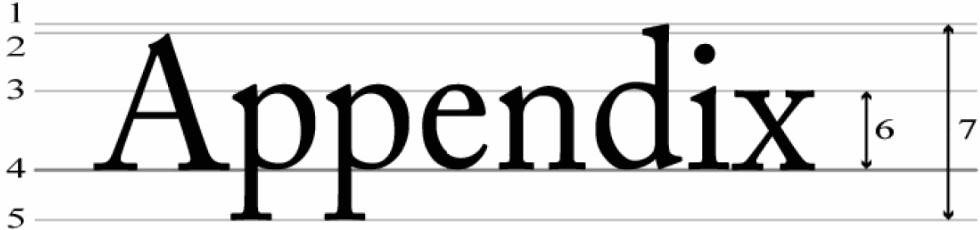
Legend
1 | Ascender line |
2 | Cap line |
3 | Mean line |
4 | Baseline |
5 | Descender line |
6 | x-height |
7 | Font size |
FOODS WHICH ARE EXEMPTED FROM THE REQUIREMENT
OF THE MANDATORY NUTRITION DECLARATION
1. Unprocessed products that comprise a single ingredient or category of ingredients;
2. Processed products which the only processing they have been subjected to is maturing and that comprise a single ingredient or category of ingredients;
3. Waters intended for human consumption, including those where the only added ingredients are carbon dioxide and/or flavourings;
4. A herb, a spice or mixtures thereof;
5. Salt and salt substitutes;
6. Table top sweeteners;
7. Products covered by Directive 1999/4/EC of the European Parliament and of the Council of 22 February 1999 relating to coffee extracts and chicory extracts <*>, whole or milled coffee beans and whole or milled decaffeinated coffee beans;
--------------------------------
<*> OJ L 66, 13.3.1999, p. 26.
8. Herbal and fruit infusions, tea, decaffeinated tea, instant or soluble tea or tea extract, decaffeinated instant or soluble tea or tea extract, which do not contain other added ingredients than flavourings which do not modify the nutritional value of the tea;
9. Fermented vinegars and substitutes for vinegar, including those where the only added ingredients are flavourings;
10. Flavourings;
11. Food additives;
12. Processing aids;
13. Food enzymes;
14. Gelatine;
15. Jam setting compounds;
16. Yeast;
17. Chewing-gums;
18. Food in packaging or containers the largest surface of which has an area of less than 25 cm2;
19. Food, including handcrafted food, directly supplied by the manufacturer of small quantities of products to the final consumer or to local retail establishments directly supplying the final consumer.
NAME OF THE FOOD AND SPECIFIC ACCOMPANYING PARTICULARS
Mandatory particulars accompanying the name of the food
1. The name of the food shall include or be accompanied by particulars as to the physical condition of the food or the specific treatment which it has undergone (for example, powdered, refrozen, freeze-dried, quick-frozen, concentrated, smoked) in all cases where omission of such information could mislead the purchaser.
2. In the case of foods that have been frozen before sale and which are sold defrosted, the name of the food shall be accompanied by the designation "defrosted".
This requirement shall not apply to the following:
(a) ingredients present in the final product;
(b) foods for which freezing is a technologically necessary step of the production process;
(c) foods for which the defrosting has no negative impact on the safety or quality of the food.
This point shall apply without prejudice to point 1.
3. Foods treated with ionising radiation shall bear one of the following indications:
"irradiated" or "treated with ionising radiation", and other indications as stated in Directive 1999/2/EC of the European Parliament and of the Council of 22 February 1999 on the approximation of the laws of the Member States concerning foods and food ingredients treated with ionising radiation <*>.
--------------------------------
<*> OJ L 66, 13.3.1999, p. 16.
4. In the case of foods in which a component or ingredient that consumers expect to be normally used or naturally present has been substituted with a different component or ingredient, the labelling shall bear - in addition to the list of ingredients - a clear indication of the component or the ingredient that has been used for the partial or whole substitution:
(a) in close proximity to the name of the product; and
(b) using a font size which has an x-height of at least 75% of the x-height of the name of the product and which is not smaller than the minimum font size required in Article 13(2) of this Regulation.
5. In the case of meat products, meat preparations and fishery products containing added proteins as such, including hydrolysed proteins, of a different animal origin, the name of the food shall bear an indication of the presence of those proteins and of their origin.
6. In the case of meat products and meat preparations which have the appearance of a cut, joint, slice, portion or carcase of meat, the name of the food shall include an indication of the presence of added water if the added water makes up more than 5% of the weight of the finished product. The same rules shall apply in the case of fishery products and prepared fishery products which have the appearance of a cut, joint, slice, portion, filet or of a whole fishery product.
7. Meat products, meat preparations and fishery products which may give the impression that they are made of a whole piece of meat or fish, but actually consist of different pieces combined together by other ingredients, including food additives and food enzymes or by other means, shall bear the following indication:
in Bulgarian: | "формовано месо" and "формована риба"; |
in Spanish: | "elaborado a partir de piezas de carne" and "elaborado a partir de piezas de pescado"; |
in Czech: | "ze   masa" and "ze masa" and "ze    masa"; masa"; |
in Danish: | "Sammensat af stykker af  " and "Sammensat af stykker af fisk"; " and "Sammensat af stykker af fisk"; |
in German: | "aus   " and "aus " and "aus   "; "; |
in Estonian: | "liidetud liha" and "liidetud kala"; |
in Greek: | "   " and " " and "  "; "; |
in English: | "formed meat" and "formed fish"; |
in French: | "viande  " and "poisson " and "poisson  "; "; |
in Irish: | "  feola ceangailte" and " feola ceangailte" and "  ceangailte"; ceangailte"; |
in Italian: | "carne ricomposta" and "pesce ricomposto"; |
in Latvian: | "   " and " " and " zivs"; zivs"; |
in Lithuanian: | "sudarytas (-a)    " and "sudarytas (-a) " and "sudarytas (-a)    "; "; |
in Hungarian: | "    " and " " and "  hal"; hal"; |
in Maltese: | "  rikostitwit" and " rikostitwit" and " rikostitwit"; rikostitwit"; |
in Dutch: | "samengesteld uit stukjes vlees" and "samengesteld uit stukjes vis"; |
in Polish: | "z    " and "z " and "z   ryby"; ryby"; |
in Portuguese: | "carne  " and "peixe " and "peixe  "; "; |
in Romanian: | "carne  " and "carne de " and "carne de   "; "; |
in Slovak: | "zo    " and "zo " and "zo   ryby"; ryby"; |
in Slovenian: | "sestavljeno, iz  oblikovano meso" and "sestavljene, iz oblikovano meso" and "sestavljene, iz  oblikovane ribe"; oblikovane ribe"; |
in Finnish: | "paloista yhdistetty liha" and "paloista yhdistetty kala"; |
in Swedish: | "sammanfogade bitar av  " and "sammanfogade bitar av fisk". " and "sammanfogade bitar av fisk". |
Specific requirements concerning
the designation of "minced meat"
1. Composition criteria checked on the basis of a daily average:
Fat content | Collagen/meat protein ratio <*> | |
- lean minced meat, | <= 7% | <= 12% |
- minced pure beef, | <= 20% | <= 15% |
- minced meat containing pigmeat, | <= 30% | <= 18% |
- minced meat of other species, | <= 25% | <= 15% |
<*> The collagen/meat protein ratio is expressed as the percentage of collagen in meat protein. The collagen content means the hydroxyproline content multiplied by a factor of 8. | ||
2. In addition to the requirements laid down in Chapter IV of Section V of Annex III to Regulation (EC) No 853/2004, the following expressions shall appear on the labelling:
- "percentage of fat content under ...",
- "collagen/meat protein ratio under ...",
3. The Member States may allow the placing on their national market of minced meat which does not comply with the criteria laid down in point 1 of this Part under a national mark that cannot be confused with the marks provided for in Article 5(1) of Regulation (EC) No 853/2004.
Specific requirements concerning
the designation of sausage casings
If a sausage casing is not edible, this must be indicated.
INDICATION AND DESIGNATION OF INGREDIENTS
Specific provisions concerning the indication
of ingredients by descending order of weight
Category of ingredient | Provision concerning indication by weight |
1. Added water and volatile products | Shall be listed in order of their weight in the finished product. The amount of water added as an ingredient in a food shall be calculated by deducting from the total amount of the finished product the total amount of the other ingredients used. This amount shall not be required to be taken into consideration if it does not exceed 5% by weight of the finished product. This derogation does not apply to meat, meat preparations, unprocessed fishery products and unprocessed bivalve molluscs |
2. Ingredients used in concentrated or dehydrated form and reconstituted at the time of manufacture | May be listed in order of weight as recorded before their concentration or dehydration |
3. Ingredients used in concentrated or dehydrated foods, which are intended to be reconstituted by the addition of water | May be listed in order of proportion in the reconstituted product provided that the list of ingredients is accompanied by an expression, such as "ingredients of the reconstituted product", or "ingredients of the ready-to-use product" |
4. Fruit, vegetables or mushrooms, none of which significantly predominates in terms of weight and which are used in proportions that are likely to vary, used in a mixture as ingredients of a food | May be grouped together in the list of ingredients under the designation "fruit", "vegetables" or "mushrooms" followed by the phrase "in varying proportions", immediately followed by a list of the fruit, vegetables or mushrooms present. In such cases, the mixture shall be included in the list of ingredients in accordance with Article 18(1), on the basis of the total weight of the fruit, vegetables or mushrooms present |
5. Mixtures of spices or herbs, where none significantly predominates in proportion by weight | May be listed in different order provided that that list of ingredients is accompanied by an expression such as "in variable proportion" |
6. Ingredients constituting less than 2% of the finished product | May be listed in a different order after the other ingredients |
7. Ingredients, which are similar or mutually substitutable, likely to be used in the manufacture or preparation of a food without altering its composition, its nature or its perceived value, and in so far as they constitute less than 2% of the finished product | May be referred to in the list of ingredients by means of the statement "contains ... and/or ...", where at least one of no more than two ingredients is present in the finished product. This provision shall not apply to food additives or to ingredients listed in Part C of this Annex, and to substances or products listed in Annex II causing allergies or intolerances |
8. Refined oils of vegetable origin | May be grouped together in the list of ingredients under the designation "vegetable oils" followed immediately by a list of indications of specific vegetable origin, and may be followed by the phrase "in varying proportions". If grouped together, vegetable oils shall be included in the list of ingredients in accordance with Article 18(1), on the basis of the total weight of the vegetable oils present. The expression "fully hydrogenated" or "partly hydrogenated", as appropriate, must accompany the indication of a hydrogenated oil |
9. Refined fats of vegetable origin | May be grouped together in the list of ingredients under the designation "vegetable fats" followed immediately by a list of indications of specific vegetable origin, and may be followed by the phrase "in varying proportions". If grouped together, vegetable fats shall be included in the list of ingredients in accordance with Article 18(1), on the basis of the total weight of the vegetable fats present. The expression "fully hydrogenated" or "partly hydrogenated", as appropriate, must accompany the indication of a hydrogenated fat |
Designation of certain ingredients
by the name of a category rather than a specific name
Without prejudice to Article 21, ingredients which belong to one of the categories of foods listed below and are constituents of another food may be designated by the name of that category rather than the specific name.
Definition of category of food | Designation | ||
1. Refined oils of animal origin | "Oil", together with either the adjective "animal", or the indication of specific animal origin. The expression "fully hydrogenated" or "partly hydrogenated", as appropriate, must accompany the indication of a hydrogenated oil | ||
2. Refined fats of animal origin | "Fat", together with either the adjective "animal" or the indication of specific animal origin. The expression "fully hydrogenated" or "partly hydrogenated", as appropriate, must accompany the indication of a hydrogenated fat | ||
3. Mixtures of flour obtained from two or more cereal species | "Flour", followed by a list of the cereals from which it has been obtained, in descending order by weight | ||
4. Starches, and starches modified by physical means or by enzymes | "Starch" | ||
5. All species of fish where the fish constitutes an ingredient of another food and provided that the name and presentation of such food does not refer to a specific species of fish | "Fish" | ||
6. All types of cheese where the cheese or mixture of cheeses constitutes an ingredient of another food and provided that the name and presentation of such food does not refer to a specific type of cheese | "Cheese" | ||
7. All spices not exceeding 2% by weight of the food | "Spice(s)" or "mixed spices" | ||
8. All herbs or parts of herbs not exceeding 2% by weight of the food | "Herb(s)" or "mixed herbs" | ||
9. All types of gum preparations used in the manufacture of gum base for chewing gum | "Gum base" | ||
10. All types of crumbed baked cereal products | "Crumbs" or "rusks" as appropriate | ||
11. All types of sucrose | "Sugar" | ||
12. Anhydrous dextrose or dextrose monohydrate | "Dextrose" | ||
13. Glucose syrup and anhydrous glucose syrup | "Glucose syrup" | ||
14. All types of milk protein (caseins, caseinates and whey proteins) and mixtures thereof | "Milk proteins" | ||
15. Press, expeller or refined cocoa butter | "Cocoa butter" | ||
16. All types of wine as covered by Annex XIb to Regulation (EC) No 1234/2007 <*> | "Wine" | ||
17. Skeletal muscles <**> of mammalian and bird species recognised as fit for human consumption with naturally included or adherent tissue, where the total fat and connective tissue content does not exceed the values indicated below and where the meat constitutes an ingredient of another food. Maximum fat and connective tissue contents for ingredients designated by the term "... meat" | "... meat" and the name(s) <***> of the animal species from which it comes | ||
Species | Fat content | Collagen/meat protein ratio <*> | |
- Mammals (other than rabbits and porcines) and mixtures of species with mammals predominating, | 25% | 25% | |
- Porcines, | 30% | 25% | |
- Birds and rabbits, | 15% | 10% | |
<*> The collagen/meat protein ratio is expressed as the percentage of collagen in meat protein. The collagen content means the hydroxyproline content multiplied by a factor of 8. | |||
If these maximum limits are exceeded, but all other criteria for the definition of "meat" are satisfied, the "... meat" content must be adjusted downwards accordingly and the list of ingredients must mention, in addition to the term "... meat", the presence of fat and/or connective tissue. The products covered by the definition of "mechanically separated meat" are excluded from this definition | |||
18. All types of products covered by the definition of "mechanically separated meat" | "mechanically separated meat" and the name(s) <***> of the animal species from which it comes | ||
<*> Council Regulation (EC) No 1234/2007 of 22 October 2007 establishing a common organisation of agricultural markets and on specific provisions for certain agricultural products (Single CMO Regulation) (OJ L 299, 16.11.2007, p. 1). <**> The diaphragm and the masseters are part of the skeletal muscles, while the heart, tongue, the muscles of the head (other than the masseters), the muscles of the carpus, the tarsus and the tail are excluded. <***> For labelling in English, this designation may be replaced by the generic name of the ingredient for the animal species concerned. | |||
Designation of certain ingredients by the name of their
category followed by their specific name or E number
Without prejudice to Article 21, food additives and food enzymes other than those specified in point (b) of Article 20 belonging to one of the categories listed in this Part must be designated by the name of that category, followed by their specific name or, if appropriate, E number. If an ingredient belongs to more than one of the categories, the category appropriate to the principal function in the case of the food in question shall be indicated.
Acid | Foaming agent | |
Acidity regulator | Gelling agent | |
Anti-caking agent | Glazing agent | |
Anti-foaming agent | Humectant | |
Antioxidant | Modified starch <**> | |
Bulking agent | Preservative | |
Colour | Propellent gas | |
Emulsifier | Raising agent | |
Emulsifying salts <*> | Sequestrant | |
Firming agent | Stabiliser | |
Flavour enhancer | Sweetener | |
Flour treatment agent | Thickener |
--------------------------------
<*> Only for processed cheeses and products based on processed cheeses.
<**> The specific name or E number shall not be required to be indicated.
Designation of flavourings in the list of ingredients
1. Flavourings shall be designated either by the terms:
- "flavouring(s)" or by a more specific name or description of the flavouring if the flavouring component contains flavourings as defined in points (b), (c), (d), (e), (f), (g) and (h) of Article 3(2) of Regulation (EC) No 1334/2008,
- "smoke flavouring(s)", or "smoke flavouring(s) produced from food(s) or food category or source(s)" (e.g. "smoke flavouring produced from beech"), if the flavouring component contains flavourings as defined in point (f) of Article 3(2) of Regulation (EC) No 1334/2008 and imparts a smoky flavour to the food.
2. The term "natural" for the description of flavourings shall be used in accordance with Article 16 of Regulation (EC) No 1334/2008.
3. Quinine and/or caffeine used as a flavouring in the production or preparation of a food shall be mentioned by name in the list of ingredients immediately after the term "flavouring(s)".
Designation of compound ingredients
1. A compound ingredient may be included in the list of ingredients, under its own designation in so far as this is laid down by law or established by custom, in terms of its overall weight, and immediately followed by a list of its ingredients.
2. Without prejudice to Article 21, the list of ingredients for compound ingredients shall not be compulsory:
(a) where the composition of the compound ingredient is defined in current Union provisions, and in so far as the compound ingredient constitutes less than 2% of the finished product; however, this provision shall not apply to food additives, subject to points (a) to (d) of Article 20;
(b) for compound ingredients consisting of mixtures of spices and/or herbs that constitute less than 2% of the finished product, with the exception of food additives, subject to points (a) to (d) of Article 20; or
(c) where the compound ingredient is a food for which a list of ingredients is not required under Union provisions.
QUANTITATIVE INDICATION OF INGREDIENTS
1. The quantitative indication shall not be required:
(a) in respect of an ingredient or category of ingredients:
(i) the drained net weight of which is indicated in accordance with point 5 of Annex IX;
(ii) the quantities of which must already appear on the labelling under Union provisions;
(iii) which is used in small quantities for the purposes of flavouring; or
(iv) which, while appearing in the name of the food, is not such as to govern the choice of the consumer in the country of marketing because the variation in quantity is not essential to characterise the food or does not distinguish it from similar foods;
(b) where specific Union provisions stipulate precisely the quantity of an ingredient or of a category of ingredients without providing for the indication thereof on the labelling; or
(c) in the cases referred to in points 4 and 5 of Part A of Annex VII.
2. Points (a) and (b) of Article 22(1) shall not apply in the case of:
(a) any ingredient or category of ingredients covered by the indication "with sweetener(s)" or "with sugar(s) and sweetener(s)" if that indication accompanies the name of the food, pursuant Annex III; or
(b) any added vitamin and mineral if that substance is subject to a nutrition declaration.
3. The indication of quantity of an ingredient or category of ingredients shall:
(a) be expressed as a percentage, which shall correspond to the quantity of the ingredient or ingredients at the time of its/their use; and
(b) appear either in or immediately next to the name of the food or in the list of ingredients in connection with the ingredient or category of ingredients in question.
4. By way of derogation from point 3:
(a) where foods have lost moisture following heat treatment or other treatment, the quantity shall be expressed as a percentage which shall correspond to the quantity of the ingredient(s) used, related to the finished product, unless that quantity or the total quantity of all the ingredients indicated on the labelling exceeds 100%, in which case the quantity shall be indicated on the basis of the weight of the ingredient(s) used to prepare 100 g of finished product;
(b) the quantity of volatile ingredients shall be indicated on the basis of their proportion by weight in the finished product;
(c) the quantity of ingredients used in concentrated or dehydrated form and reconstituted during manufacture may be indicated on the basis of their proportion by weight as recorded before their concentration or dehydration;
(d) in the case of concentrated or dehydrated foods which are intended to be reconstituted by the addition of water, the quantity of the ingredients may be indicated on the basis of their proportion by weight in the reconstituted product.
NET QUANTITY DECLARATION
1. The net quantity declaration shall not be mandatory in the case of foods:
(a) which are subject to considerable losses in their volume or mass and which are sold by number or weighed in the presence of the purchaser;
(b) the net quantity of which is less than 5 g or 5 ml; however, this provision shall not apply to spices and herbs; or
(c) normally sold by number, provided that the number of items can clearly be seen and easily counted from the outside or, if not, is indicated on the labelling.
2. Where the indication of a certain type of quantity (such as the nominal quantity, minimum quantity, or average quantity) is required by Union provisions or, where there are none, by national provisions, this quantity shall be regarded as the net quantity for the purposes of this Regulation.
3. Where a prepacked item consists of two or more individual prepacked items containing the same quantity of the same product, the net quantity shall be indicated by mentioning the net quantity contained in each individual package and the total number of such packages. The indication of those particulars shall not, however, be mandatory where the total number of individual packages can be clearly seen and easily counted from the outside and where at least one indication of the net quantity contained in each individual package can be clearly seen from the outside.
4. Where a prepacked item consists of two or more individual packages which are not regarded as units of sale, the net quantity shall be given by indicating the total net quantity and the total number of individual packages.
5. Where a solid food is presented in a liquid medium, the drained net weight of the food shall also be indicated. Where the food has been glazed, the declared net weight of the food shall be exclusive of the glaze.
For the purposes of this point, "liquid medium" shall mean the following products, possibly in mixtures and also where frozen or quick-frozen, provided that the liquid is merely an adjunct to the essential elements of that preparation and is thus not a decisive factor for the purchase: water, aqueous solutions of salts, brine, aqueous solutions of food acids, vinegar, aqueous solutions of sugars, aqueous solutions of other sweetening substances, fruit or vegetable juices in the case of fruit or vegetables.
DATE OF MINIMUM DURABILITY,
"USE BY" DATE AND DATE OF FREEZING
1. The date of minimum durability shall be indicated as follows:
(a) the date shall be preceded by the words:
- "Best before ..." when the date includes an indication of the day,
- "Best before end ..." in other cases,
(b) the words referred to in point (a) shall be accompanied by:
- either the date itself, or,
- a reference to where the date is given on the labelling,
If need be, these particulars shall be followed by a description of the storage conditions which must be observed if the product is to keep for the specified period;
(c) the date shall consist of the day, the month and possibly, the year, in that order and in uncoded form.
However, in the case of foods:
- which will not keep for more than 3 months, an indication of the day and the month shall be sufficient,
- which will keep for more than 3 months but not more than 18 months, an indication of the month and year shall be sufficient,
- which will keep for more than 18 months, an indication of the year shall be sufficient,
(d) subject to Union provisions imposing other types of date indication, an indication of the date of minimum durability shall not be required for:
- fresh fruit and vegetables, including potatoes, which have not been peeled, cut or similarly treated; this derogation shall not apply to sprouting seeds and similar products such as legume sprouts,
- wines, liqueur wines, sparkling wines, aromatised wines, and similar products obtained from fruit other than grapes, and beverages falling within CN code 2206 00 obtained from grapes or grape musts,
- beverages containing 10% or more by volume of alcohol,
- bakers' or pastry cooks' wares which, given the nature of their content, are normally consumed within 24 hours of their manufacture,
- vinegar,
- cooking salt,
- solid sugar,
- confectionery products consisting almost solely of flavoured and/or coloured sugars,
- chewing gums and similar chewing products.
2. The "use by" date shall be indicated as follows:
(a) it shall be preceded by the words "use by ...";
(b) the words in point (a) shall be accompanied by:
- either the date itself, or,
- a reference to where the date is given on the labelling,
Those particulars shall be followed by a description of the storage conditions which must be observed;
(c) the date shall consist of the day, the month and, possibly, the year, in that order and in uncoded form;
(d) the "use by" date shall be indicated on each individual prepacked portion.
3. The date of freezing or the date of first freezing as referred to in point 6 of Annex III shall be indicated as follows:
(a) it shall be preceded by the words "Frozen on ...";
(b) the words referred to in point (a) shall be accompanied by:
- the date itself, or,
- a reference to where the date is given on the labelling,
(c) the date shall consist of the day, the month and the year, in that order and in uncoded form.
TYPES OF MEAT FOR WHICH THE INDICATION OF THE COUNTRY
OF ORIGIN OR PLACE OF PROVENANCE IS MANDATORY
CN codes (Combined Nomenclature 2010) | Description |
0203 | Meat of swine, fresh, chilled or frozen |
0204 | Meat of sheep or goats, fresh, chilled or frozen |
Ex 0207 | Meat of the poultry of heading 0105, fresh, chilled or frozen |
ALCOHOLIC STRENGTH
The actual alcoholic strength by volume of beverages containing more than 1,2% by volume of alcohol shall be indicated by a figure to not more than one decimal place. It shall be followed by the symbol "% vol." and may be preceded by the word "alcohol" or the abbreviation "alc".
The alcoholic strength shall be determined at 20 °C.
Positive and negative allowed tolerances in respect of the indication of the alcoholic strength by volume and expressed in absolute values shall be as listed in the following table. They shall apply without prejudice to the tolerances deriving from the method of analysis used for determining the alcoholic strength.
Description of beverage | Positive or negative tolerance |
1. Beers of CN code 2203 00 having an alcoholic strength not exceeding 5,5% vol.; still beverages falling within CN code 2206 00 obtained from grapes | 0,5% vol. |
2. Beers having an alcoholic strength exceeding 5,5% vol.; sparkling beverages falling within CN code 2206 00 obtained from grapes, ciders, perries, fruit wines and the like, obtained from fruit other than grapes, whether or not semi-sparkling or sparkling; mead | 1% vol. |
3. Beverages containing macerated fruit or parts of plants | 1,5% vol. |
4. Any other beverages containing more than 1,2% by volume of alcohol | 0,3% vol. |
REFERENCE INTAKES
Daily reference intakes for vitamins and minerals (adults)
1. Vitamins and minerals which may be declared and their nutrient reference values (NRVs)
Vitamin A  | 800 | Chloride (mg) | 800 |
Vitamin D  | 5 | Calcium (mg) | 800 |
Vitamin E (mg) | 12 | Phosphorus (mg) | 700 |
Vitamin K  | 75 | Magnesium (mg) | 375 |
Vitamin C (mg) | 80 | Iron (mg) | 14 |
Thiamin (mg) | 1,1 | Zinc (mg) | 10 |
Riboflavin (mg) | 1,4 | Copper (mg) | 1 |
Niacin (mg) | 16 | Manganese (mg) | 2 |
Vitamin B6 (mg) | 1,4 | Fluoride (mg) | 3,5 |
Folic acid  | 200 | Selenium  | 55 |
Vitamin B12  | 2,5 | Chromium  | 40 |
Biotin  | 50 | Molybdenum  | 50 |
Pantothenic acid (mg) | 6 | Iodine  | 150 |
Potassium (mg) | 2 000 |
2. Significant amount of vitamins and minerals
As a rule, the following values should be taken into consideration in deciding what constitutes a significant amount:
- 15% of the nutrient reference values specified in point 1 supplied by 100 g or 100 ml in the case of products other than beverages,
- 7,5% of the nutrient reference values specified in point 1 supplied by 100 ml in the case of beverages, or,
- 15% of the nutrient reference values specified in point 1 per portion if the package contains only a single portion,
Reference intakes for energy and selected nutrients
other than vitamins and minerals (adults)
Energy or nutrient | Reference intake |
Energy | 8 400 kJ/2 000 kcal |
Total fat | 70 g |
Saturates | 20 g |
Carbohydrate | 260 g |
Sugars | 90 g |
Protein | 50 g |
Salt | 6 g |
CONVERSION FACTORS
Conversion factors for the calculation of energy
The energy value to be declared shall be calculated using the following conversion factors:
- carbohydrate (except polyols), | 17 kJ/g - 4 kcal/g |
- polyols, | 10 kJ/g - 2,4 kcal/g |
- protein, | 17 kJ/g - 4 kcal/g |
- fat, | 37 kJ/g - 9 kcal/g |
- salatrims, | 25 kJ/g - 6 kcal/g |
- alcohol (ethanol), | 29 kJ/g - 7 kcal/g |
- organic acid, | 13 kJ/g - 3 kcal/g |
- fibre, | 8 kJ/g - 2 kcal/g |
- erythritol, | 0 kJ/g - 0 kcal/g |
EXPRESSION AND PRESENTATION OF NUTRITION DECLARATION
The units of measurement to be used in the nutrition declaration for energy (kilojoules (kJ) and kilocalories (kcal)) and mass (grams (g), milligrams (mg) or micrograms  ) and the order of presentation of the information, as appropriate, shall be the following:
) and the order of presentation of the information, as appropriate, shall be the following:energy | kJ/kcal |
fat | g |
of which | |
- saturates, | g |
- mono-unsaturates, | g |
- polyunsaturates, | g |
carbohydrate | g |
of which | |
- sugars, | g |
- polyols, | g |
- starch, | g |
fibre | g |
protein | g |
salt | g |
vitamins and minerals | the units specified in point 1 of Part A of Annex XIII |
Вернуться в "Каталог нормативных документов"
Источник информации: https://internet-law.ru/documents/dop_documents/50/gost_98811/0/regla_34819.html
На правах рекламы:
|
© Антон Серго, 1998-2026.
|
Разработка сайта |
|